Builders Risk Insurance Illinois
OfferMarket Insurance
Compare 40+ carriers for builder's risk insurance in Illinois
Fast quotes · 100% free · no obligation
Last updated: November 20, 2026
"The first rule in investment is don't lose and the second rule in investment is don't forget the first rule." - Warren Buffett
Builders risk insurance in Illinois covers a property while it is being renovated or built: the house, the work already installed and the materials waiting on site, from closing day until you sell, lease or refinance. Maybe you are gutting a brick two-flat in Chicago's Little Village, flipping a ranch in Joliet or putting up a spec home outside Naperville. Either way, three questions come up before closing: which policy fits the job, what it will actually cost, and which Illinois risks the policy quietly leaves with you.

Our position is direct, and the rest of this guide backs it up: "a generic, off-the-shelf policy is a poor fit for an Illinois rehab." The state's real risks sit in the fine print. Illinois has broken its own tornado record twice in three years, basements across Cook County filled during the July 2023 storms, 34 counties sit over old coal mines, and Chicago has its own rules for vacant buildings and the investors who renovate them. Add your lender's insurance checklist, and a quote nobody reviewed can cost you at claim time or at closing. OfferMarket Insurance closes those gaps for Illinois investors, and the sections below show how.
Insurance disclosure: A portion of the insurance inquiries submitted on OfferMarket are quoted, bound and serviced by OfferMarket Insurance LLC (NPN 20545557), which is licensed in Illinois (license number 3004490840) and in a number of other states. View the full list at offermarket.us/licenses.
Key Takeaways
- 🌪️ Illinois set a record with 142 tornadoes in 2024, then passed 190 by August 2026. Write the wind and hail deductible in dollars before you bind.
- 💲 Our Illinois fix and flip example ranges run from $1,000 to $3,500 a year, depending on property value and rehab budget. Your address and scope set the real number, and we quote every request the same day.
- 🏚️ In Chicago, a building that sits vacant for more than 30 days must be secured, insured for liability and registered with the city. Plan for it on every gut rehab.
- 🚰 Basement backup is not flood, and neither one is included by default. Add water backup on any house with a basement, and bind flood at closing when the lot is in a flood zone.
- ⛏️ In 34 mostly central and southern counties, mine subsidence coverage is automatically part of a property policy unless it is waived in writing. A builder's risk form may handle it differently, so ask.
- 🧊 A vacant house through an Illinois January needs heat or drained lines, or a burst pipe claim can be denied.
- 👷 Illinois has no state general contractor license, but roofers must hold a state license, and Chicago licenses general contractors and residential developers. Verify both before work starts.
- 🧾 Get the minimum earned premium in writing before you bind, so a flip that sells early does not pay for a full year.
The Short Answer: Which Illinois Policy Fits Your Rehab?
For most Illinois investors renovating a 1 to 4 unit property, the right product is a fix and flip policy. It combines property coverage for the existing house and materials with vacancy protection and general liability in one policy. Standalone builder's risk is the better fit for ground-up construction. Flood always needs its own policy, and in a mine subsidence county you should confirm how the quote treats that coverage.
| Policy or coverage | Best for | What it pays for | What it does not |
|---|---|---|---|
| Fix and flip (renovation) policy | Rehabbing a vacant 1 to 4 unit property | The existing building, the rehab, stored materials, vacancy and liability | Flood, earth movement, basement backup unless added |
| Standalone builder's risk | New homes, additions and major rebuilds | The structure and materials while construction is underway | Liability, flood, earth movement |
| Mine subsidence coverage | Properties in the 34 mandatory counties, or anywhere by request | Damage when underground mine workings collapse | Other ground movement, such as settling or expansive soil |
| Flood insurance (NFIP or private) | River towns, low lots and mapped flood zones | Rising water and overland flooding | Wind, fire and theft |
| Landlord policy (DP-3) | The finished, rented property | The rental building, liability and lost rent | An active renovation |
What Builders Risk Insurance Costs in Illinois
No honest statewide rate exists. A cosmetic flip in Joliet, a gut rehab of a Chicago two-flat and a new build in Plainfield are priced on different math. Start with the ranges below, then replace them with a real quote for your address.

Example Illinois Premium Ranges
These are example ranges from OfferMarket. They are estimates, not quotes.
| Property value | Rehab budget | Estimated annual premium |
|---|---|---|
| $150,000 | $50,000 | $1,000 to $2,000 |
| $300,000 | $100,000 | $1,500 to $2,500 |
| $500,000 | $200,000 | $2,000 to $3,500 |
Estimates for standalone builders risk, which insures the property only, run lower. Published industry estimates for Illinois are about $500 to $2,000 a year, and US Assure lists a minimum premium starting at $375 in Illinois for the Builders Risk Plan insured by Zurich. A fix and flip policy adds protection such as vacancy coverage and general liability, so compare what each quote covers, not only the price.
How an Illinois Premium Is Built
| Line item | What drives it |
|---|---|
| Base premium | Completed value multiplied by the carrier's rate |
| Minimum premium | Kicks in on short or low-value jobs |
| Mine subsidence | A separately stated premium set by the Fund, based only on the coverage amount |
| Sewer backup and other add-ons | Priced separately on most forms |
| Flood | A separate policy for any property in or near a floodplain |
| Taxes and fees | 3.5% surplus lines tax plus fire marshal tax and stamping fee if non-admitted, plus policy fees |
| Deductibles | The all-perils and storm deductibles, each shown as a dollar figure |
A small, short job often lands on a carrier's minimum premium rather than the straight rate. If the policy is placed with a surplus lines carrier, Illinois adds a 3.5% surplus lines tax, up to 1% in fire marshal tax and a 0.04% stamping fee (Locke Lord surplus lines manual), and surplus lines policies are not backed by the state guaranty fund.
What the Storm Deductible Means in Dollars
| Policy limit | 1% wind and hail deductible | 2% wind and hail deductible | 5% wind and hail deductible |
|---|---|---|---|
| $250,000 | $2,500 | $5,000 | $12,500 |
| $350,000 | $3,500 | $7,000 | $17,500 |
| $500,000 | $5,000 | $10,000 | $25,000 |
Under our lending guidelines, a percentage deductible can be as high as 5% of the building's coverage limit, and a flat deductible can be as high as $5,000. Every figure in this table passes, with the 5% column at the ceiling. The harder test is your reserves: if a June storm took off part of the roof, could you cover that number and keep the crew working?
Selling Early and the Minimum Earned Premium
Policies are often written for 3, 6 or 12 months. The minimum earned premium is the share of the premium a carrier keeps even if you cancel after a few weeks, and some fees are never returned. When you sell early or refinance into an Illinois DSCR loan, OfferMarket fix and flip premiums are generally refunded pro rata for the unused months. New construction forms can be fully earned the day they are bound, so read the cancellation terms before you pay.
What Factors Influence Builder's Risk Insurance Cost in Illinois?
US Assure names five pricing factors for Illinois builders risk: project type, location, construction material type, optional coverages, and additional fees and taxes. Here is how each one plays out for Illinois investors, followed by three more factors we weigh on our own files.
1. Location
- 🌪️ Tornado and derecho exposure, which now reaches every part of the state
- ⛏️ Whether the county is one of the 34 mandatory mine subsidence counties
- 🌊 Flood zones along the Illinois, Mississippi, Rock and Des Plaines rivers
- 🚒 Fire protection class in rural areas, and theft risk on the block
2. Project Type
- 🏗️ Ground-up builds start from an empty lot, so they usually carry the lowest rate
- 🔨 Renovations rate higher because an older building is exposed for the whole job
- 🧱 Roof, foundation, tuckpointing and structural work price above cosmetic work
3. Construction Material Type
- 🧱 Solid brick two-flats, three-flats and bungalows across Chicago and the inner suburbs
- 🏚️ Older frame houses and balloon framing in Rockford, Peoria, Decatur and downstate river towns
- 🏠 The age and type of roof, the biggest factor in storm pricing
4. Optional Coverages
- 🌊 Flood, which always sits outside the base form
- 🚰 Sewer, drain and sump backup
- ⏳ Soft costs, which pay loan interest and carrying costs when a covered loss stalls the job
- 💸 Rent loss on any unit that is leased
- 📜 Ordinance or law, on carriers that offer it for renovations
5. Fees and Taxes
- 🏛️ Admitted carriers are licensed by the Illinois Department of Insurance and backed by the state guaranty fund
- 🧾 Surplus lines carriers add the 3.5% tax plus fees, and their policy fees are often not refundable
Three Factors We Add From Our Own Illinois Files
- 🥶 Vacancy and winter. A long vacancy, or a project that runs through January and February, adds freeze and theft risk.
- 📏 The limit. Rebuild cost drives it, not the purchase price or the after-repair value.
- 💵 The deductible. A higher deductible lowers the premium, up to the lender's ceiling of 5% of the building limit for a percentage deductible, or $5,000 for a flat one.
What One Flooded Basement Really Costs
Say you are finishing the garden unit of a Berwyn two-flat when a summer storm sends sewer water up through the floor drain. New drywall, flooring and the water heater are ruined. With backup coverage on the policy, the repair should be covered, but drying, tear-out and rework can push the listing back a month or more. At 11% on a $280,000 loan, interest alone runs about $2,570 a month, before taxes, utilities and insurance. That is the gap soft cost coverage is built for: it can pick up carrying costs while a covered loss holds up the project.
Ways to Spend Less Without Creating a Gap
- Build the limit from reconstruction cost, with land left out
- Choose a higher deductible only up to what your lender accepts and your cash can cover
- Replace a failing roof early, before spring storm season
- Lock the house, add cameras and keep appliances, copper and boilers in a locked space until installation
💡 Pro tip: Never save money by accepting a wind or hail exclusion, skipping backup coverage on a house with a basement, or letting vacancy coverage lapse.
Get the Actual Figure for Your Address
Estimates only go so far. Send us the address, the limit you need and your timeline, and we will return the premium, each deductible written in dollars and the fees, ready to drop into your deal analyzer. We quote every request the same day, usually within 2 to 3 hours.
⚡ Calculate my real Illinois premium with a quote
Why an Off-the-Shelf Policy Fails Illinois Investors
Five gaps appear on Illinois quotes over and over. A generic policy usually carries at least one of them.

- 💵 A storm deductible nobody turned into dollars. A 2% wind and hail deductible on a $350,000 limit is $7,000 per storm. Lenders accept it, since it sits well under the 5% ceiling, but it is still $7,000 the rehab budget has to find after a June derecho.
- 🏚️ No plan for Chicago's vacant building rules. The house sits empty for more than 30 days, nobody registers it, and the liability policy on file was never checked against the city's requirements.
- 🚰 A flooded basement with no backup coverage. The storm overwhelms the sewer, water comes up through the floor drain, and the policy never had water backup added.
- ⛏️ Mine subsidence left to chance. The investor buys in Peoria, Springfield or the Metro East and assumes the coverage is there, or signs a waiver without reading it.
- 🏦 A policy the lender sends back. The wrong named insured, the wrong mortgagee clause or a carrier below an A- rating. Any one of these can push a closing date.
Our view is simple. An Illinois investor should not have to find these gaps alone. OfferMarket Insurance is licensed in Illinois and works only with 1 to 4 unit residential investors.
Every quote we place is checked against your scope of work and your lender's insurance requirements before it is bound. When OfferMarket Capital is also your lender, one team matches the policy to the loan file. Our guide to fix and flip loans in Illinois covers the financing side.
Which Policy Fits Your Illinois Project
| Illinois project | What usually fits | Settle this before you bind |
|---|---|---|
| Cosmetic flip (Aurora, Joliet, Rockford) | Fix and flip policy | Storm deductible converted to dollars |
| Two-flat or greystone gut rehab (Chicago, Cicero, Berwyn) | Renovation form that insures the building as bought | Vacant building registration, basement backup and the heat plan |
| Rehab in a mine subsidence county (Peoria, Springfield, Belleville, Moline) | Fix and flip policy, with the mine subsidence answer in writing | Whether the form includes it, and any unrepaired damage |
| River town rehab (Alton, Quincy, Ottawa) | Fix and flip policy plus flood where required | Flood zone and foundation condition |
| Two to four units with tenants staying in some | A renovation form that allows tenants in part of the building, plus landlord coverage on those units | Which units are leased, and rent loss on those units |
| Ground-up home (Will, Kane and Kendall counties) | New construction builder's risk paired with general liability | Coverage in force before materials arrive |
What an Illinois Policy Covers and What It Leaves Out
Builder's risk is generally written on an open perils form, which means a cause of loss that the policy does not exclude is usually covered. US Assure describes its Illinois plan the same way: unless a peril is specifically excluded, it is likely covered. The exclusions and the add-ons are where Illinois rehabs get into trouble.

| Usually included | Usually an add-on | Needs a separate policy | Not covered |
|---|---|---|---|
| Fire and lightning | Soft costs (interest and holding costs after a covered delay) | Flood | Damage present before you closed |
| Theft, vandalism and arson | Backup of sewers, drains or sumps | Liability, when you buy standalone builder's risk | Settling, cracking and most earth movement |
| Wind and hail, unless excluded | Earthquake or earth movement, where offered | Workers' compensation, carried by each employer | The cost to redo faulty work |
| Collapse | Contract change orders | Contractor's tools and equipment | Theft by your own workers |
| Debris removal and materials in transit | Ordinance or law, on forms that offer it | Mine subsidence, where the form leaves it out | Wear, mold, rot and slow leaks |
What we confirm on every Illinois quote 📋
- ✅ Usually in the base form: Fire, lightning, theft, vandalism, collapse, debris removal and materials in transit
- ➕ Usually optional: Soft costs, sewer and sump backup, change orders, earth movement and flood
Three items settle most Illinois claims, so we confirm each one in writing before you bind:
❄️ Snow, ice and freeze. US Assure limits its rain, snow, sleet and ice extension to commercial projects. On a residential rehab in Rockford or Elgin, we confirm how your form treats snow load, ice damming and freeze damage before the first hard cold snap.
📜 Ordinance or law. Some renovation forms include it, and others exclude it with no endorsement available. Where a carrier offers it, we request 25%. Where it does not, we tell you before you bind, so you decide with the facts in front of you.
🚰 Sewer and sump backup. In Cook County especially, this is the add-on that decides whether a summer storm is a covered claim or your expense. We add it on any house with a basement, a floor drain or a sump pump.
Insure the house, not only the upgrades. A renovation policy has to protect the building you bought, not just the new kitchen and roof. Some builder's risk policies cover improvements only, which leaves the original structure exposed. OfferMarket's Illinois renovation coverage insures the structure, the foundation, and materials and equipment at the property or within 100 feet.
Illinois Perils: What Can Go Wrong During the Project

Tornadoes, Derechos and Severe Storms
Illinois averages 54 tornadoes a year, yet it recorded 142 in 2024, well above the previous high of 124 in 2006 (Illinois State Climatologist). On July 15, 2024, a derecho produced 32 tornadoes across the National Weather Service Chicago forecast area, the most on any single day in its records (NWS Chicago). That state record did not last long. By August 2026, the state climatologist counted 191 tornadoes for the year (FOX 32 Chicago).
- 💵 Check the storm deductible first. Illinois quotes often carry a separate wind and hail deductible written as a percentage of the limit. The cost section below shows what those percentages mean in dollars.
- 📸 Document the roof at closing. A carrier pays for storm damage that happens during the policy term, not for hail marks or missing shingles that were there when you bought.
- 🏠 Get the roof closed before spring. Severe weather season in Illinois runs from spring through summer, and an open roof turns a passing storm into a drywall and flooring claim.
Flood and Basement Backup
On July 2, 2023, nearly 9 inches of rain fell near Berwyn and 8.6 inches near Cicero, with more than 8 inches in Chicago's Garfield Park. The National Weather Service reported that rain backed up into tens of thousands of basements, and FEMA had received nearly 75,000 claims for flooded homes by late November.
- 🗺️ Mapped flood zones. A property inside a FEMA special flood hazard area will need flood coverage before funding. Our guidelines set the limit at the greater of $250,000 or the loan balance.
- 🤝 Bind flood with the loan. A new NFIP policy normally takes 30 days to start. Buying it in connection with a loan closing removes that wait. Our landlord vs. flood insurance guide explains why a property policy never pays for rising water.
- 🚰 Backup is a different claim. Water that rises through a floor drain or overflows a failed sump pump is not flood. It is usually excluded unless you add sewer and sump backup coverage, so add it and consider a backflow valve and a battery backup pump during the rehab.
- 📄 Read the seller's disclosure. The Illinois disclosure report asks whether the seller knows of flooding or recurring leakage in the basement or crawl space (765 ILCS 77/35). A "yes" there is your cue to price backup coverage and drainage work before you close.
👉 Get Your Illinois Builders Risk Quote →
Mine Subsidence in Central and Southern Illinois
Underground coal mining left voids beneath large parts of Illinois. When those workings fail, the ground above can drop and crack a foundation. Illinois handles this risk through private insurers backed by the Illinois Mine Subsidence Insurance Fund, which acts as their reinsurer (215 ILCS 5/801.1).
The 34 Mandatory Counties
In these counties, where most of the underground mining took place, mine subsidence coverage is automatically included in residential and commercial property policies unless the insured rejects it in writing (Illinois Mine Subsidence Insurance Fund):
- Bond
- Bureau
- Christian
- Clinton
- Douglas
- Franklin
- Fulton
- Gallatin
- Grundy
- Jackson
- Jefferson
- Knox
- LaSalle
- Logan
- Macoupin
- Madison
- Marion
- Marshall
- McDonough
- Menard
- Mercer
- Montgomery
- Peoria
- Perry
- Putnam
- Randolph
- Rock Island
- Saline
- Sangamon
- St. Clair
- Tazewell
- Vermilion
- Washington
- Williamson
Everywhere Else, It Is Available on Request
In the remaining counties, including Cook and the collar counties, coverage is available if you ask for it. Every insurer writing property insurance in Illinois has to make it available (IMSIF). IMSIF buyer and seller guide states that rates are the same in every county and depend only on the amount of coverage.
Three Rules That Matter When You Buy Distressed
- Unrepaired damage can block coverage. Even in a mandatory county, an insurer can refuse mine subsidence coverage on a property with evidence of unrepaired subsidence damage until the damage is repaired.
- Past claims must be disclosed. A seller has to disclose in writing to the buyer and the lender any mine subsidence claims that were paid on the property.
- Open claims can transfer. An Assignment of Claim Rights, drawn up by an attorney, can give the buyer the right to future payments on an open claim. Ask about it before you buy a house with known subsidence damage.
All three rules come from the Fund's.
💡 Pro tip: If you waive mine subsidence on a policy, the insurer does not have to offer it again at renewal unless you ask in writing (215 ILCS 5/805.1), so a quick signature now can leave a gap later. On any rehab in Peoria, Springfield, Belleville, Danville or Carbondale, ask whether the quote includes mine subsidence, get the answer in writing, and check the landlord policy's declarations page again when the property becomes a rental.
Polar Cold and Frozen Pipes
On January 30, 2019, Chicago hit 23 below zero, its coldest temperature in 34 years, and Rockford set an all-time record low of 31 below the next morning. Cold like that finds every vacant house with the heat off.
- 🧊 The freeze condition. On most vacant-house forms, freeze damage is paid only if heat was maintained or the water was shut off and the lines were drained. Drain the system the same day the old boiler or furnace comes out.
- ❄️ Ice dams. Heat escaping into an uninsulated attic melts roof snow that refreezes at the eaves and pushes water under the shingles. Air-seal and insulate the attic as part of the rehab.
- 📝 Keep a visit log. Record the date, photograph the thermostat and walk the basement on every visit. That log is your proof of heat if a freeze claim is questioned.
Illinois Risk Checklist by Region
Illinois behaves like three insurance markets in one state. Work through the column that matches your property before you request a quote.
| Check | Chicago and the collar counties | Central and western Illinois (Peoria, Springfield, Quad Cities, Champaign) | Metro East and southern Illinois (Belleville, Alton, Carbondale) |
|---|---|---|---|
| Wind and hail | Deductible in dollars; derecho and tornado exposure | Deductible in dollars; tornado exposure | Deductible in dollars |
| Mine subsidence | Optional; available on request | Mandatory in Peoria, Sangamon, Tazewell, Rock Island and more | Mandatory in St. Clair, Madison, Williamson, Jackson and more |
| Water | Sewer and sump backup | Illinois River and creek flood zones | Mississippi River flood zones |
| Winter | Freeze plan, ice dams | Freeze plan | Freeze plan |
| Local rules | Chicago vacant building registration, general contractor and developer licenses | Local permits and codes | Local permits and codes |
Chicago Rules That Hit Investor Rehabs
Chicago sets its own rules for vacant buildings, contractors and the investors who renovate. Several of them land directly on a fix and flip or BRRRR plan.

Vacant Building Registration and Insurance
Under Chicago's code, the owner of a vacant structure must maintain liability insurance for the premises. The obligation begins 30 days after the building becomes vacant, or 30 days after you acquire it, whichever is later, and it lasts as long as the building stays vacant (Municipal Code of Chicago, 14X-12-1203). The owner must also secure every opening and register the building, with proof of insurance required at registration.
The Department of Buildings lists a $300,000 liability minimum for residential structures, and each registration lasts six months until the building is deregistered (Chicago Department of Buildings). The registration fee runs $250 to $500 (City of Chicago).
That acquisition clock matters to investors. If you close on an empty two-flat and the permit takes six weeks, the house can owe registration and insurance before the first crew arrives. Our loan guidelines already call for $1,000,000 in general liability, which clears the city's residential minimum. Confirm the current limit and carrier requirements with the city before you register.
The Residential Real Estate Developer License
Chicago requires a Residential Real Estate Developer business license for anyone who acquires a building and renovates more than 50% of its existing floor area, increases the floor area, or substantially alters the plumbing or electrical. The same license applies to new homes built on vacant land and to condo conversions. Most gut rehabs meet that test, so get the license in place before you pull permits.
Licensed General Contractors
A licensed and insured general contractor is required for most construction, rehabilitation and demolition work in Chicago. The exemption for owners acting as their own general contractor applies only to the owner's primary residence, on a property with no more than 6 units and no building taller than 3 stories.
An investment property does not qualify. Look up every general contractor in the city's licensed contractor search before you sign.
Codes Outside Chicago
Illinois has no statewide building code for residential construction. Cities, villages and counties adopt and enforce their own (Illinois Capital Development Board), and Chicago keeps its own construction codes, including a separate building rehabilitation code. Ask the local building department which code edition applies before you price the scope, because code upgrades change both the budget and the insurance limit.
🚨 The Vacancy Clause on an Illinois Rehab
On investor claims, the vacancy wording is where many denials begin.
- Many dwelling forms cut theft, vandalism and glass coverage once a house has been empty for 60 days in a row, and a few start the clock at 30.
- A gutted house with no one living in it can still be treated as vacant while work goes on. Courts tend to look for substantial, continuing work on site, according to Merlin Law Group, and a crew that stops for the holidays and waits on a permit through February weakens that argument.
- 📄 Keep a vacancy permit or vacant property endorsement in force for the entire project, as our lending guidelines require, along with dated invoices and weekly photos.
What to Send Us So Closing Stays on Schedule
Have these details ready the day your offer is accepted:
- The insured name exactly as your LLC or land trust will appear on title
- The property address and county, your target closing date and the purchase price
- Budget and scope of work, with any roof, masonry, foundation or structural items called out
- What it would cost to rebuild the finished property
- When the house was built, plus the roof's material and age
- Basement, floor drains, sump pump and heating system details
- Flood zone status and the seller's disclosure on basement water
- Mine subsidence status, including any past claims or waivers
- Current occupancy, including any tenants and their lease end dates
- The loan number and your lender's exact mortgagee clause
We quote every request the same day, usually within 2 to 3 hours, and complete information keeps it that fast. For fix and flip and builders risk coverage, upload your scope of work to your OfferMarket Insurance File as soon as you submit the request. The scope of work is your rehab budget, including any work already completed, and it can be a PDF, an Excel file or photos.
A template is available in the file if you need one. If you tell us in the quote request that you have had a claim in the last 5 years, we will also ask for the claim amount and a loss run report, the carrier's record of past claims on the property. Without these documents, we can't quote the property accurately. Chicago multifamily, structural work, mine subsidence questions and surplus lines placements can bring follow-up questions from the underwriter before binding, so send those files as early as you can.
💡 Pro tip: Buying through an Illinois land trust or assigning a contract you signed personally to an LLC? Tell us before we bind. Lenders reject certificates when the named insured does not match the owner of record, so we need to know exactly how the trust or LLC holds title. Our Illinois land trust guide explains how these trusts work.
Illinois Contractor and Liability Rules Investors Should Know

🪪 Roofers need a state license. Illinois has no state license for general contractors, but roofing contractors must be licensed by the Illinois Department of Financial and Professional Regulation. Write down the license number and verify it with IDFPR before the tear-off. Plumbing is licensed by the state as well, under the Illinois Department of Public Health. Our checklist on what to look for in a professional contractor covers the rest of the vetting.
📝 The Home Repair and Remodeling Act. The Act covers repair and remodeling work on single-family homes and buildings with 6 or fewer units, but not original construction. For work over $1,000, the contractor must give you a written contract stating the total cost before starting, and must hand you the "Home Repair: Know Your Consumer Rights" pamphlet (815 ILCS 513/20). Contractors must also carry liability insurance of at least $100,000 per person and $300,000 per occurrence for bodily injury and $50,000 for property damage, unless they meet a $1,000,000 net worth test. Ask for the certificate.
👷 Workers' compensation from the first employee. Illinois requires an employer with even one part-time employee to carry workers' compensation (Illinois Workers' Compensation Commission), and construction is classed as extra-hazardous. When a subcontractor is uninsured, the Act can shift liability for an injured worker to the contractor above it, and to whoever engaged that contractor (820 ILCS 305/1). On an investor project, that can mean you. Collect a current certificate from every contractor with employees.
⏳ How long you can be sued. Construction claims generally must be filed within four years of when the claimant knew or should have known of the problem, and no more than 10 years after the act or omission. Someone who discovers the defect before the 10 years run out still gets four years to sue (735 ILCS 5/13-214).
📄 Disclosure applies to flips. The Residential Real Property Disclosure Act exempts newly built homes that have never been occupied, but that exemption does not include the rehabilitation of existing homes (Public Act 102-0765). When you sell a renovated house, complete the disclosure report and keep the permits and invoices that back it up.
🔑 Claims after closing. A buyer's injury or defect claim can arrive years after the sale, so make sure your general liability carries products and completed operations coverage. Fix and flip lenders typically ask for limits of $1,000,000 per occurrence and $2,000,000 aggregate on an occurrence form, with the lender listed as additional insured.
What Our Quality Control Catches on Illinois Quotes
Our team reviews every quote against the project and the lender's guidelines before it is bound, including quotes investors bring us from other agents. Four errors come up again and again. The examples below are illustrative, built from the patterns we see on investor files.

1. A Renovation Quoted as a Rental
An investor closes on a vacant ranch in Joliet for a cosmetic flip, and the quote that comes back is a landlord (DP-3) policy. A landlord form assumes a tenant in the house. Once the property sits empty past the vacancy period, coverage for theft and vandalism can shrink, and active renovation may fall outside what the form was written to cover. The lender also expects a renovation form during the rehab. We requote it as a fix and flip policy with a vacancy permit, then move it to a landlord policy at lease-up.
2. Dwelling Coverage Below What You Asked For
An investor asks for a limit based on the contractor's rebuild estimate for a brick two-flat in Chicago, and the quote comes back at the purchase price instead. A limit below replacement cost can trigger a coinsurance penalty that cuts every claim payment, and the lender can reject it. We set the dwelling limit at the amount the investor requested, supported by a replacement cost estimate, or at the loan amount on an agreed value basis where the guidelines allow it.
3. Liability Written at a Rental Limit
A gut rehab in Berwyn comes back with $500,000 in liability, a limit that fits a stabilized rental after a DSCR refinance but not a flip. A fix and flip lender wants $1,000,000 per occurrence and $2,000,000 aggregate on an occurrence form, with the lender named as additional insured. We raise the limits before closing and add completed operations if the house will be sold. Investors holding several properties can also look at umbrella coverage once the rentals are stabilized.
4. A Deductible Changed From Your Request
An investor in Peoria asks for a $5,000 deductible to keep the premium down, and the quote arrives with a $1,000 deductible. It looks generous, but it raises the premium for every month of the policy. The opposite happens too: a wind and hail deductible written as a percentage that nobody converted to dollars. We match each deductible to the request and to the lender's guideline before anything is bound.
⚡ Ask our team to review your Illinois quote
Setting the Right Limit
Your limit should match the cost to rebuild the finished property from the foundation up, with land excluded. Rebuilding a solid masonry two-flat in Chicago, or an older frame house in Peoria or Rockford, to today's code can cost more than the property would sell for. In parts of the North Shore and the western suburbs, land is a large share of the price. Market value is the wrong measure in both cases, and a limit set too low can trigger a coinsurance penalty on every claim.
- What it costs to rebuild the structure you bought
- Every dollar of the rehab budget, materials and labor together
- The general contractor's overhead and profit, sometimes as much as 20% of completed value
- Additions, a garden unit conversion or any new unit
- Code work the building department will require after a loss
The ARV calculator tells you whether the deal works. A replacement cost estimate tells you what to insure. If your loan is below replacement cost, our fix and flip guidelines allow the limit to match the loan, provided the policy is written on agreed value or with zero coinsurance.
Builder's Risk Insurance Guidelines
Below are common builder's risk insurance guidelines for fix and flip loans (otherwise known as hard money loans). These coverage limits are generally considered best practice from a risk management perspective.
Property Coverage
| Mandatory | Yes |
| AM Best Rating | A- VIII or greater |
| Term | 1 Year |
| Limits | Replacement Cost (appraisal or estimator), or Loan Amount. If loan is less than Replacement Cost, use an Agreed Value Policy or zero coinsurance |
| Deductible | $5,000 |
| Accepted Policy Types | Dwelling Fire (Special Form), or Commercial Property (Basic or Special Form) |
| Cancellation | 30-day notice |
| Exclusions | No windstorm, hail or named storm exclusion |
| Lender's Designation | Mortgagee |
General Liability Coverage
| Mandatory | Yes |
| AM Best Rating | A- VIII or greater |
| Term | 1 Year |
| Limits | $1,000,000 per occurrence / $2,000,000 aggregate |
| Deductible | $1,000 |
| Coverage Details | Occurrence basis for losses (not claims-made) |
| Cancellation | 30-day notice |
| Lender's Designation | Additional Insured |
Flood Insurance
If the property is in a FEMA special flood hazard area, your lender may require flood insurance.
| Mandatory | If in a flood zone (Flood Zone Determination required) |
| Term | 1 Year |
| Limits | The greater of $250,000 or the loan balance |
| Cancellation | 30-day notice |
| Lender's Designation | Mortgagee |
Additional Details
| Mortgagee Clause (OfferMarket Capital loans) | OfferMarket Capital LLC ISAOA/ATIMA627 S Hanover StBaltimore, MD 21230Borrowing from another lender? Use that lender's exact clause. |
| Condos | - Blanket policy may be used if it allows the individual Unit to be included in coverage.- Homeowner association maintains an "all risk" coverage for common areas, fixtures, personal property, equipment at 100% of their insurable value on a replacement cost basis. |
| PUDs | - Project's blanket policy may be used if it allows the individual Unit to be included in coverage.- Homeowner association maintains an "all risk" coverage for common areas, fixtures, personal property, equipment at 100% of their insurable value on a replacement cost basis. |
| Instructions | - Use ACORD form to ensure compliance- Send insurance certificates, invoices or paid receipts, no later than 24 hours before closing.- Send final policy documents, no later than 60 days after closing.- Borrower must notify carrier if property becomes vacant or unoccupied and obtain a vacancy permit for the entire period of vacancy. |
When the rehab becomes a rental. Refinancing into one of our DSCR loans through a refinance changes the insurance requirements: a dwelling limit of at least 80% of replacement cost or the loan amount, whichever is greater, liability of $500,000 per occurrence and $1,000,000 aggregate, and 12 months of rent loss coverage.
Each mortgagee clause should end with ISAOA/ATIMA, and lenders require an AM Best rating of A- VIII or better.

From Rehab to Rental
- 🔄 Start the landlord policy first. Bind landlord coverage before the lease begins, then cancel the renovation policy and request the refund. Our Illinois landlord insurance page covers the rental side.
- 🏦 Line up the refinance. Review the DSCR loan requirements for Illinois and how a bridge loan rolls into a DSCR rental loan before the rehab ends.
- 🏚️ Deregister the vacant building. In Chicago, end the vacant building registration once the property is occupied, so you are not paying renewal fees on a leased building.
- ⛏️ Recheck mine subsidence at the handoff. In a mandatory county, the landlord policy's declarations page should show the coverage, unless someone signed a waiver.
- 🗂️ Keep the file: permits, contractor licenses and invoices, the developer license if you needed one, and before and after photos. Test the rent against the payment in our DSCR calculator before you apply for the refinance.
Illinois Market Notes

- Chicago. Two-flats, greystones, bungalows and frame cottages. Plan for vacant building registration, a licensed general contractor, the developer license on large rehabs, basement backup and a winter heat plan.
- Cicero, Berwyn and the near west suburbs. Older brick housing that took some of the worst basement flooding in July 2023. Add backup coverage and check the disclosure report for past water.
- The collar counties. Aurora, Joliet, Elgin and Waukegan mix older homes near downtown with newer subdivisions, and Will, Kane and Kendall counties see ground-up builds. Watch the storm deductible and local permit rules.
- Rockford. Lower entry prices, older frame homes and the city's all-time record cold of 31 below in 2019. Winterize every vacant house.
- Peoria and the Quad Cities. Peoria, Tazewell and Rock Island are mandatory mine subsidence counties, with Illinois and Mississippi River flood zones nearby. Confirm both before you bind.
- Springfield, Decatur and Champaign-Urbana. Sangamon is a mandatory mine subsidence county, and rental demand near the universities supports small multifamily rehabs with partial occupancy.
- Metro East and southern Illinois. Belleville, Collinsville, Alton, Carbondale and Marion all sit in mandatory mine subsidence counties. Add Mississippi River flood checks in the river towns and rural fire protection farther south.
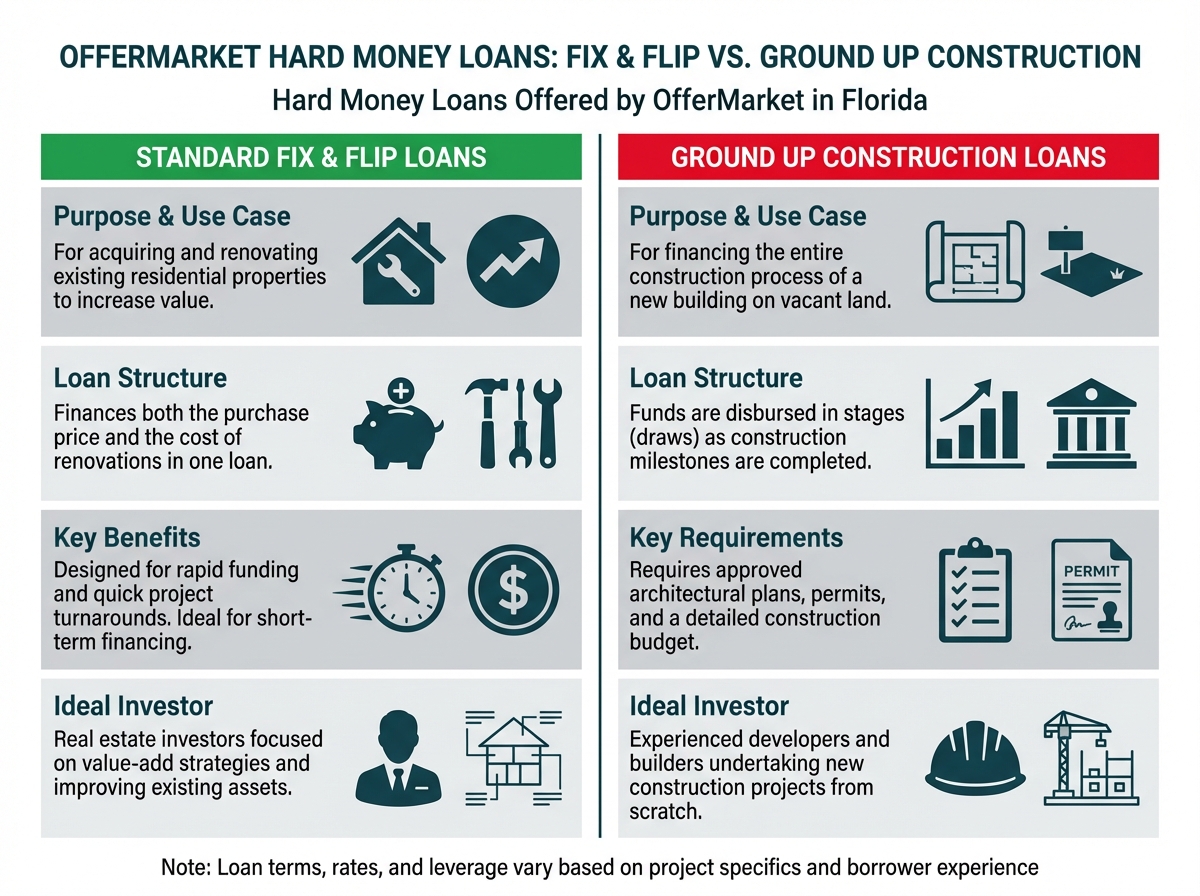
- New construction anywhere in the state. Finance the build with a ground-up construction loan, insure it on completed value from the first delivery, and carry completed operations coverage if you plan to sell. Size the loan in our construction loan calculator.
Illinois Builder's Risk Checklist
- ✅ The form matches both the work and who is living in the building
- ✅ The house you bought is covered, not just the new work
- ✅ No wind or hail exclusion, and the storm deductible shown in dollars
- ✅ Every deductible at or under 5% of the limit (or $5,000 when flat) and affordable from your reserves
- ✅ Mine subsidence status confirmed, with no unexpected waiver
- ✅ Flood zone checked, and a flood policy bound at closing where the lender needs it
- ✅ Sewer and sump backup added for any house with a basement
- ✅ A written winter plan: heat on or plumbing drained, with a dated visit log
- ✅ Vacancy endorsement in force from closing to completion
- ✅ Chicago vacant building registration and liability insurance in place if the building is empty more than 30 days
- ✅ Chicago developer license and licensed general contractor confirmed where required
- ✅ Licensed roofer and insurance certificates collected from every contractor
- ✅ The minimum earned premium and any fully earned fees in writing before you pay
- ✅ The named insured matches the LLC or land trust on title
- ✅ Liability at the lender's limits, plus completed operations for a sale
How OfferMarket Insurance Works in Illinois
OfferMarket Insurance LLC is a licensed insurance agency (NPN 20545557) built for 1 to 4 unit residential real estate investors, and it is licensed in Illinois (license number 3004490840). We quote, bind and service the policy inhouse.
You send the property once. Before you bind, we check the quote against the project and against your lender's guidelines: the policy type, the limit, wind and hail terms, mine subsidence, sewer backup, every deductible in dollars, the minimum earned premium, flood, vacancy, freeze conditions, liability and the mortgagee clause.
For a Chicago property, we also check that the liability coverage lines up with the city's vacant building rules. We send the certificates directly to your lender. At lease-up, we arrange landlord insurance so the property is never uninsured between policies.
Speed and claims help. We quote every request the same day, usually within 2 to 3 hours. If you have a loss, our licensed insurance agent works the claim with you on an urgent basis, from the first report to the carrier through the adjuster's inspection.
An Illinois rehab policy has to handle record storm years, flooded basements, old mines, Chicago's ordinances and a lender's checklist at the same time. A one-size quote skips that review, and we do it on every file. You can review our licenses at offermarket.us/licenses.
⚡ Start my instant Illinois quote
Frequently Asked Questions
Is Builder's Risk Insurance Required in Illinois?
No Illinois law requires it on a private home renovation. Lenders require it, and so do most construction contracts, which is why nearly every financed Illinois rehab carries it.
How Much Does Builders Risk Insurance Cost in Illinois?
Our Illinois example ranges run from $1,000 to $3,500 a year for properties valued at $150,000 to $500,000, including vacancy and liability coverage. Price follows the completed value, the county, the roof, the scope of work and whether the carrier is admitted. Flood and sewer backup are extra, and a surplus lines policy adds a 3.5% tax plus fees. Underwrite the deal with a real quote for your address.
Does Builder's Risk Cover Basement Flooding in Chicago?
Not by default. River or overland flooding needs a flood policy, and water that backs up through a drain or sump needs sewer and sump backup coverage added to the policy.
Does Builder's Risk Cover Mine Subsidence in Illinois?
It depends on the form and the county. In 34 mandatory counties, property policies include the coverage unless it is waived in writing, and it is available on request everywhere else. A builder's risk form may handle it differently, so ask whether your quote includes it.
Are Tornado and Hail Damage Covered on an Illinois Rehab?
Yes, as long as the quote does not exclude wind and hail. Check the storm deductible in dollars, and keep closing-day photos, because damage that existed before the policy started is not covered.
Do I Have to Register a Vacant House in Chicago?
If the building is vacant for more than 30 days, yes. The owner must secure it, register it with the Department of Buildings and carry at least $300,000 in liability insurance on a residential building.
Do Illinois Contractors Need a License?
Illinois does not license general contractors at the state level, but roofers and plumbers must hold state licenses. Chicago and many other cities license general contractors locally, and Chicago also licenses residential real estate developers.
How Fast Can I Get a Builders Risk Quote in Illinois?
We quote every request the same day, usually within 2 to 3 hours. Complete details on the property, scope, occupancy and lender keep it that fast.
Is OfferMarket Licensed in Illinois?
Yes. OfferMarket Insurance LLC (NPN 20545557) is licensed in Illinois (license number 3004490840) and quotes, binds and services coverage. See our licenses page.
Protect and Grow Your Portfolio With OfferMarket
Illinois rewards investors who buy well and renovate carefully, from Chicago two-flats to downstate starter homes. The margin depends on details: the wind and hail deductible, basement backup, mine subsidence, the winter freeze, Chicago's vacant building rules and the lender's checklist. Settle each one before closing, and bind a policy that was reviewed against both the project and the loan.
Protect your capital. Protect your reputation. Protect your future in Illinois real estate.
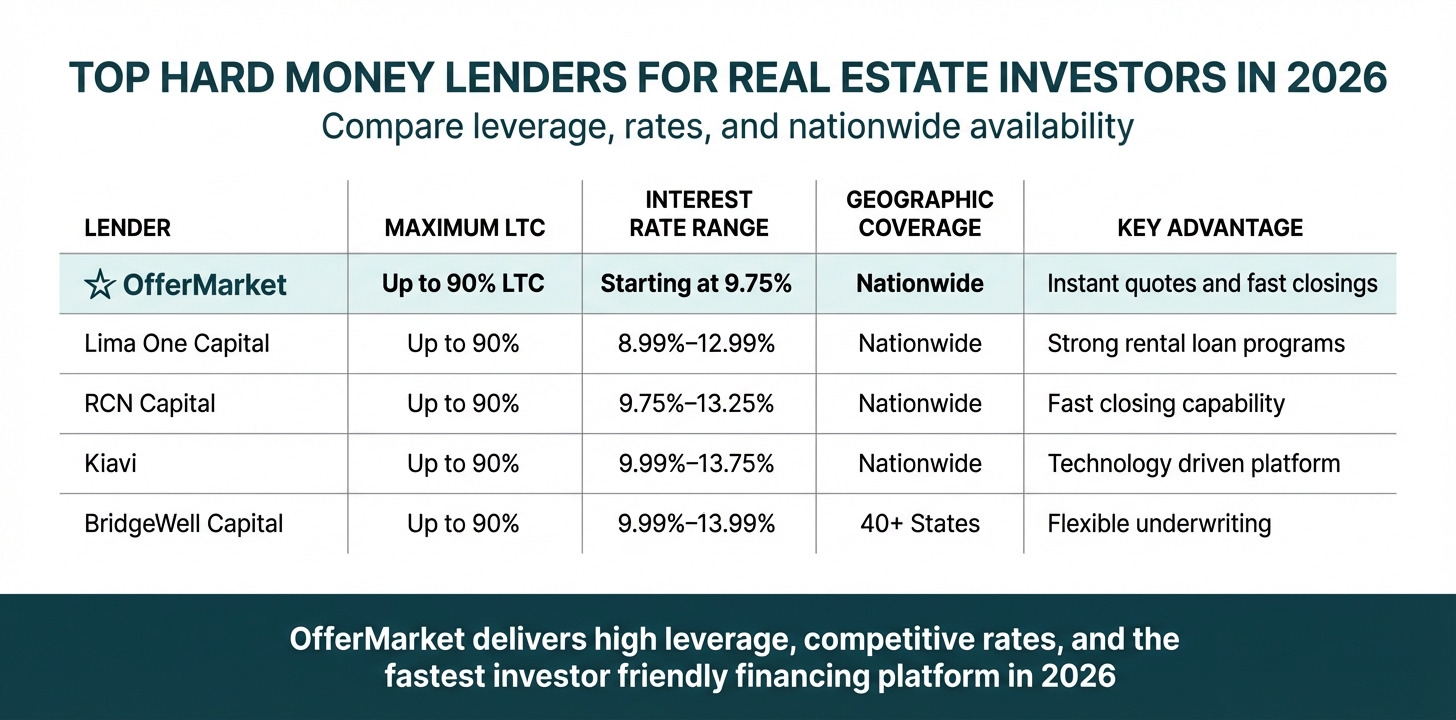
OfferMarket serves Illinois investors at every stage, from a first flip in Joliet to BRRRR rentals in Chicago and new construction in the western suburbs. If you are still choosing a lender, start with our guide to hard money lenders in Illinois.
☂️ Investor Insurance rate shopping platform specialized in fix and flip, builder's risk and landlord insurance that meets fix and flip and DSCR loan guidelines. 🏚️ Off Market Properties marketplace featuring hundreds of exclusive and off market deals posted by wholesalers, tired landlords and distressed sellers. 💰 Private Lending featuring instant quotes and a simple, low cost, transparent borrowing experience for DSCR loans, Fix and Flip loans and Low Balance DSCR loans. 💡 Insights regularly published to provide you with a knowledge advantage.

OfferMarket Loans
Check your rate
60 seconds · no credit pull