Investor Friendly Title Company Near Me
Filter by Zip Code
Start typing a zip code to filter — results narrow as you type more digits
Alabama
12
verified
1
verified
Arkansas
California
1
verified
Colorado
Connecticut
District of Columbia
Delaware
Florida
1
verified
Georgia
Illinois
3
verified
1
verified
Indiana
Kansas
3
verified
2
verified
Kentucky
Louisiana
1
verified
Maryland
5
verified
3
verified
3
verified
1
verified
1
verified
Michigan
Minnesota
2
verified
1
verified
Missouri
Mississippi
North Carolina
2
verified
Nebraska
11
verified
New Jersey
New Mexico
New York
2
verified
1
verified
1
verified
Ohio
3
verified
2
verified
2
verified
1
verified
1
verified
Oklahoma
7
verified
1
verified
Pennsylvania
2
verified
2
verified
2
verified
1
verified
South Carolina
Tennessee
Texas
4
verified
Virginia
Washington
Wisconsin
West Virginia
Learn More About Title Companies
Table of Contents
Investor Friendly Title Company Near Me: Finding the right one
When you're building your real estate investment business, the partnerships you form can make or break your success. And few relationships matter more than the one you have with your title company. Whether you're wholesaling your first deal, growing a rental portfolio, or flipping houses, having an investor-friendly title company in your corner can be the difference between a smooth closing and a deal that falls apart at the finish line.
Think of your title company as the referee of your real estate transaction—they're the neutral party making sure ownership transfers legally and securely. But here's what many new investors don't realize: not every title company knows how to work with investors. Industry data shows that title related issues are one of the top reasons closings get delayed, sometimes by weeks or even months, stressing out sellers and buyers and threatening the integrity of the transaction. The right title company can completely avoid these issues because they have experienced them before and see them a mile away.
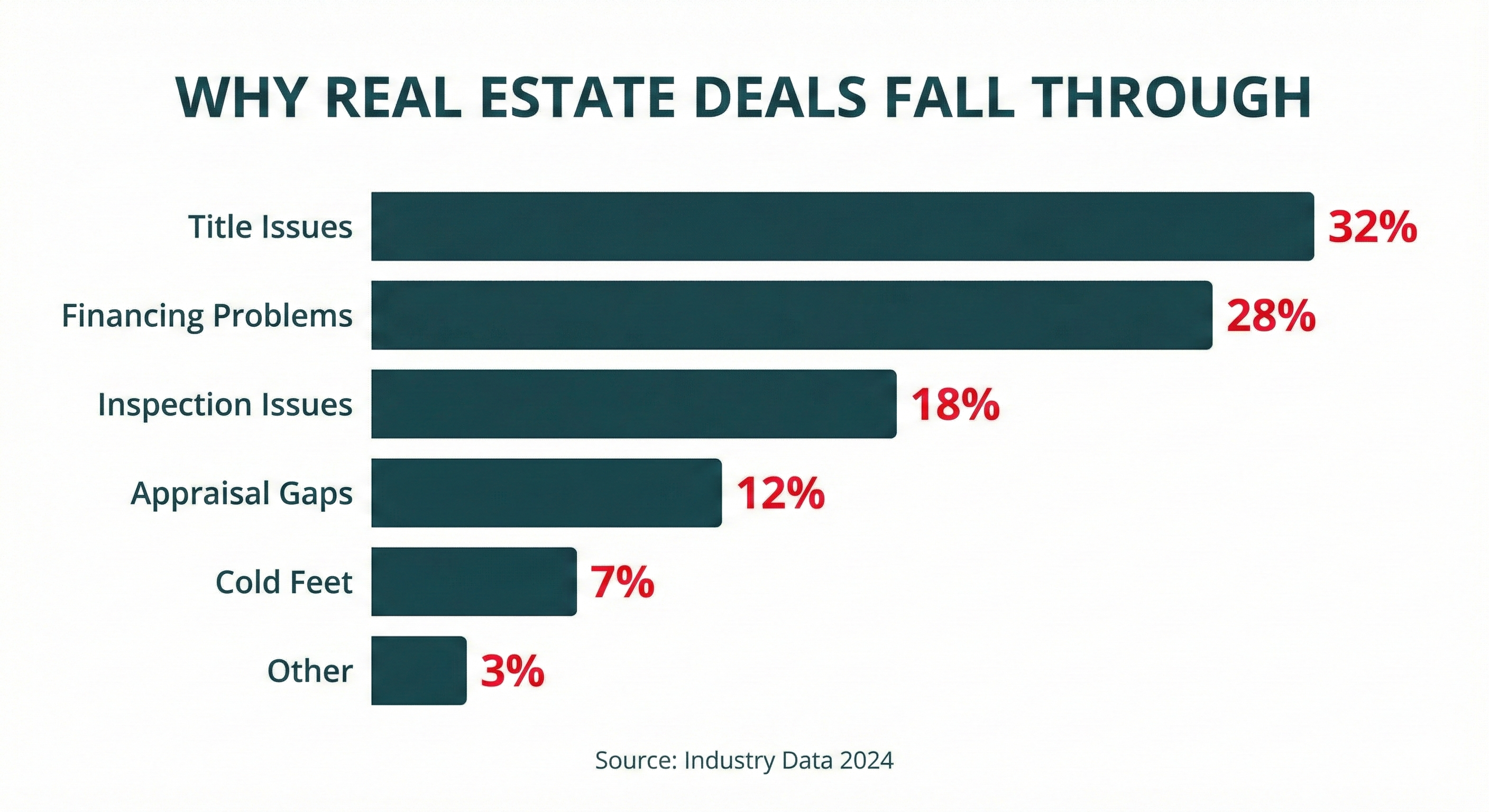
As Endpoint reports, title problems cause a significant chunk of closing delays in real estate deals. That's exactly why choosing a knowledgeable, investor-focused title company matters so much for your bottom line.
Here's what we'll cover in this guide:
- What exactly makes a title company "investor friendly"
- How to identify and select the right title company
- Common pitfalls to avoid when working with title companies
- Strategies for building strong, long-term relationships with title professionals
- The differences between attorney and title company states and how this affects your transactions
- When and how to replace a title company if necessary
OfferMarket maintains a carefully curated, nationwide list of vetted title companies that specialize in working with investors. These companies have proven track records of successfully closing investor transactions, including complex deals like double closings and assignments. Our directory provides not just contact information but verified transaction histories, areas of operation, and specializations to help you find the perfect match for your investment needs.
Let's break down what makes a title company truly investor friendly and how the right partner can fast-track your real estate investment success.
What is an Investor Friendly Title Company?
An investor friendly title company is a specialized service provider that gets what real estate investors need. Unlike standard title companies that mainly handle traditional buyer-seller transactions, investor-friendly title companies bring the knowledge and experience to handle more complex investment deals.
Key Characteristics of Investor Friendly Title Companies
Expertise in Wholesale Transactions: These companies know assignment contracts, double closings, and the ins and outs of wholesale deals. They're well-versed in the paperwork needed when you assign your purchase contract to an end buyer .
Experience with Rehab Projects: They get the timeline pressures and financing hurdles that come with fix-and-flip investments.
Support for Landlord Transactions: They can smoothly handle portfolio acquisitions and have systems ready for investors buying multiple properties.
Proficiency with Double Closings: Also called back-to-back closings, these deals need a title company that can coordinate two separate closings (A-B and B-C) in quick succession, often on the same day.
Creative Problem-Solving: Investor-friendly title companies can work through tricky situations that pop up in investment deals, such as title issues, lien complications, or non-standard financing arrangements.
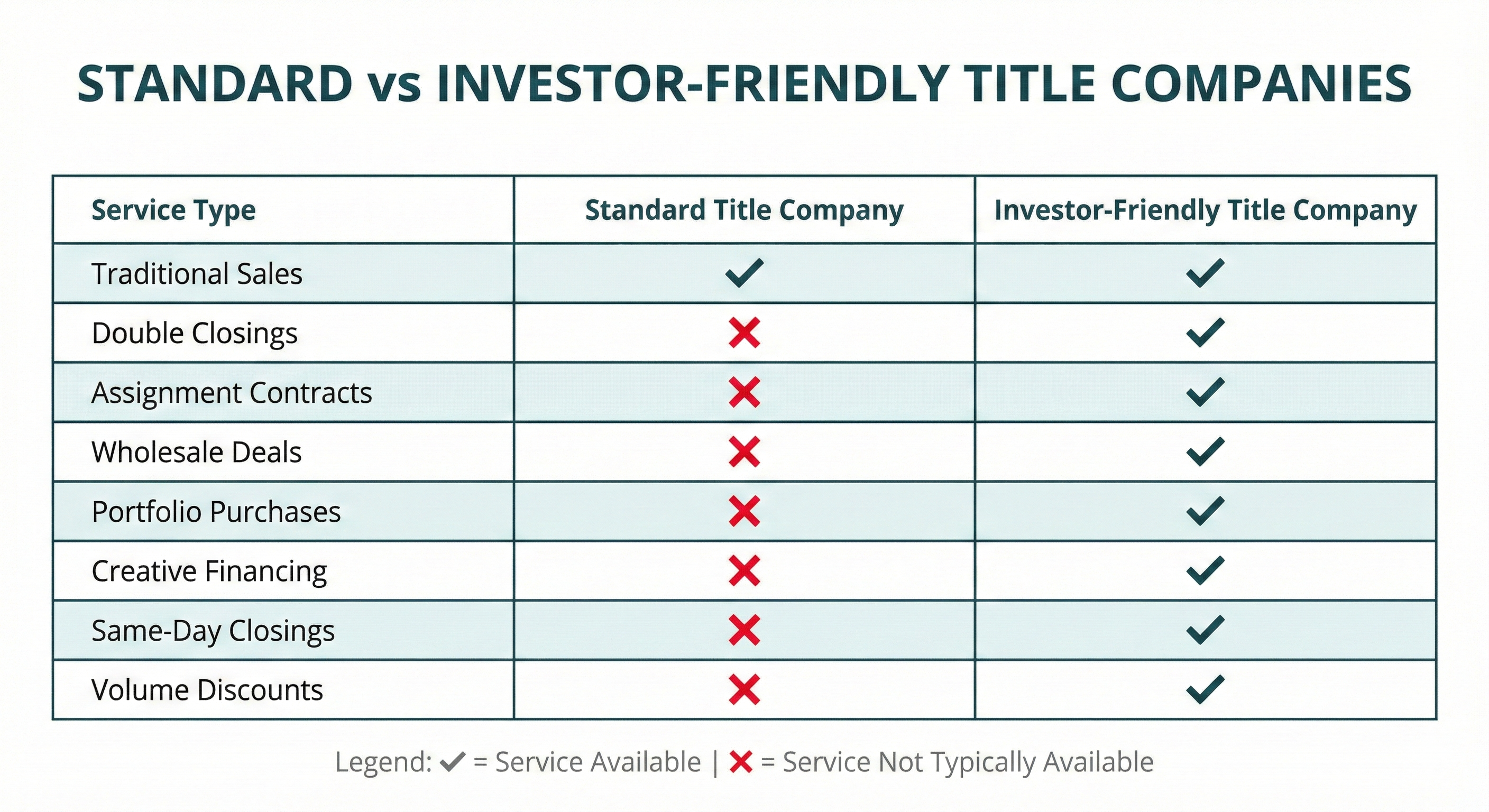
How They Differ from Standard Title Companies
Standard title companies often lack experience with investor specific transaction types and may be hesitant or unwilling to handle them due to perceived risk or unfamiliarity. Here's the reality: many traditional title companies may refuse to work with wholesalers altogether or charge significantly higher fees for these transactions.
Here's what sets investor-friendly title companies apart:
- Comfort Level: Investor-friendly title companies welcome assignment contracts and double closings, while standard companies may view these with suspicion.
- Speed: Investment-focused title companies get it—your deals are time-sensitive. They can often close faster because they understand the urgency.
- Fee Structure: They typically offer more competitive fees for investors who bring repeat business to the table.
- Legal Knowledge: They stay on top of investor-specific regulations and compliance requirements that affect wholesaling, fix-and-flip, and rental property investments.
- Network: They often have connections with other investor-friendly professionals like attorneys, lenders, and insurance providers.
The bottom line? Working with a title company that understands investment strategies can mean the difference between a smooth, efficient closing and a delayed or failed transaction. For active real estate investors, finding a truly investor-friendly title company isn't just nice to have—it's essential to your business success.
What Makes a Title Company Investor Friendly?
As a real estate investor, you face unique challenges that traditional homebuyers simply don't encounter. An investor-friendly title company understands these differences and is equipped to handle them efficiently.
Unique Needs of Investors vs. Traditional Buyers
Here's the thing: unlike traditional buyers who might close on just a handful of properties in their lifetime, you're likely running multiple transactions each year. That means efficiency and speed aren't just nice-to-haves—they're essential to your bottom line.
While traditional homebuyers typically engage in straightforward transactions, investors often deal with complex scenarios requiring specialized knowledge. Investor friendly title companies get the ins and outs of wholesale deals, fix-and-flip transactions, and rental property acquisitions. They know their way around creative financing structures, simultaneous closings, and assignment contracts.
Specialized Transaction Knowledge
A truly investor-friendly title company brings expertise in:
- Double closings: Handling back-to-back transactions where you buy and sell a property on the same day
- Assignment contracts: Processing deals where the original purchase contract is assigned to another buyer
- Entity transactions: Managing closings involving LLCs, corporations, and other business entities
- Subject-to deals: Facilitating transactions where you take property "subject to" the existing mortgage
Speed and Efficiency Requirements
Let's be real: time equals money in this business. Deals can fall through when closings drag on, and the data backs this up—financing issues are one of the top reasons real estate transactions collapse. According to Crawford Willis Group, "Financing problems account for 32% of terminated contracts." That's why having a title company that moves quickly and efficiently can make or break your success .
Communication and Flexibility
The best investor-friendly title companies make clear, proactive communication a priority. They understand you're often working under tight deadlines and that unexpected hiccups can derail profitable opportunities.
Consider this: a Bankrate study found that "around 4% of home sales were canceled in June 2022," with many falling through due to title or inspection issues. A solid investor-friendly title company helps you avoid these pitfalls through transparent communication and creative problem-solving.
Benefits of Working with Investor Focused Title Companies
Partnering with a title company that gets how investors operate can make a real difference in your business:
- Faster closings: They know time is money and keep things moving efficiently
- Creative solutions: They work to solve problems instead of walking away from tricky deals
- Investment strategy support: They understand what you're trying to build and help you get there
- Reduced stress: Their experience with investor deals means fewer curveballs along the way
- Network connections: They often know other professionals who work well with investors
The right title company isn't just handling paperwork for one deal—they become a true partner in your investment journey. They'll learn how you operate, stay one step ahead of what you need, and help you close transactions that might stump less experienced companies.
Understanding Title Company vs. Attorney States
Before you start looking for an investor friendly title company, here's something important to know: closing requirements aren't the same everywhere. Some states are "title company states" while others are "attorney states," and this affects how your deals will get done.
What Are Title Company States?
In title company states, title companies can handle everything involved in closing your deal, including:
- Conducting title searches
- Issuing title insurance
- Preparing closing documents
- Facilitating the closing process
- Disbursing funds
This setup keeps things simple—one company manages your entire closing. These title companies typically have escrow officers who guide your transaction from contract to keys.
What Are Attorney States?
Attorney states work differently. Here, a lawyer must be involved in at least part of your real estate transaction. According to Origin Title, "In attorney states, an attorney must be involved in the closing process, either by conducting the closing, preparing documents, or reviewing documents".
The level of attorney involvement varies by state:
- Full Attorney States: Require attorney supervision for the entire closing process
- Limited Attorney States: Require attorney involvement for specific aspects, such as document preparation or review
State-by-State Breakdown
Here's what you need to know about which states require attorney involvement, based on research compiled by October Research:
- Connecticut: Attorney must conduct closing
- Delaware: Attorney must conduct closing
- Georgia: Attorney must conduct closing
- Massachusetts: Attorney must conduct closing
- New York: Attorney must conduct closing
- South Carolina: Attorney must conduct closing
- Vermont: Attorney must conduct closing
- Alabama: Attorney must prepare deed
- Illinois: Attorney involvement customary but not required by law
- New Jersey: Attorney involvement customary but not required by law
The remaining states operate as title company states, meaning attorneys are optional rather than legally required for closings.
What This Means for Your Investment Strategy
Knowing these distinctions puts you in the driver's seat because:
- Cost implications: Attorney involvement typically adds to your closing costs
- Timeline considerations: Attorney states may require more time to close
- Transaction flexibility: Title company states often give you more room to maneuver with investor-friendly transactions like double closings or assignments
Finding the Right Professional for Your State
Here's how to connect with the right closing agent for your deals:
- In title company states, seek out title companies experienced with investor transactions
- In attorney states, partner with real estate attorneys who understand investment deals and creative financing structures
- In states with optional attorney involvement, weigh your transaction's complexity before deciding whether to bring an attorney on board
Getting clear on your state's requirements helps you build the right team and keeps your real estate investment transactions moving smoothly without unnecessary hiccups.
Essential Questions to Ask When Interviewing Title Companies
Finding the right title company can be a game-changer for your real estate investing business. The key is knowing which questions to ask so you can identify a true partner who gets what you do. Here's your roadmap to vetting potential title companies like a pro:
Experience with Investment Transactions
First things first—find out if they speak your language:
- "What percentage of your business comes from real estate investors versus traditional homebuyers?"
- "How many wholesale transactions have you closed in the past year?"
- "Can you describe your experience handling double closings or simultaneous closings?"
- "Are you familiar with assignment of contract transactions, and how do you handle them?"
A title company that's truly investor friendly won't hesitate when answering these questions. They'll likely share specific examples of deals they've closed that look a lot like yours. However, if they hesitate in answering any of these questions or give you attitude, that is an instant red flag that should tell you all you need to know about how any transaction will go with that company. Better move on now before you get too deep!
Fee Structure and Transparency
When you're working with tight margins, every dollar counts. Get clarity upfront:
- "Can you provide a complete breakdown of all fees I should expect for a typical investment transaction?"
- "Do you offer any investor-specific pricing or volume discounts?"
- "Are there additional costs for double closings or assignments?"
- "How and when do you require earnest money to be deposited?"
According to Land Title Guarantee Company, "A reputable title company will be transparent about their fees and willing to explain each line item on your closing statement".
Communication and Availability
When you're managing multiple deals, you need a team that keeps pace with you:
- "What is your typical response time to emails or calls?"
- "Do you have a dedicated point of contact for investors?"
- "What hours are you available for closings? Do you offer after-hours closings for time-sensitive deals?"
- "Can you accommodate remote closings or digital document signing? "
Problem-Solving Capabilities
Investor transactions often come with unique challenges that call for creative thinking:
- "Can you walk me through a tricky investor transaction you've handled and how you worked through the issues?"
- "What's your approach when title issues pop up during the closing process?"
- "What resources do you tap into when complex title problems need quick solutions?"
JD Titles suggests asking: "How will you handle issues that arise during the closing process? This is important because every transaction is different and sometimes issues arise".
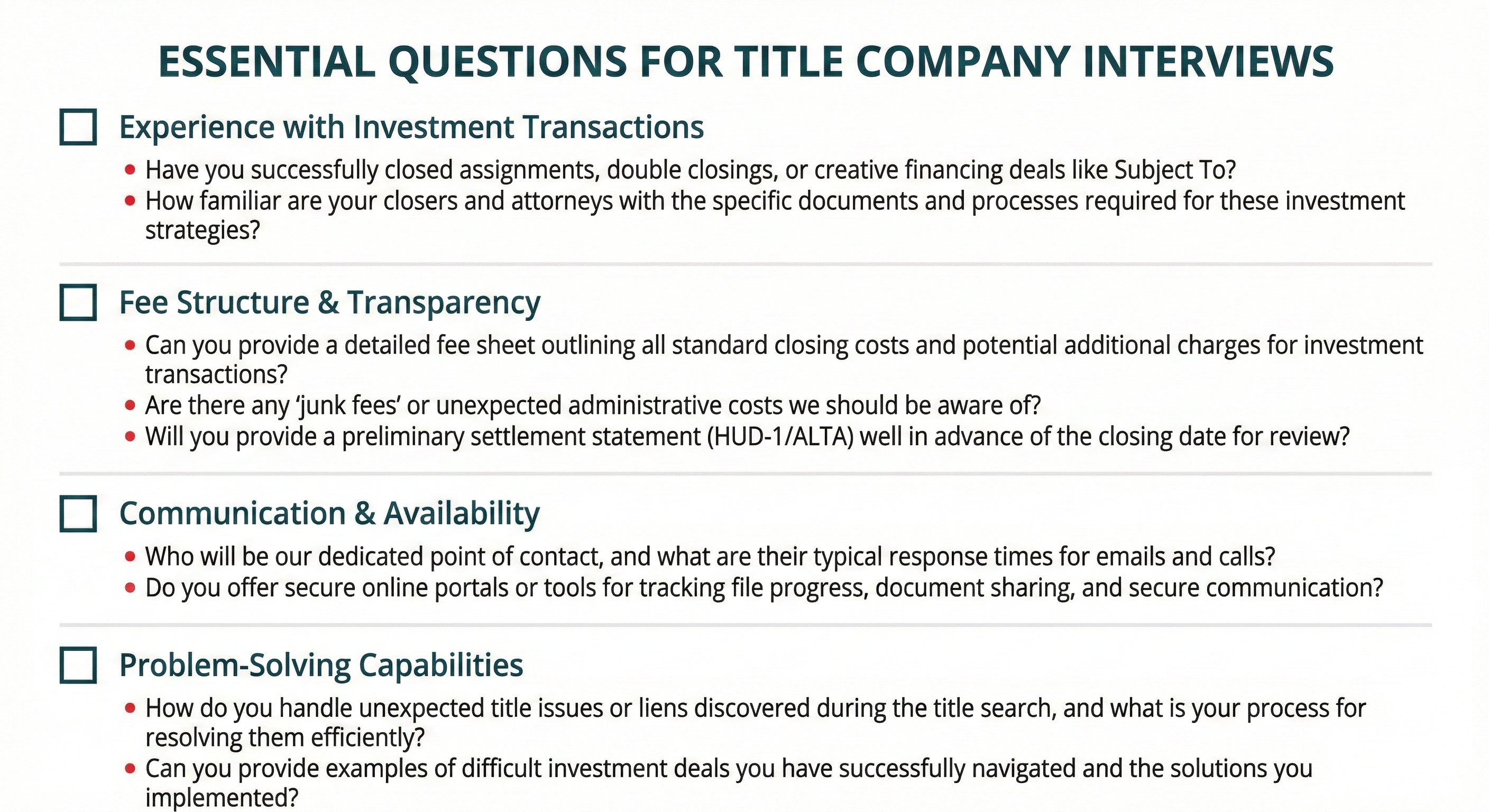
By asking these questions when interviewing potential title companies, you'll quickly spot the ones with the experience, transparency, and responsiveness that real estate investors need. A title company that truly understands investors will welcome these questions and back up their answers with knowledgeable, detailed responses.
Common Pitfalls of Choosing the Wrong Title Company
As a real estate investor, you face challenges that require specialized knowledge from your title company. Knowing the warning signs of a title company that can't handle investor transactions will save you time, money, and headaches down the road. When you recognize these signs, you should start preparing immediately to switch title companies for your future transactions.
Inexperience with Investor Transactions
Title companies that mostly work with traditional homebuyers often struggle with investor-specific deals like double closings, assignments, or land trusts. In fact, 68% of real estate investors surveyed reported closing delays because their title company wasn't familiar with wholesaling structures or creative financing methods.
Poor Communication Practices
Communication problems are among the top complaints from real estate investors working with title companies. Watch out for these red flags:
- Slow response times (taking more than 24 hours to return calls or emails)
- Inability to explain title issues in plain, easy-to-understand language
- Frequent miscommunications that require you to repeat yourself
- No proactive updates on where your transaction stands
Unreasonable or Hidden Fees
Steer clear of title companies that aren't upfront about their fee structure. As noted by Guida Law Firm, "Hidden fees can significantly impact your bottom line and may indicate other transparency issues with the title company" .
Signs of Legal or Compliance Issues
Title companies operate under strict regulatory guidelines—and you should expect nothing less. Here are some red flags to keep on your radar:
- They dodge requests for their license information
- They won't share their errors and omissions insurance details
- They hint at shortcuts or ways to sidestep legal requirements
- They seem fuzzy on state-specific real estate laws
Inability to Handle Title Issues Efficiently
If you've been investing for a while, you know title hiccups happen. The key is how your title company handles them. According to REI Ink, "Nearly 25% of all real estate transactions encounter some type of title issue before closing". When your title company struggles with everyday challenges like liens, boundary disputes, or deed errors, that's a clear sign they're not built for investor needs.
High Staff Turnover
Are you constantly introducing yourself to new escrow officers or title agents? That's a telltale sign of internal instability. This revolving door typically leads to inconsistent service and frustrating delays while new team members play catch-up on your transactions.
Lack of Investor Network
The best investor-friendly title companies have built solid relationships with local real estate attorneys, investor-focused lenders, and other key service providers. Without these connections, a title company simply can't offer the full support your investment business deserves.
Here's the bottom line: spotting these warning signs early saves you headaches down the road. The right title company isn't just another vendor—they're a true partner in building your real estate portfolio. Choose wisely, and you'll have a valuable ally in your corner for years to come.
Essential Services Offered by Investor Friendly Title Companies
As a real estate investor, you need title company services that go beyond standard residential transactions. Investor-friendly title companies offer a comprehensive suite of services designed to facilitate complex investment deals while providing protection and efficiency.
Core Title Services
Title Searches and Examinations: This is a thorough investigation of public records to verify ownership and identify any potential claims, liens, or encumbrances that could affect the property's title. For you as an investor, comprehensive searches are critical since investment properties often come with complicated ownership histories.
Title Insurance: This protects you against financial loss from defects in title that weren't discovered during the title search. According to Pike Title, "Title insurance protects the lender and the buyer from financial loss due to defects in a title to a property" .
Escrow Services: This involves management of funds and documents during the transaction, ensuring all conditions are met before closing. This neutral third-party service is especially valuable when you're handling multiple transactions simultaneously.
Document Preparation: This covers creation and review of all necessary legal documents for closing, including deeds, mortgage documents, and closing statements tailored to your investment transactions.
Closing Coordination: This means organizing the closing process, including scheduling, document collection, and disbursement of funds. As McKesson Title explains, "The title company acts as a neutral third party that facilitates the closing process, ensuring that all necessary documents are signed and funds are properly disbursed".
Investor-Specific Services
Truly investor-friendly title companies go beyond basic services to offer specialized assistance:
Double Closing Facilitation: This is expertise in handling simultaneous closings where you purchase a property and immediately sell it to an end buyer.
Assignment of Contract Support: Assistance with transactions involving contract assignments, a common strategy in wholesaling.
Entity Creation Guidance: Help with establishing LLCs or other business entities for property ownership, offering liability protection and tax benefits.
Remote Closing Options: Electronic document signing and virtual closing capabilities that accommodate investors who may not be local to their investment properties.
1031 Exchange Coordination: Assistance with tax-deferred exchanges that allow investors to postpone paying capital gains taxes when selling investment properties.
Investor-Focused Title Reports: Customized title reports that highlight issues particularly relevant to investors, such as zoning restrictions or pending code violations.
When choosing a title company for your investment deals, make sure they offer these key services and have hands-on experience with your specific transaction types. The right title company becomes a true partner in your investment journey, not just someone who pushes paper at closing.
How to Build and Maintain a Strong Relationship with a Title Company
A solid relationship with your title company can be a game-changer for your real estate investing success. How you communicate and collaborate with your title team often determines whether your deals close smoothly or get bogged down in frustrating delays. Its vital to secure a go-to contact inside a title company so you have confidence that there is always someone on the other side that will be eager to help you. This goes hand in hand with the turnover advice from above, if you go-to person leaves it might make sense to follow them to their next employer because reliable professionals are hard to identify.
Best Practices for Communication
Good communication is the bedrock of any strong business partnership. When you start working with a title company, nail down your preferred communication style right away—whether that's email, phone, or a secure online portal. Industry pros agree that regular check-ins throughout each transaction help avoid confusion and keep everyone on the same page about deadlines and next steps.
"The most successful investors communicate clearly, respond promptly, and stay engaged throughout the entire closing process," notes a representative from Robertson Title Team. "This proactive approach helps title professionals anticipate and address potential issues before they become problems."
How to Prepare Documents Properly
One of the biggest culprits behind closing delays? Incomplete or sloppy paperwork. Here's how to keep things running smoothly with your title company:
- Submit all required documents complete and organized—no missing pages or scattered files
- Make sure all signatures are properly executed and notarized when needed
- Provide clear, legible copies of IDs and supporting materials
- When they ask for additional information, get back to them quickly
- Proactively ask them if there are any other documents they might need, surprisingly powerful thing to ask
Getting your documents right the first time shows you respect their workflow and helps them do their job efficiently. That's a win win for everyone on the transaction.
Setting Reasonable Expectations
Knowing realistic timeframes is key to a solid working relationship with your title company. Most standard residential closings take 30-45 days. More complex investor deals—like assignments or double closings—often need extra time.
"Setting reasonable expectations from the beginning creates a foundation of trust and prevents frustration on both sides," explains Ohio Real Title. "Discuss potential challenges upfront and work together to develop contingency plans rather than demanding unrealistic turnaround times."
Professional Etiquette Tips
A little professional courtesy builds relationships that pay dividends over time:
- Trust their expertise and respect their processes
- Give them a heads-up when you've got complex or time-sensitive deals coming
- Say thanks when they go the extra mile—it matters
- Remember they're handling multiple closings at once
- If issues come up, address them directly and professionally before escalating
Here's the bottom line: title professionals are your partners in getting deals done, not roadblocks in your way.
Benefits of Maintaining a Good Relationship
Building a solid partnership with your title company pays off in real ways for your investment business:
Priority Service: When things get busy, title companies take care of their trusted clients first. That relationship you've built? It moves you to the front of the line.
Problem-Solving Partners: A title company that knows you won't just flag issues—they'll roll up their sleeves and help you find solutions to keep your deal moving forward.
Market Intelligence: Title professionals see everything happening in your local market. They can tip you off to trends, property red flags, and opportunities before others catch on.
Referral Network: Great title companies know great people. They can connect you with lenders, attorneys, and other pros who can help grow your business.
Smoother Transactions: Here's the bottom line—strong relationships mean faster closings, fewer headaches, and deals that actually get done.
As Denver Investment Real Estate notes, "The relationship you build with your title company is one of the most important professional connections you'll make as a real estate investor. These partnerships often determine whether deals close on time, problems get solved quickly, and whether your investment business can scale effectively."
Put these relationship-building strategies to work, and you'll become the client title companies want to help—setting yourself up for smoother deals and a stronger investment portfolio.
How Investor Friendly Title Companies Handle Complex Transactions
As an investor, you're not doing cookie-cutter deals. You need a title company that gets creative financing, wholesale transactions, and everything in between. The best investor-friendly title companies have seen it all and know exactly how to navigate these situations. Here's how they handle the complex deals that are part of your everyday investing life.
Double Closings
Double closings (also called back-to-back closings) are a powerful strategy where two separate transactions happen in sequence, often on the same day. You purchase a property from the original seller and then immediately sell it to your end buyer.
According to Marina Title](https://marinatitle.com/double-closings-a-valuable-tool-for-real-estate-investors/), "A double closing is a real estate strategy in which an investor purchases a property and then immediately resells it to another buyer. These transactions typically occur on the same day or within a very short time frame, and they are conducted as two separate transactions."
Here's how investor friendly title companies make these deals work smoothly:
- Coordinating the timing of both closings
- Managing the flow of funds between transactions
- Ensuring proper documentation for each closing
- Understanding the legal requirements in different states
- Maintaining clear communication with all parties involved
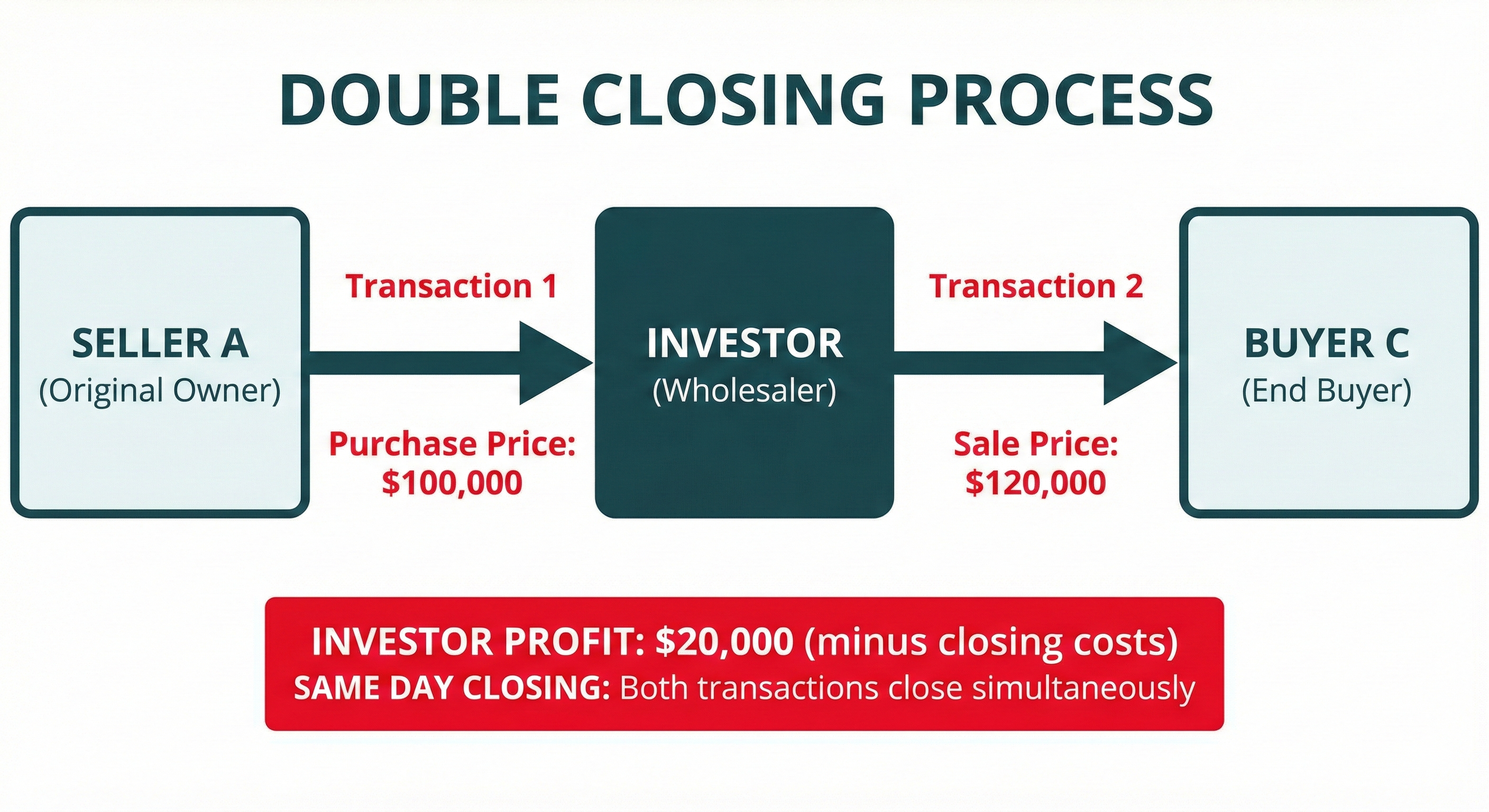
Assignment Transactions
With assignments, you contract to purchase a property but then "assign" your rights in that contract to another buyer for a fee. It's a straightforward way to profit without ever owning the property.
Goliath Data explains: "Unlike double closings where you appear on the chain of title, assignments allow you to transfer your purchase rights to another buyer without ever taking ownership of the property."
A good investor-friendly title company will support your assignment deals by:
- Creating proper assignment documentation
- Explaining the process to all parties
- Handling the disclosure requirements that vary by state
- Managing earnest money transfers
- Ensuring the original contract permits assignment
Subject-To Transactions
Subject-to deals let you purchase properties "subject to" the existing mortgage. You take over the payments without formally assuming the loan—a creative approach that can open doors to great opportunities.
An investor friendly title company will have your back by:
- Properly documenting the transfer of ownership
- Explaining the risks to all parties
- Creating appropriate disclosure forms
- Handling the title transfer while acknowledging the existing financing
- Advising on due-on-sale clause implications
Land Contracts
Land contracts (also known as contracts for deed) are seller-financing arrangements where you make payments directly to the seller while they retain legal title until the contract is fulfilled.
Investor friendly title companies manage these by:
- Drafting or reviewing the land contract documentation
- Recording the appropriate notices to protect buyer interests
- Conducting preliminary title searches
- Setting up escrow services for payments when needed
- Facilitating the eventual deed transfer when the contract is fulfilled
Entity Purchases
If you're like many savvy investors, you might use an LLC, corporation, or trust to hold your properties. This smart move does add a few extra steps to your transactions.
A title company that works well with investors will:
- Verify your entity documentation and authority to transact
- Ensure proper vesting of the property in your entity's name
- Address special requirements for certain entity types
- Handle additional documentation required for entity transactions
- Navigate state-specific regulations regarding entity purchases
Special Considerations for Each Transaction Type
Every transaction structure brings its own set of challenges. Here's where investor friendly title companies really earn their keep—by anticipating and addressing these considerations before they become problems:
- For double closings: Funding gaps between transactions and disclosure requirements
- For assignments: Transparency with the original seller and end buyer
- For subject-to transactions: Due-on-sale clause risks and liability management
- For land contracts: Proper recording to protect all parties' interests
- For entity purchases: Proper documentation of signing authority and entity good standing
The best investor friendly title companies don't just understand these transaction types—they stay on top of changing regulations and best practices so your closings go smoothly, no matter how complex the deal.
Understanding Title Company Fees and Closing Costs for Investors
Let's talk money. As a real estate investor, you need to know exactly what fees you'll encounter at the title company so you can budget accurately and protect your profits. Title company fees often make up a big chunk of your closing costs, and these can swing quite a bit depending on where you're buying and what type of deal you're doing.
Breakdown of Typical Title Company Fees
Here's what you can expect most title companies to charge as part of their services:
- Title search fee: $75-$200, covering the research into the property's ownership history
- Title insurance premium: Typically 0.5% to 1% of the purchase price, protecting against ownership disputes
- Settlement or closing fee: $300-$600, for handling the paperwork and facilitating the closing
- Recording fees: $25-$250, for filing documents with local government offices
- Escrow fees: $300-$700, for managing funds during the transaction
According to data from Bankrate, the average closing costs (including title fees) range from 2% to 5% of the loan amount, with title-related services accounting for a substantial portion of these expenses.
Fee Variations by State and Region
Title fees vary significantly across states due to different regulations and market conditions. Here's what you should know:
- New York, Delaware, and Washington, D.C. have some of the highest title insurance costs
- Indiana, Iowa, and Missouri tend to have lower title insurance rates
- California has relatively high title fees but offers more competition among providers
The Alita Group reports that title insurance costs alone can range from $544 in Iowa to $2,190 in New York for a $300,000 property.
Costs to question
Its worth a follow up email to discuss your fees with your title company if you see multiple fees on your settlement statement from below categories because you might not logically need to have to pay for those services. Keep in mind many fees aren't negotiable but its worth to politely investigate the reason for suspicious fees.
- Wire transfer fees: $25-$50 per transfer
- Document preparation fees: $50-$250
- Courier/delivery fees: $30-$100
- Notary fees: $25-$150
- Email/electronic document fees: $25-$100
How Smart Investors Cut Title Costs
Here's the good news: you have more control over these expenses than you might think. Try these proven strategies:
- Shop around: Title insurance rates aren't set in stone. Get quotes from several providers and you'll likely find room to save
- Ask for the "reissue rate": If the property had title insurance in the last 5-10 years, you could snag a discount of 25-40%
- Bundle your services: Many title companies will cut you a deal when they handle multiple parts of your closing
- Build relationships: When you bring repeat business to the table, you've got leverage to negotiate better rates
- Look for investor packages: Title companies that work with investors often have special pricing for frequent closers
As Hera Title points out, "Investors who close multiple properties per year can often negotiate reduced fees with title companies that value their repeat business".
The bottom line? Know your fees, negotiate strategically, and watch your transaction costs shrink—putting more money back into your investment returns.
When and How to Replace a Title Company
Let's face it: not every transaction runs smoothly. Sometimes you need to switch title companies mid-deal. Knowing when to make that call—and how to do it right—can save your sanity and possibly your entire transaction.
Warning Signs It's Time to Make a Switch
Keep an eye out for these red flags:
- Radio silence - Your title company takes forever to respond or leaves simple questions hanging for days
- Mistake after mistake - Documents come back with errors in calculations, legal descriptions, or other details that need constant fixing
- Missed deadlines - Failure to meet agreed-upon timelines without valid reasons
- Lack of investor experience - Confusion about investor-specific transactions like assignments or double closings
- Unexplained fee increases - Adding charges that weren't disclosed in the initial fee estimate
As DC Title Guy puts it, "If you've had more than one negative experience with your title company, it's probably time to look elsewhere. Your title company should make your job easier, not harder".
Step-by-Step Process for Switching
Ready to make the move? Here's your roadmap to a seamless transition:
- Review your contract - Look for any clauses about title company selection
- Find a replacement - Line up a new investor-friendly title company before you pull the trigger
- Notify all parties - Give the seller, buyer, agents, and lenders a heads-up about the change
- Request a formal transfer - Have your new title company reach out to grab the file from the old one
- Transfer earnest money - Make sure any deposits move safely to the new escrow account
- Update the sales contract - Sign an amendment naming your new title company
Federal Title explains, "The buyer and seller must execute an amendment to the sales contract that identifies the new settlement agent" .
Legal Considerations
Before you switch, keep these legal factors on your radar:
- Contract provisions - Most real estate contracts spell out who gets to pick the title company
- State laws - Your state may have specific rules about mid-transaction changes
- Timing constraints - The closer you are to closing, the trickier the legal landscape gets
- RESPA regulations - Stay aware of laws that prohibit kickbacks or unearned fees between providers
Minimizing Delays and Disruptions
Want to keep your deal moving forward? Here's how:
- Act quickly - The earlier in the process you make the switch, the less disruption it will cause
- Provide complete information - Give your new title company all relevant documents immediately
- Follow up consistently - Verify that all necessary transfers and communications have occurred
- Consider closing timeline - Understand that a switch may necessitate extending your closing date
- Document everything - Keep records of all communications regarding the switch
Communication Strategies with All Parties
When you're swapping title companies, clear communication keeps everyone on the same page:
- Be transparent - Let all parties know why you're making the change
- Remain professional - Skip the negative talk about the previous title company
- Provide written notification - Send formal emails or letters to create a solid paper trail
- Coordinate directly - Help your old and new title companies connect with each other
- Set expectations - Give everyone a heads-up about potential timeline shifts
Here's the bottom line: you absolutely have the right to switch title companies, but it takes some careful planning to keep your deal on track. The smart move? Start with OfferMarket's vetted list of investor friendly title companies from day one, and you'll likely avoid this headache altogether.
Technology That Streamlines Real Estate Closings
Let's face it—today's real estate market moves fast. That's why investor-friendly title companies are embracing cutting-edge technology to speed up closings and boost efficiency. These digital tools don't just save you time; they also beef up security and make the whole process more convenient for you as an investor.
Digital Closing Platforms
The best title companies now use powerful digital closing platforms that bring everything together in one place. Tools like Qualia have changed the game by handling title production, document management, and client communication all under one roof. The result? Your deals close faster, and you spend less time waiting around.
"Qualia is the leading comprehensive digital closing platform used by title, escrow, real estate, and mortgage lending professionals to transform home buying and selling into simple, secure, and enjoyable experiences for millions of homeowners each year," according to industry reports.
Remote Closing Capabilities
Here's great news for busy investors: many investor-friendly title companies now offer remote closing options, so you can skip the in-person meetings entirely. This is a game-changer if you're managing properties across different regions or states. Remote closings work just like traditional ones, but with digital verification methods that let you:
- Verify your identity virtually
- Review all documents from your computer or tablet
- Sign paperwork electronically
- Complete your transaction from anywhere with internet access
Electronic Document Signing
E-signing technology has become standard among forward-thinking title companies, and that's good news for your bottom line. Electronic signature platforms integrated with title software let you sign closing documents securely from any device. The result? No more paper shuffling, fewer errors, and a much faster path to closing day.
According to experts at Elevated Title, "Technology has transformed what was once a time-consuming, paper-heavy process into a streamlined digital workflow, allowing for faster, more accurate title searches and closings".
Secure Fund Transfers
Let's talk about protecting your money. Wire fraud prevention technology has become essential for investor-friendly title companies. The best platforms now use bank-level encryption and multi-factor authentication to safeguard your financial information during closings. These systems verify banking details and provide confirmation protocols that help prevent costly wire fraud—a critical safeguard when you're transferring large sums.
Client Communication Portals
Investor-friendly title companies increasingly offer dedicated online portals and communication platforms that provide:
- Real-time transaction status updates
- Secure document sharing
- Direct messaging with closing teams
- Milestone notifications
- Closing cost calculators
These tools keep you in the loop throughout the closing process—no more constant phone calls or chasing down updates via email. This kind of transparency is a game-changer when you're managing multiple deals at once.
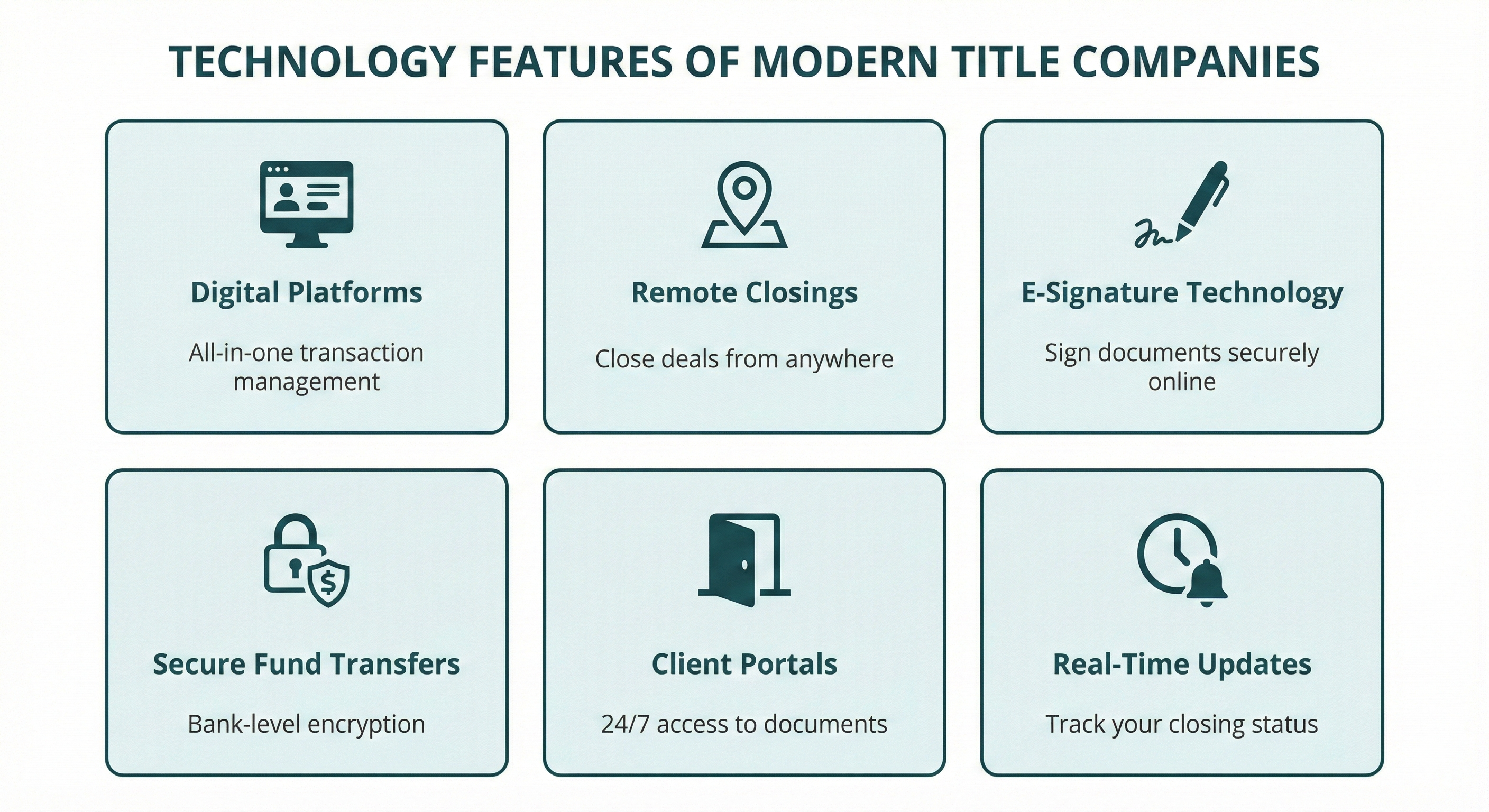
When a title company embraces these technological innovations, they're showing you they value your time, your security, and your success. And that's exactly what you need as an investor looking to close deals quickly and smoothly.
Why Choose OfferMarkets Vetted List of Title Companies?
Let's face it: finding a reliable investor friendly title company can feel like searching for a needle in a haystack—especially when you're working across multiple markets or stepping into unfamiliar territory. That's where OfferMarket comes in. We've done the legwork for you by building a comprehensive, carefully vetted list of title companies that truly understand real estate investors. This list of investor friendly title companies is organized by number of completed transactions through OfferMarket's lending platform guaranteeing that they were completed with real estate investors rather then retail buyers.
Our Vetting Process
We don't just throw together a random list of title companies. Every company in our network has to have at least one completed transaction with a real estate investor. This means that these title companies:
- Have experience working with real estate professionals
- Are able to cooperate between multiple parties such as real estate focused lenders, wholesalers and professional buyers and sellers of real estate
- Were successful at getting a transaction to the finish line
This careful vetting means only genuinely investor friendly title companies make the cut—saving you hours of research and potential headaches down the road
Benefits of Our Title Company Network
When you tap into OfferMarket's title company list, you get some real advantages:
Verified Transaction Data: Know for certain that these companies have real experience working with real estate investors
Comprehensive Contact Information: Connect directly with title professional that can answer your questions
Nationwide Coverage: Whether you're investing in Florida, Texas, or Oregon, our network includes vetted title companies across the country.
As one real estate investor shared on a popular forum, working with the right title company can make or break a deal: "The difference between a good and bad title company is night and day. A good one will actively help solve problems rather than just pointing them out".
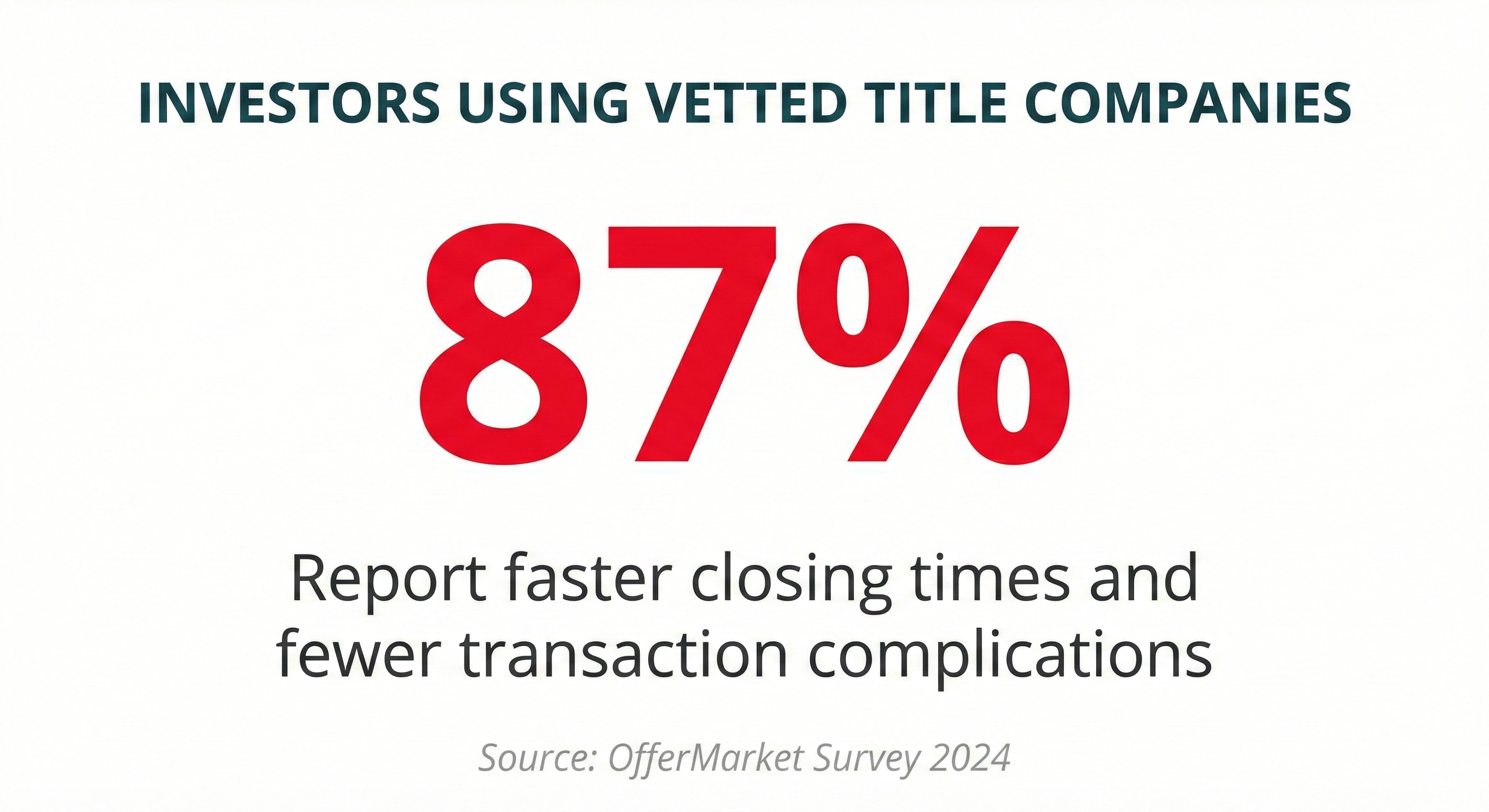
Here's the bottom line: the title company you choose can make or break your deal. With OfferMarket's network of vetted, investor friendly title companies, you'll streamline your transactions and close with confidence every time.
Local vs. National Title Companies: Making the Right Choice for Your Investment Strategy
One of the first choices you'll make when looking for an investor friendly title company is this: local boutique or national chain? Both have their strengths and trade-offs, and understanding them will help you make smarter decisions for your portfolio.
Local Title Companies: The Hometown Advantage
Local title companies bring something big chains often can't: personalized service. According to Federal Title, "Local title companies have established relationships with county clerks and recorders who maintain property records, which can be invaluable when researching title issues" (Federal Title). Those connections can help you resolve problems faster and keep your closing on track.
Here's what local firms typically bring to the table:
- Deep knowledge of local real estate practices and regulations
- Established relationships with local recording offices
- More flexible and personalized service
- Ability to meet in person when needed
- Familiarity with local market conditions and common title issues
That said, local companies do have some limitations:
- Limited geographic coverage for multi-state investors
- Potentially fewer technological resources
- May have smaller staff and limited availability
National Title Companies: Scale and Consistency
If you're investing across multiple states, national title companies offer something valuable: consistency and broad coverage. "National title companies often have more standardized processes and technology platforms, which can create consistency across transactions in different states," notes Blueprint Title (Blueprint Title).
Here's what national chains typically bring to the table:
- Consistent processes across multiple states
- Advanced technology platforms
- Larger staff and broader availability
- Potentially more competitive rates due to economies of scale
- Established relationships with national lenders
But there are some trade-offs to consider:
- Less personalized service
- Potential lack of local market expertise
- Standardized approach that may not accommodate unique situations
Making the Right Choice for Your Investment Strategy
Let your investment approach guide your decision between local and national title companies:
If you're investing in a single market: Local title companies often deliver better service when you're focused on one geographic area. Their deep knowledge of local regulations and potential pitfalls can save you headaches down the road.
If you're investing across multiple states: National firms offer the convenience and consistency you need. As one investor on BiggerPockets shared, "Having a title company that can handle transactions in multiple states saves me from having to research and build relationships with different companies in each market" .
If you're tackling complex deals: Local boutique firms are often more willing to work with creative strategies like double closings or subject-to transactions that some national chains might shy away from.
If you're closing deals at high volume: You may benefit from the scalability and potential volume discounts that national companies can offer.
Here's the bottom line: it doesn't have to be either/or. Many successful investors build relationships with both local and national title companies, choosing strategically based on each transaction's specific requirements and location.
Key Takeaways
- Investor friendly title companies offer specialized services including handling complex transactions like double closings, assignments, and wholesale deals
- The right title company should demonstrate experience with investor transactions, maintain clear communication, and provide transparent fee structures
- Building strong relationships with your title company can lead to smoother closings and better long-term outcomes
- Understanding the differences between attorney and title company states is crucial for navigating real estate transactions properly
- Regular evaluation of your title company's performance ensures they continue to meet your evolving investment needs
Action Steps for Finding Your Next Title Company
- Create a list of potential title companies in your target investment area
- Verify their legitimacy by checking their licensing and insurance status
- Interview multiple companies, asking specific questions about their investor experience
- Request references from other investors who have worked with them
- Review their fee structure and closing timeline expectations
Here's a smart move: before signing with any title company, verify their legitimacy through state regulatory agencies and ask for proof of insurance. Taking time for proper due diligence protects you from potential fraud and keeps your transactions running smoothly.
OfferMarket Loans
Check your rate
60 seconds · no credit pull