Landlord Insurance Arkansas
Last updated: September 21, 2026
Arkansas landlords do not lose sleep over a slow month of rent. They lose it over the 190-mph wind that arrives with four minutes of warning. On March 14, 2025, two EF-4 tornadoes tore across Arkansas on a single day, part of a spring that produced more than 47 confirmed tornadoes and 144 tornado warnings in 30 days. The Natural State ranks second in the nation for tornado deaths per capita, and that is before you count the New Madrid fault under its northeast corner or the Arkansas River flooding that caused an estimated $3 billion in damage in 2019.

Landlord insurance in Arkansas is the coverage that stands between your rental income and that storm. It protects the structure, defends you when a tenant is injured, and replaces the rent you lose while the property sits uninhabitable through a rebuild. A homeowners policy does none of that on a rented house, and it can be voided outright the moment the carrier learns a tenant lived there.
Arkansas is not a cheap insurance state, and pretending otherwise costs owners money. Homeowners premiums here run well above the national average because of tornado and hail exposure, and landlord policies price off the same risk. That is exactly why the wrong policy or a missing endorsement hurts more in Arkansas than in a calmer market. OfferMarket shops 40+ carriers who compete for Arkansas business, with Arkansas-specific quality control on every quote, and matches coverage to strict lender requirements, especially for DSCR loans, without eating your cash flow.
"The first rule in investment is don't lose and the second rule in investment is don't forget the first rule." - Warren Buffett
Landlord Insurance Arkansas: Coverage Areas
Wherever your Arkansas rental property is based, our insurance network has you covered for landlords:
- Little Rock
- Fayetteville
- Fort Smith
- Springdale
- Jonesboro
- Rogers
- Conway
- And beyond
Our specialized coverage spans the diverse landscapes and neighborhoods unique to Arkansas, protecting your rental investments.
💡 Pro tip: Arkansas's tornado and hail exposure, especially across the central counties and the Arkansas River Valley, makes roof age the single biggest factor in your quote. Having a recent 4-point inspection and roof documentation ready can speed up underwriting and unlock preferred pricing, particularly for homes with roofs older than 15 years.
How Much Does Landlord Insurance Cost in Arkansas?

Arkansas landlord insurance runs a median of about "$1,457 per year", according to 2026 industry reports, which places it just above the national average. Most single-family rentals fall in a "$800 to $2,400 per year" range depending on the property, and landlord (DP-3) policies typically cost 15% to 25% more than a homeowners policy on the same building because they add liability and loss-of-rent coverage.
Do not mistake Arkansas for a cheap-insurance state. Homeowners premiums here run well above the national average, driven by one of the highest tornado and hail exposures in the country, and landlord rates price off the same storm risk. The single biggest lever on your premium is roof age and construction, because carriers price for the near-certainty of a severe-storm claim.
Location within Arkansas moves the number:
| Region | Primary Cost Driver |
|---|---|
| Little Rock / Central Arkansas | Highest tornado activity in the state, urban liability |
| Northwest (Fayetteville, Rogers, Springdale) | Hail, severe storms, fast-growing rental demand |
| Fort Smith / Arkansas River Valley | Flash flooding, straight-line wind |
| Northeast (Jonesboro, Marked Tree area) | New Madrid earthquake exposure, tornado |
The figures above are 2026 industry survey ranges and reflect typical single-family rentals. They are ranges, not a quote. Your actual premium depends on dwelling replacement cost, form, deductible, roof age, and claims history.
Want your real rate instead of a survey average? Shop 40+ carriers free
Why Arkansas Landlords Need Landlord Insurance
The case for landlord insurance in Arkansas is not abstract. It is a list of specific dollar losses a single event can hand you.
Start with the weather. Arkansas sits where Tornado Alley meets Dixie Alley, and it shows: more than 47 confirmed tornadoes in 2025 alone, two of them EF-4s with 190-mph winds on March 14, and 144 tornado warnings in a single 30-day stretch. The state ranks second nationally for tornado deaths per capita. Hail and ice storms compound the exposure, and a single supercell can total a roof in minutes. A structural rebuild on a typical single-family rental runs well into six figures, and lost rent stacks on top while the unit is uninhabitable.
Then the two perils owners routinely overlook. Northeast Arkansas sits over the New Madrid Seismic Zone, a 150-mile fault system running through Marked Tree, and the USGS puts the odds of a magnitude 6.0 or greater quake in the region at 25% to 40% over 50 years. A standard landlord policy excludes earthquake entirely. Flooding is the other gap: the 2019 Arkansas River flood caused an estimated $3 billion in damage and breached levees between Fort Smith and Little Rock, and no standard policy covers a foot of river water on your ground floor.
Then the liability and legal exposure. If a tenant slips on icy steps in Fayetteville or a contractor is injured during a repair in Fort Smith, you can be sued for medical bills, lost wages, and legal defense. Arkansas landlord-tenant law (Ark. Code 18-16-301 and following) also sets duties on deposits: for landlords who own six or more units or use a paid manager, the deposit is capped at two months' rent, must be returned within 60 days with an itemized statement, and a wrongful withholding exposes you to the amount due plus twice that amount in damages, court costs, and attorney's fees under Ark. Code 18-16-306.
Arkansas law does not require landlord insurance. Your lender does. Any financed property, and every DSCR loan, mandates it. But the lender requirement is the floor, not the reason. The reason is that in a state this exposed to wind, hail, quake, and flood, preserving your capital is a year-round job.
Protect your cash flow before the next storm. Get your free quote
What Risks Does Landlord Insurance Cover in Arkansas?

A comprehensive Arkansas landlord insurance policy typically includes:
- 🏠 Property insurance
- ⚖️ General liability insurance
- 💸 Business interruption insurance
- 🌊 Flood insurance (especially critical for Arkansas flood-prone areas)
Property Insurance
In Arkansas, the primary risk for landlords is damage to the property itself. This can result from storms common in the region, fire, or accidental damage. Your landlord insurance can also cover temporary lodging expenses for tenants if the property is rendered uninhabitable due to covered damage.
Arkansas landlords choose from three property insurance forms: Basic, Broad, and Special Form, each covering a different scope of risks called "perils." The table below compares them on the factors that decide whether a claim actually rebuilds your property.
| DP-1 (Basic Form) | DP-2 (Broad Form) | DP-3 (Special Form) | |
|---|---|---|---|
| Coverage Type | Named perils only. If a peril is not listed, it is not covered. | Broad named perils. Adds burst pipes, ice and snow weight, falling objects, and more. | Open perils. Covers all causes of loss unless specifically excluded. The broadest protection. |
| Payout Method | Actual Cash Value. Deducts depreciation. An old roof pays like an old roof. | Replacement Cost on the dwelling. | Replacement Cost at today's construction prices. |
| Loss of Rent | Not included. | Included. Reimburses lost rent during covered repairs. | Included. Critical after a tornado rebuild. |
| Best For | Vacant properties or major rehabs on a tight budget. | Landlords wanting broader cover without full open-perils pricing. | Recommended for occupied Arkansas rentals. The gold standard. |
Basic Form Perils in Arkansas
Basic property insurance covers fundamental risks such as:
- 🔥 Fire
- 🌩️ Lightning
- 💥 Internal explosion
Extended Coverage (EC) Perils in Arkansas
Arkansas landlords often add extended coverage using the mnemonic WCcSHAVVER, which includes:
- 🌬️ Windstorm (important given Arkansas's exposure to severe winds)
- 🦹♂️ Civil commotion
- 🔥 Smoke damage
- 🌨️ Hail (hailstorms are common in Arkansas)
- ✈️ Aircraft damage
- 🚗 Vehicle impact
- 🌋 Volcanic action (rare in Arkansas but still listed)
- 💥 Explosion
- ❗ Riot
Plus vandalism and malicious mischief (V&MM):
- 🏚️ Vandalism
- 🦹♂️ Malicious mischief
Broad Form Perils
Arkansas landlord policies often include broad form perils, remembered by BIG AFFECT:
- 🥷 Burglary damage
- 🧊 Ice, sleet, snow (heavy winter weather can occur)
- 🪟 Glass breakage
- 🚰 Accidental water discharge
- 🧊 Freezing of pipes or appliances
- ✈️ Falling objects
- ⚡ Electrical current damage
- 🏚️ Collapse
- 💥 Tearing asunder
Special Form Peril (DP-3)
The most comprehensive landlord insurance, Special Form, covers all direct physical losses except those specifically excluded. In Arkansas, exclusions often include:
- 🌊 Flood damage (requires separate flood insurance)
- 🌎 Earthquake (a real exposure in northeast Arkansas near the New Madrid zone; requires an endorsement)
- 🤡 Intentional damage
- ⚠️ Building code enforcement issues
- 🔌 Off-premises power failure
- 🇺🇸 Government seizure
The Two Perils Arkansas Landlords Miss: Earthquake and Flood
⚠️ Critical warning: A standard landlord policy excludes both earthquake and flood, and in Arkansas both are real.
Earthquake. The old assumption that Arkansas quakes are "rare" is out of date. Northeast Arkansas sits over the New Madrid Seismic Zone, a 150-mile fault running through Marked Tree, and the region records 250 to 300 small earthquakes a year. The USGS estimates a 25% to 40% chance of a magnitude 6.0 or greater quake in the next 50 years, and a magnitude 6.3 struck near Lepanto in 1976. A quake endorsement uses a percentage deductible (a share of the building's value, not a flat dollar figure), so buy it deliberately if you own in the northeast counties.
Flood. Flooding along the Arkansas and Mississippi rivers and their tributaries is a recurring, expensive event. The 2019 Arkansas River flood caused an estimated $3 billion in damage and breached levees between Fort Smith and Little Rock. Standard landlord policies exclude all flood damage. If your property sits in a low-lying area or near a river, you need a separate NFIP or private flood policy (see the flood section below).
General Liability Insurance in Arkansas
Liability coverage protects Arkansas landlords if someone is injured or their property damaged on your rental premises. Most Arkansas landlord policies cover "$100,000 to $1,000,000" per incident and "$1,000,000 to $2,000,000" annually. Standard landlord policies commonly write $300,000 to $2 million in liability per occurrence.
If a tenant slips on icy steps in Fayetteville or a contractor suffers injury during repairs in Fort Smith, your liability insurance covers medical expenses and legal costs.
- ⚖️ Injury liability
- 🚑 Lawsuits
Business Interruption Insurance (Loss of Rent) in Arkansas
Arkansas landlords also face lost rental income if a covered event forces tenants to vacate, such as severe storm damage. Business interruption insurance compensates for this income loss, typically costing about "$1 per $1,000 of annual rent". For example, on $40,000 annual rent, expect an extra $40 premium for this coverage. Given how long a post-tornado rebuild can take when contractors are stretched across a whole region, this coverage is not optional for a leveraged rental.
Flood Insurance in Arkansas
Flood insurance is critical in Arkansas due to frequent flooding in low-lying areas like along the Arkansas River and the Mississippi Delta. If your property falls within a FEMA-designated Special Flood Hazard Area, flood insurance is typically mandatory. Lenders require flood certificates, and premiums vary by Arkansas flood risk zone.
What Arkansas landlords should know:
NFIP limits: The National Flood Insurance Program caps a 1-4 family dwelling at $250,000 on the building and $100,000 on contents. If your loan exceeds $250,000, a lender may require excess or private flood coverage.
The 30-day rule: A new NFIP policy carries a 30-day waiting period before it takes effect (waived for loan-triggered purchases). Do not wait for a flood warning to buy.
River-valley risk: The 2019 Arkansas River flood is the reminder that inland flooding is a dollars-and-cents threat, not a coastal one. Flood coverage is separate from landlord insurance but vital to fully protect Arkansas rental properties. To understand how they fit together, read our guide on landlord vs flood insurance.
Comparing Arkansas Landlord Insurance to Homeowner's Policies

Homeowners insurance and landlord insurance are not interchangeable in Arkansas, and using the wrong one is a claim-denial risk, not a savings move. A homeowners policy is written for a home you occupy. The moment a tenant moves in, that policy can be voided for occupancy, and it never covers lost rent or landlord liability. The table below shows where the two forms diverge for an Arkansas rental.
| Coverage Factor | Homeowners Policy (HO-3) | Landlord Policy (DP-3) |
|---|---|---|
| Tenant-occupied property | Not covered. A claim can be denied once the carrier learns the home was not owner-occupied. | Covered. Written specifically for tenant-occupied dwellings. |
| Loss of rent | Not included. | Included. Reimburses lost rent after a covered loss. |
| Landlord liability | Covers the resident owner, not landlord-tenant exposure. | Covers tenant and guest injury claims. |
| Rental / business use | Excluded as a commercial use. | Built for the business of renting property. |
| Tornado / wind / hail | Covered for an owner-occupied home. | Covered, the core Arkansas peril. |
| DSCR / lender compliance | Not accepted for a financed rental. | Required. Meets DSCR loan guidelines. |
Landlord Insurance for DSCR Loans in Arkansas
Are you financing your Arkansas rental property with a Debt Service Coverage Ratio (DSCR) loan? DSCR lenders have strict insurance requirements that may be challenging to meet without an insurance agency specializing in landlord insurance Arizona.
Your insurance premium directly impacts your DSCR calculation, which affects how much financing you qualify for. To optimize your cash flow and secure the best loan amount, it’s essential to obtain cost-effective landlord insurance Arkansas policies.
Use our specialized DSCR and cash flow calculators designed for Arizona rental investors to see how insurance premiums influence your loan eligibility and net income.

| DSCR Loan Insurance Requirement | Required? |
|---|---|
| Property Insurance | Yes |
| General Liability Insurance | Yes |
| Business Interruption Insurance | Yes |
| Mortgagee Clause | Yes |
| Lender as Additional Insured | Sometimes |
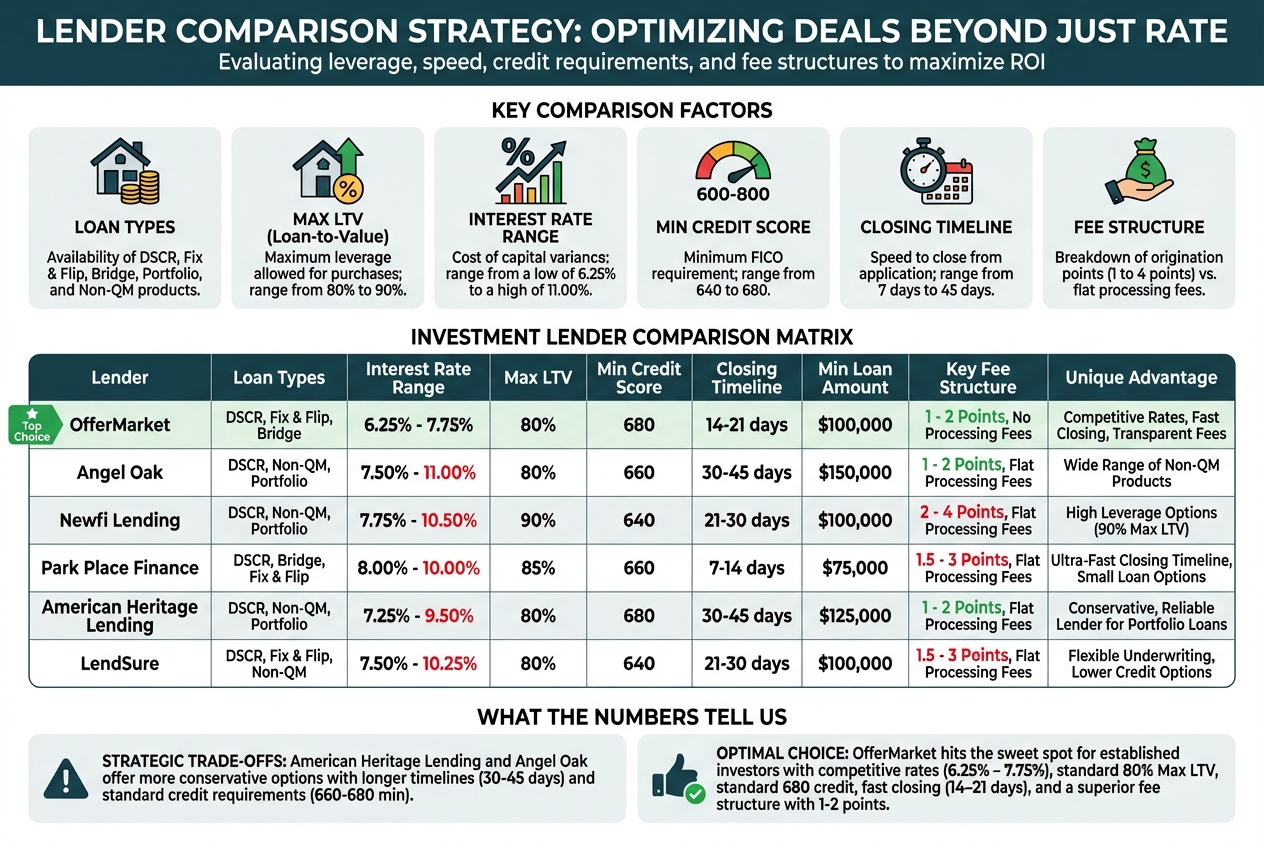
OfferMarket Insurance rate shopping helps Arkansas landlords manage DSCR loan insurance requirements by delivering quotes aligned with lender rules while reducing your overall costs. If you finance through OfferMarket Capital, both your loan and insurance are managed seamlessly in one place—streamlining every step.

What Moves Your Premium in Arkansas

Landlord insurance pricing in Arkansas depends on several factors.
Location
Arkansas carriers weigh historical claims in your local market. Urban areas like Little Rock or Fayetteville price differently than rural counties, and central Arkansas carries the state's highest tornado activity. Regional repair costs and roof-claim frequency also move premiums.
Property Insurance Type
| Property Insurance Type | Relative Cost |
|---|---|
| Basic Form (DP-1) | Lowest (baseline) |
| Basic Form + Extended Coverage | Low |
| Broad Form (DP-2) | Moderate |
| Special Form (DP-3) | Highest |
Special Form is best for Arkansas landlords seeking the broadest protection against wind, hail, and tornado.
Dwelling Coverage Amount
The size of your dwelling coverage is the largest cost factor. Arkansas landlords should insure to full replacement cost to avoid coinsurance penalties.
| Dwelling Coverage Type | Relative Cost |
|---|---|
| Actual Cash Value | Lowest |
| Functional Replacement Cost | Moderate |
| Replacement Cost Value | Highest |
Deductible
| Deductible | Relative Premium |
|---|---|
| $1,000 | Highest |
| $2,500 | High |
| $5,000 | Moderate |
| $7,500 | Low |
| $10,000 | Lowest |
Higher deductibles lower your annual Arkansas landlord insurance premium. Note that many Arkansas policies carry a separate, often percentage-based, wind and hail deductible given the storm exposure.
Claim History
Arkansas landlords with frequent or severe claims on their properties or personal records face higher premiums. Insurers use CLUE reports specific to Arkansas addresses to assess risk, and a history of roof or water claims weighs heavily.
Crime Score
In Arkansas, crime rates vary widely between urban centers and rural areas. Properties in neighborhoods with elevated crime scores (for example, parts of Little Rock or Pine Bluff) may see higher premiums or coverage restrictions.
Property Condition
Arkansas rental properties in good repair, with modern electrical, plumbing, HVAC, and especially a newer roof, typically enjoy better premiums. Properties needing repairs or with hazards like lead paint may face higher costs or exclusions.
How to Protect Your Arkansas Rental Property
Beyond insurance, safeguard your Arkansas rental investment with these best practices:
Tenant Screening
Use credit checks and background screenings for Arkansas renters, with firm criteria to reduce risk.
Regular Maintenance
Inspect quarterly, especially after Arkansas storms. Watch for roof leaks, mold, and water intrusion, common in the state’s humid climate.
Tenant Maintenance Education
Educate tenants on basic upkeep, like winterizing pipes to prevent freeze damage during Arkansas cold snaps.
DP-3 Insurance

DP-3 policies](https://www.offermarket.us/blog/dwg-3-insurance-policy) are preferred in Arkansas for replacement cost coverage that best protects your investment against the state's wind and hail exposure.
OfferMarket's DP-3 Coverage Benchmarks
When you get a landlord insurance quote through OfferMarket, the in-house team reviews every quote against these benchmarks:
- 🏠 Dwelling Coverage: Full replacement cost value with zero coinsurance
- 💵 Deductible: Flat $5,000 across all perils (watch for separate wind/hail deductibles)
- ⚖️ Premises Liability: $500,000 per occurrence minimum
- 💸 Loss of Rent: Up to 12 months of rental income
- 📋 Ordinance or Law: Included (typically 10% of dwelling coverage)
- 🚰 Water Backup: Included (typically $5,000)
- 🏗️ Loss Settlement: Replacement Cost Value on dwelling, other structures, and personal property
If any of these are missing, below benchmark, or structured in a way that would leave you exposed, the team flags it and works to correct it before the policy is bound. This is the QC layer that separates getting a quote from getting the right coverage.
What is Coinsurance?
Arkansas landlords should insure properties at least 80% of replacement cost to avoid costly penalties during claims.
Coinsurance Formula:
(Insurance Carried ÷ Insurance Required) × Loss - Deductible = Claim Payment
Example: If an Arkansas property has a replacement cost of $200,000 but is insured for $100,000 with a $5,000 deductible and suffers $50,000 in damage:
($100,000 ÷ $200,000) × $50,000 = $25,000 - $5,000 = $20,000 payout, leaving $30,000 out of pocket. This is why it is so important to insure at full replacement cost with zero coinsurance.
Best Landlord Insurance in Arkansas

Choosing the right Arkansas landlord insurance depends on your risk tolerance, budget, and the depth of your coverage. A comprehensive policy includes property, liability, business interruption, and flood insurance if needed, plus an earthquake endorsement for northeast Arkansas.
Partnering with an Arkansas-specialized insurance agency that accesses many carriers ensures the best price and coverage. Start your Arkansas landlord insurance quote today with OfferMarket Insurance!
How to Get Landlord Insurance Arkansas Through OfferMarket

OfferMarket takes the stress out of securing landlord insurance in Arkansas. Our team connects you directly with underwriters who understand the challenges of leasing property across the state, whether you are in Little Rock, Fayetteville, Fort Smith, Jonesboro, or a smaller Arkansas community.
What You Need for a Quote
Getting a comprehensive quote is fast and easy. Having the following information ready will streamline the process:
- 🏠 Coverage Type: Specify if you need Landlord Insurance or coverage for a property under renovation Fix and Flip Insurance.
- 📍 Property Address: The full address of the rental property you need to insure.
- 💵 Monthly Rent: The current or projected monthly rental income.
- 🏢 Entity Name: How you hold the title (e.g., your LLC, a trust, or your personal name).
- 🏗️ Dwelling Coverage: Your best estimate of the cost to rebuild the property.
- 📅 Effective Date: When you need the policy to start (e.g., your closing date).
- 📋 Claims History: The number of property claims you've filed in the last 5 years.
- 📬 Mailing Address: Your personal or business mailing address.
- 🎂 Date of Birth: A standard requirement for identity verification by carriers.
The OfferMarket Arkansas Advantage
- Fast quotes, usually within 24 hours
- Custom-tailored policies for 1 to 100+ Arkansas properties
- Flexible support for all ownership structures: personal, LLC, C-Corp, S-Corp, revocable trust, land trust, or LP
- Expertise with lender requirements for Arkansas projects
- Competitive pricing sourced from top national and regional carriers
- Instant COI (certificate of insurance) generation for your Arkansas closing
- Secure storage of all insurance records in your OfferMarket Insurance File
Landlord Insurance Guidelines
| Coverage Type | Requirement |
|---|---|
| Property Insurance | Mandatory |
| AM Best Rating | A- VIII or higher |
| Term | 1 Year |
| Limits | 80% RCV or Loan Amount (whichever is greater) |
| Deductible | $5,000 |
| Policy Type | Dwelling Fire (Special Form), Commercial Property (Basic or Special Form) |
| Cancellation | 30 days notice |
| Exclusions | No windstorm/hail exclusions |
| Lender’s Designation | Mortgagee |
General Liability Coverage
| Coverage Detail | Requirement |
|---|---|
| General Liability Insurance | Mandatory |
| AM Best Rating | A- VIII or higher |
| Term | 1 Year |
| Limits | Minimum $100,000 per occurrence; $500,000 preferred; $1,000,000 aggregate |
| Deductible | $1,000 |
| Coverage Basis | Occurrence (not claims-made) |
| Cancellation Notice | 30 days |
| Lender Designation | Additional Insured (sometimes) |
Business Interruption Insurance
| Coverage Detail | Requirement |
|---|---|
| Business Interruption Insurance | Mandatory |
| AM Best Rating | A- VIII or higher |
| Term | 1 Year |
| Limits | One year of effective gross rental revenue |
| Coverage Details | Actual Loss Sustained basis acceptable |
| Cancellation Notice | 30 days |
| Lender Designation | Mortgagee |
Flood Insurance
| Coverage Detail | Requirement |
|---|---|
| Flood Insurance | Mandatory if rental is in flood zone |
| AM Best Rating | A- VIII or higher |
| Term | 1 Year |
| Limits | Greater of $250,000 or loan balance |
| Cancellation Notice | 30 days |
| Lender Designation | Mortgagee |
Additional Details
Lenders require inclusion of their mortgagee clause:
| Mortgagee Clause | OfferMarket Capital LLC ISAOA/ATIMA 627 S Hanover St Baltimore, MD 21230 |
|---|---|
| Condos | - Blanket policy may be used if it allows the individual Unit to be included in coverage. - Homeowner association maintains an “all risk” coverage for common areas, fixtures, personal property, equipment at 100% of their insurable value on a replacement cost basis. |
| PUDs | - Project’s blanket policy may be used if it allows the individual Unit to be included in coverage. - Homeowner association maintains an “all risk” coverage for common areas, fixtures, personal property, equipment at 100% of their insurable value on a replacement cost basis. |
| Instructions | - Use ACORD form to ensure compliance - Send insurance certifications, invoices or paid receipts, no later than 24 hours before closing. - Send final policy documents, no later than 60 days after closing. - Borrower must notify carrier if property becomes vacant or unoccupied and obtain a vacancy permit from the insurance carrier for the entire period of vacancy. |
Frequently Asked Questions About Arkansas Landlord Insurance
Is landlord insurance required in Arkansas?
Arkansas law does not require landlord insurance. However, if your property is financed, your lender requires it, and every DSCR loan mandates it. Beyond the lender requirement, going without coverage in a state this exposed to tornadoes, hail, and flooding means paying for repairs, lawsuits, and lost rent out of your own pocket.
How much does landlord insurance cost in Arkansas?
The median is about "$1,457 per year", with most single-family rentals falling between $800 and $2,400 depending on the property. Arkansas is not a cheap-insurance state, because tornado and hail exposure pushes rates above the national average. A landlord policy runs roughly 15% to 25% more than a comparable homeowners policy. These are ranges, not a quote.
Does landlord insurance cover tornado damage in Arkansas?
Yes. Wind and hail from a tornado or severe storm are core covered perils on a landlord policy, which is exactly why the coverage matters so much here. Note that many Arkansas policies carry a separate, often percentage-based, wind/hail deductible.
Does landlord insurance cover earthquakes in Arkansas?
No. A standard policy excludes earthquake. This matters in northeast Arkansas, which sits over the New Madrid Seismic Zone with a 25% to 40% chance of a magnitude 6.0 or greater quake over 50 years. You must add an earthquake endorsement, which uses a percentage deductible.
Does landlord insurance cover flooding in Arkansas?
No. Flood is excluded from standard landlord policies. Given the Arkansas and Mississippi river systems (the 2019 Arkansas River flood caused an estimated $3 billion in damage), you need a separate NFIP or private flood policy if your property is in or near a flood zone.
What is the difference between DP-1 and DP-3?
DP-1 (Basic) covers only named perils and pays actual cash value, so the payout is depreciated. DP-3 (Special Form) covers open perils, pays replacement cost, and includes loss of rent. DP-3 is the recommended form for occupied Arkansas rentals.
How does OfferMarket Insurance work in Arkansas?
OfferMarket Insurance is a specialized platform helping Arkansas real estate investors find landlord insurance tailored to their rental properties. We shop across 40+ carriers licensed in Arkansas to find the best coverage at the lowest price, ensuring your policy meets both your preferences and Arkansas lender requirements.
Do I need a Builders Risk Policy for my Arkansas rental property?
Builders Risk insurance is only necessary if you are renovating or building a property from the ground up in Arkansas. It is not required for standard landlord insurance policies.
Can I choose Functional Replacement Cost instead of Replacement Cost Value in Arkansas?
This depends on your Arkansas lender's guidelines. Many lenders allow Functional Replacement Cost, but some may require Replacement Cost Value, especially for older properties as indicated in appraisal reports.
Why does my Arkansas lender require to be an Additional Insured?
This is a common request for DSCR loans in Arkansas. Being named as an Additional Insured provides your lender with liability coverage on your policy, protecting their interests beyond the standard Mortgagee Clause.
Can I use my preferred Arkansas insurance agent for my landlord insurance?
Yes, as long as your agent can offer competitive landlord insurance policies that comply with Arkansas DSCR loan guidelines. Agents unfamiliar with landlord insurance or Arkansas-specific regulations may cause delays or higher costs.
Can I pay for my Arkansas landlord insurance at closing?
DSCR loan guidelines usually require that landlord insurance premiums be paid in full at closing, either through the settlement statement or directly to your Arkansas insurance agent before closing.
Is it possible to escrow my Arkansas landlord insurance premium?
Many Arkansas rental property lenders require premium escrow. Your mortgage servicer collects the insurance payment monthly with your mortgage payment and forwards it to the insurance company.
Can I receive a refund if I cancel my Arkansas landlord insurance policy?
Yes, Arkansas insurance carriers must refund unearned premiums on a prorated basis. Make sure to have new coverage active before canceling to avoid any lapse in protection.
What is an AM Best Rating?
AM Best is a rating agency evaluating the financial strength of insurance companies operating in Arkansas. For landlord insurance, carriers should have an AM Best rating of A- VIII or higher to ensure reliability.
What is Builders Risk Insurance in Arkansas?
Builders Risk insurance covers your Arkansas rental property and materials during renovation or construction phases. Coverage typically includes fire, windstorm, vandalism, and theft specific to Arkansas construction risks.
Protect and grow your portfolio with OfferMarket
Landlord insurance in Arkansas is not a luxury; it is a critical line of defense. Between the state's exposure to severe weather "ranging from the EF-4 tornadoes and hail of Tornado Alley to the New Madrid fault and Arkansas River flooding" and the standard risks of tenant liability, experienced Arkansas investors understand that preserving capital is just as important as growing it.
OfferMarket's insurance solutions scale seamlessly with your ambitions, whether you are securing your first rental or managing a diverse portfolio. We ensure you are protected against the specific volatility of the Arkansas market so you can focus on cash flow, not coverage gaps.
Protect your capital. Protect your reputation. Protect your future in Arkansas real estate.
OfferMarket is dedicated to helping Arkansas's rental investors build generational wealth. Our mission is to empower you at every stage of your journey, whether you're investing in 1-4 unit homes in "Little Rock's" established neighborhoods, capitalizing on "Northwest Arkansas's" rapid growth around "Fayetteville and Rogers", or expanding a portfolio across "Fort Smith, Jonesboro," and beyond.
☂️ Landlord Insurance rate shopping platform specialized in landlord insurance that meets DSCR loan guidelines 🏚️ Off Market Properties marketplace featuring hundreds of exclusive and off market deals posted by wholesalers, tired landlords and distressed sellers. 💡 *Insights regularly published to provide you with a knowledge advantage.
OfferMarket Loans
Check your rate
60 seconds · no credit pull