4 Point Inspections Near Me
Last updated: July 16, 2026
Add us on GoogleA 4-point inspection is a targeted risk assessment required by insurance carriers to evaluate four critical systems in a property: the roof, electrical system, plumbing, and HVAC. For real estate investors, particularly those targeting older, value-add properties, this inspection is a crucial chokepoint. Lenders require proof of landlord insurance before funding a loan, and insurers require a 4-point inspection on older homes before issuing a policy. If the inspection reveals significant issues, it can lead to insurance denials or prohibitively high premiums, effectively killing your deal at the closing table.
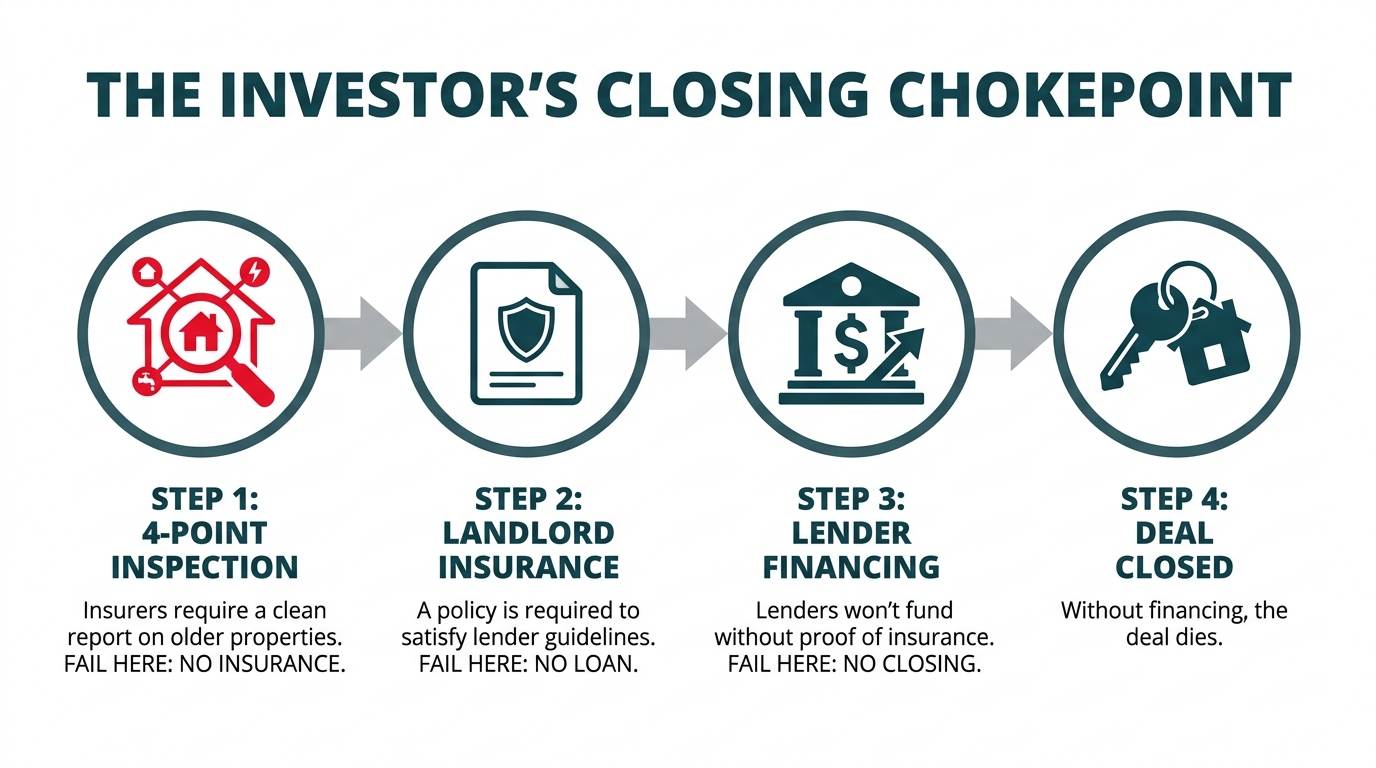
This inspection is not a comprehensive home inspection; it is a pass/fail test for insurability focused solely on the age, condition, and material of these four systems. Understanding what inspectors look for, what flags cause denials, and how to navigate the process is essential for any investor looking to acquire or refinance an older property.
When Insurance Carriers Require a 4-Point Inspection
The requirement for a 4-point inspection is primarily triggered by the age of the property. While specifics vary by insurance carrier and state, the common threshold is for homes 20 to 30 years or older. This practice originated in Florida after Hurricane Andrew in 1992, when massive insurance losses revealed that carriers had overestimated the durability of systems in older homes. The requirement has since become standard practice in high-risk coastal states and is increasingly common nationwide.
For real estate investors, this means a 4-point inspection is often mandatory in these scenarios:
- New Purchase: When acquiring a rental property that falls within the carrier's age threshold.
- Refinancing: When refinancing an older property in your portfolio, as the new lender will require a new insurance policy.
- Switching Carriers: When shopping for a better insurance rate on an existing older rental, the new carrier will likely require an inspection.
- Policy Renewal: Some carriers may request an updated inspection upon renewal, especially for very old properties (40+ years).
- BRRRR Strategy: When transitioning a stabilized fix-and-flip from a builders risk policy to a permanent landlord insurance policy, the carrier will require a 4-point to underwrite the new coverage.
It's crucial to note that Florida has the most stringent requirements, with nearly all carriers demanding an inspection for homes over 20 years old. However, states like Texas, Louisiana, and California are seeing wider adoption of this underwriting tool.
The 4-Point Inspection Checklist
Roof
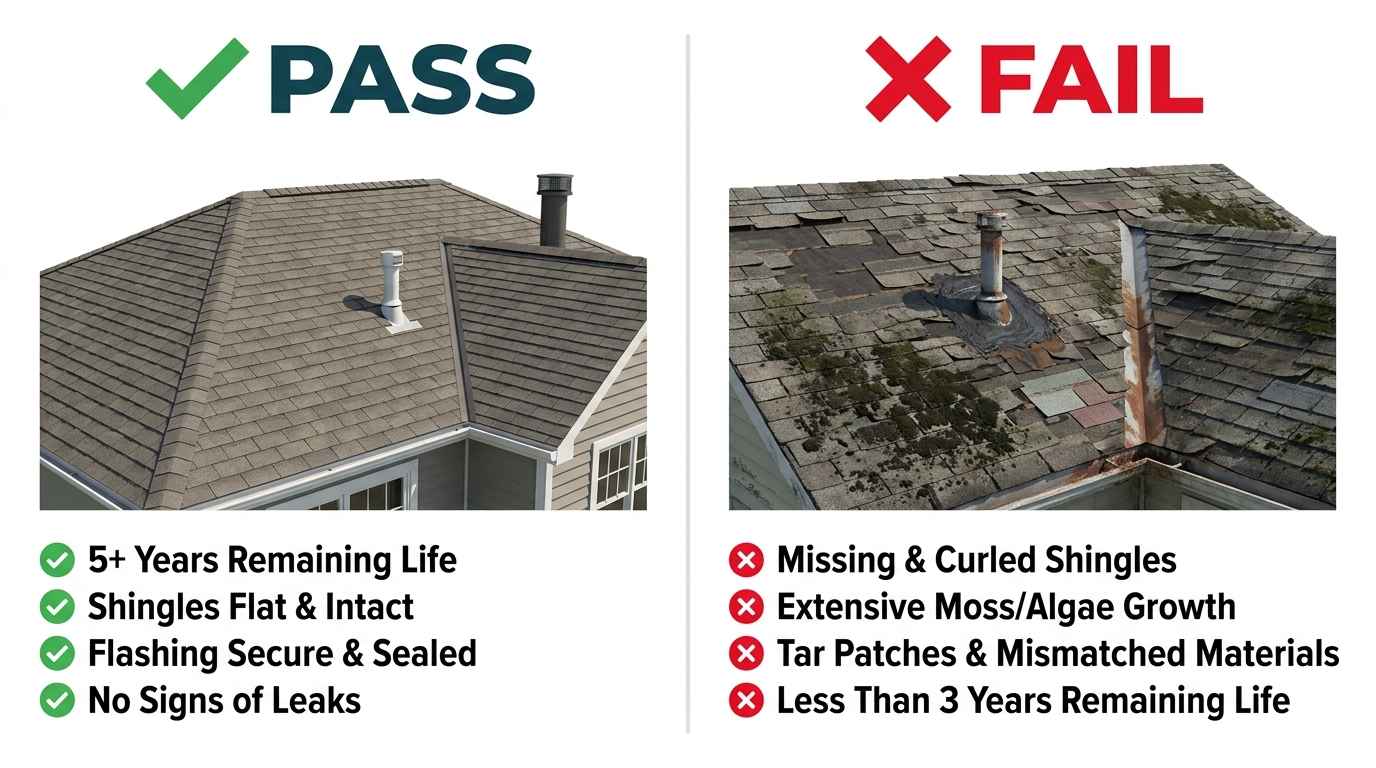
The roof is the property's first line of defense, and for insurers, it's a primary source of potential claims. The inspector's job is to document its age, material type, and overall condition, providing photographic evidence for the underwriter.
The most critical metric for insurers is the remaining useful life. Most carriers require a minimum of 3-5 years of life left on the roof to issue a policy. An asphalt shingle roof that is 15-20 years old is an immediate red flag and will be scrutinized heavily.
Key red flags that can lead to denial or mandatory replacement include:
- Age: Asphalt shingle roofs over 15 years old, or any roof past its typical life expectancy.
- Visible Damage: Missing, cracked, or curling shingles; damaged flashing around vents and chimneys.
- Active Leaks: Any evidence of current water intrusion noted in the attic or on ceilings.
- Extensive Patchwork: Multiple repairs or mismatched materials suggest the roof is failing and has been patched instead of replaced.
Electrical System
The electrical system is the most common reason for an outright insurance denial for investors. Underwriters are extremely risk-averse when it comes to fire hazards, and outdated or problematic electrical components are a non-starter for most carriers.
The inspector will identify the manufacturer of the main electrical panel, the type of wiring used in the branch circuits, and the presence of safety features like GFCI outlets.
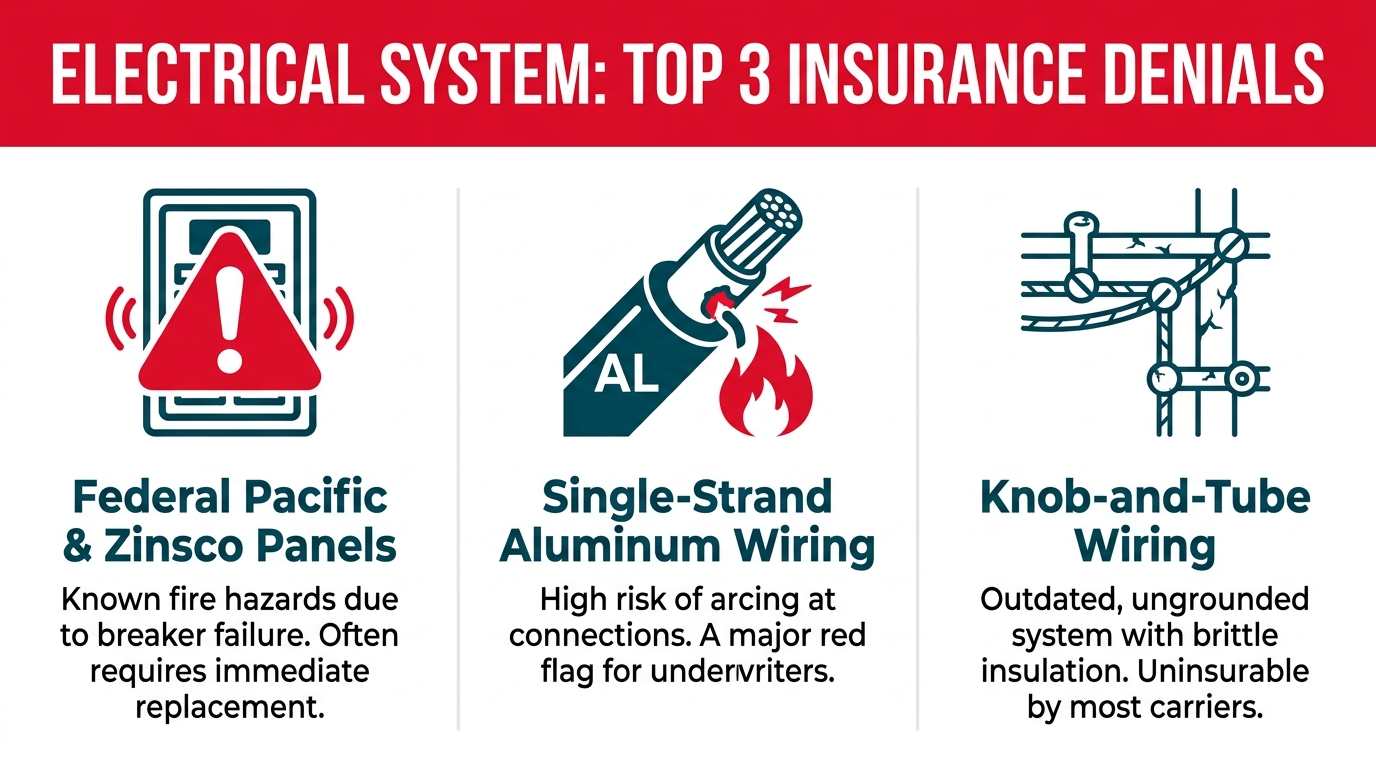
Major red flags that will almost certainly lead to a denial are:
Problematic Electrical Panels: Federal Pacific Electric (FPE) Stab-Lok panels and Zinsco or GTE-Sylvania-Zinsco panels are known for failing to trip during an overcurrent event, creating a severe fire risk. Most carriers will not insure a home with one of these panels installed.
Single-Strand Aluminum Branch Wiring: Used extensively from the mid-1960s to the mid-1970s, this type of wiring is a fire hazard because the aluminum can expand, contract, and loosen at connection points over time, leading to arcing. Note that multistrand aluminum wiring for major appliances (like a dryer) is safe and not an issue.
Knob-and-Tube Wiring: Found in homes built before the 1950s, this wiring system lacks a ground wire and its insulation can become brittle, posing both shock and fire risks.
Lack of GFCI Protection: While not always a deal-breaker, missing Ground Fault Circuit Interrupter (GFCI) outlets in "wet" locations (kitchens, bathrooms, garages, exterior) will be flagged and may be required for policy approval.
Plumbing System
Water damage is one of the most frequent and costly claims for insurers. The plumbing inspection focuses on the material of the supply and drain lines, the age and condition of the water heater, and any signs of active leaks.
An inspector will document the visible piping materials and check the manufacturer date on the water heater. Even small, slow drips will be photographed and noted.
Common plumbing red flags include:
Polybutylene Pipes: This flexible gray plastic piping, used from the late 1970s to the mid-1990s, is known to become brittle and fail suddenly due to reactions with common water disinfectants. Its presence is a major concern for insurers.
Old Water Heaters: A water heater over 18-20 years old is often flagged for replacement. Older tanks are more prone to failure and lack modern safety features. The inspector will also check for a properly installed temperature and pressure relief (TPR) valve.
Active Leaks: Any sign of an active or ongoing leak from pipes, fixtures, or the water heater is a critical issue that must be repaired before a policy can be issued.
Deteriorating Drain Lines: While harder to inspect, visible sections of old cast iron or Orangeburg (bituminous fiber) pipe that show deterioration can be flagged as a potential future failure point.
HVAC System
The Heating, Ventilation, and Air Conditioning (HVAC) system is inspected to ensure the property has a permanent, adequate source of heat and to check for potential hazards like water leaks or fire risks from poorly maintained equipment.
The inspector documents the system type (e.g., central furnace, heat pump), its age, and its general condition.
HVAC red flags that can impact insurability:
No Central Heat: A property that relies solely on portable space heaters or window AC units (with or without heat strips) may be uninsurable with some carriers due to fire risk and the potential for frozen pipes in colder climates.
Age and Condition: An HVAC system that is over 20 years old and shows significant signs of corrosion, deferred maintenance, or leaks will be flagged.
Water Leaks: A leaking air handler or clogged condensate drain line can cause significant water damage and will be noted as a required repair.
Visible Hazards: Frayed wiring, heavy rust on a furnace's heat exchanger, or improper venting are all critical safety issues.
Get an Instant Insurance Quote
Protect your investment property with competitive rates — quote in minutes.
Get Insurance Quote →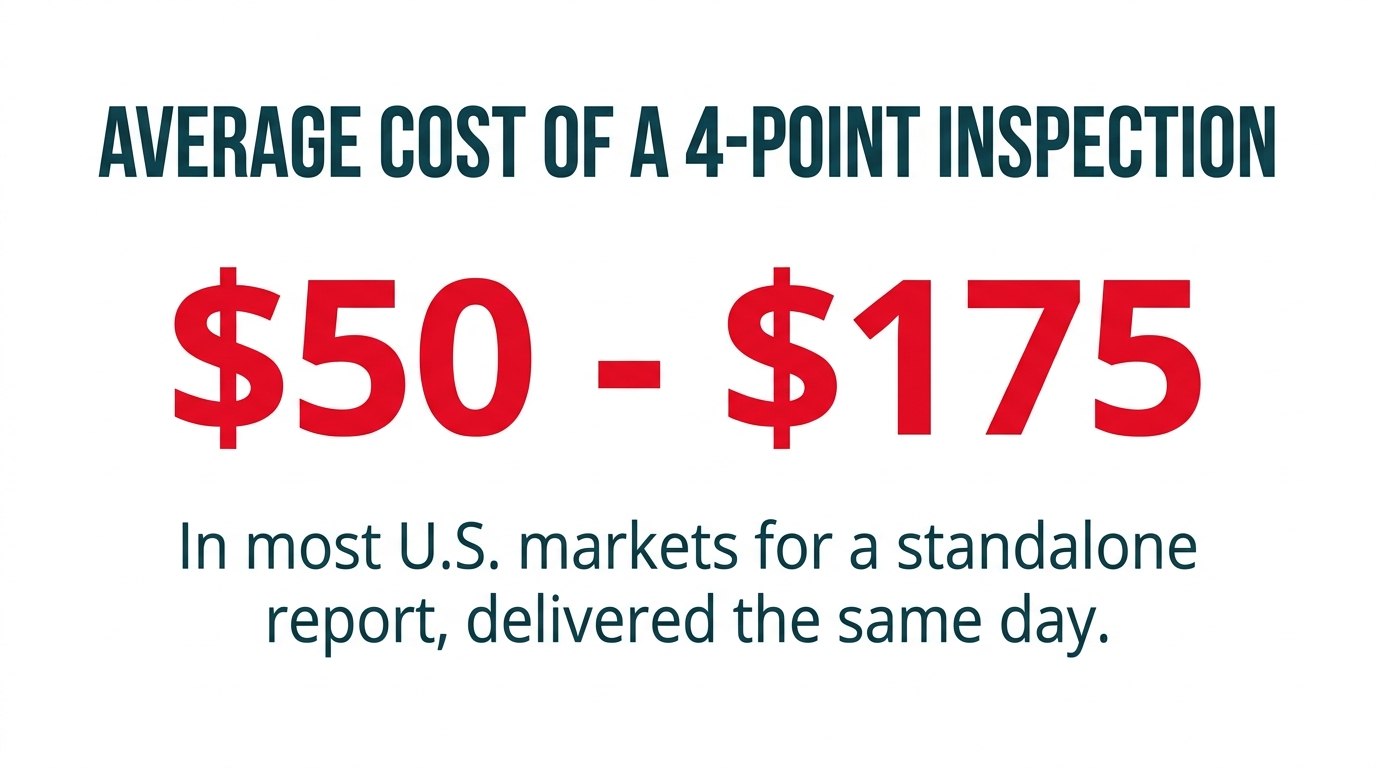
4-Point Inspection Costs and Turnaround Time
Fortunately, a 4-point inspection is one of the more affordable steps in the due diligence process. The cost and speed make it an easy tool for investors to deploy early.
Standalone Cost: Expect to pay between $50 and $175 for a standalone 4-point inspection report in most markets. The national average hovers around $100.
Bundled Cost: In hurricane-prone states like Florida, it's common to bundle the 4-point with a wind mitigation inspection. This package typically costs between $125 and $325 and can earn you significant discounts on your insurance premium.
Turnaround Time: The on-site inspection is quick, usually taking only 30-60 minutes. Because the report is a standardized form with photos, most inspectors can deliver the final PDF report electronically the same day.
This low cost and fast turnaround mean you can get critical insurability data early in your process without a significant outlay of time or money.
Investor Strategy: The Buy-Side Playbook
For investors acquiring property, the 4-point inspection is a strategic tool, not just a procedural hurdle. The investors who treat it as a checkbox get surprised at closing. The ones who build it into their acquisition workflow use it to kill bad deals early, negotiate better prices, and move faster on good ones.
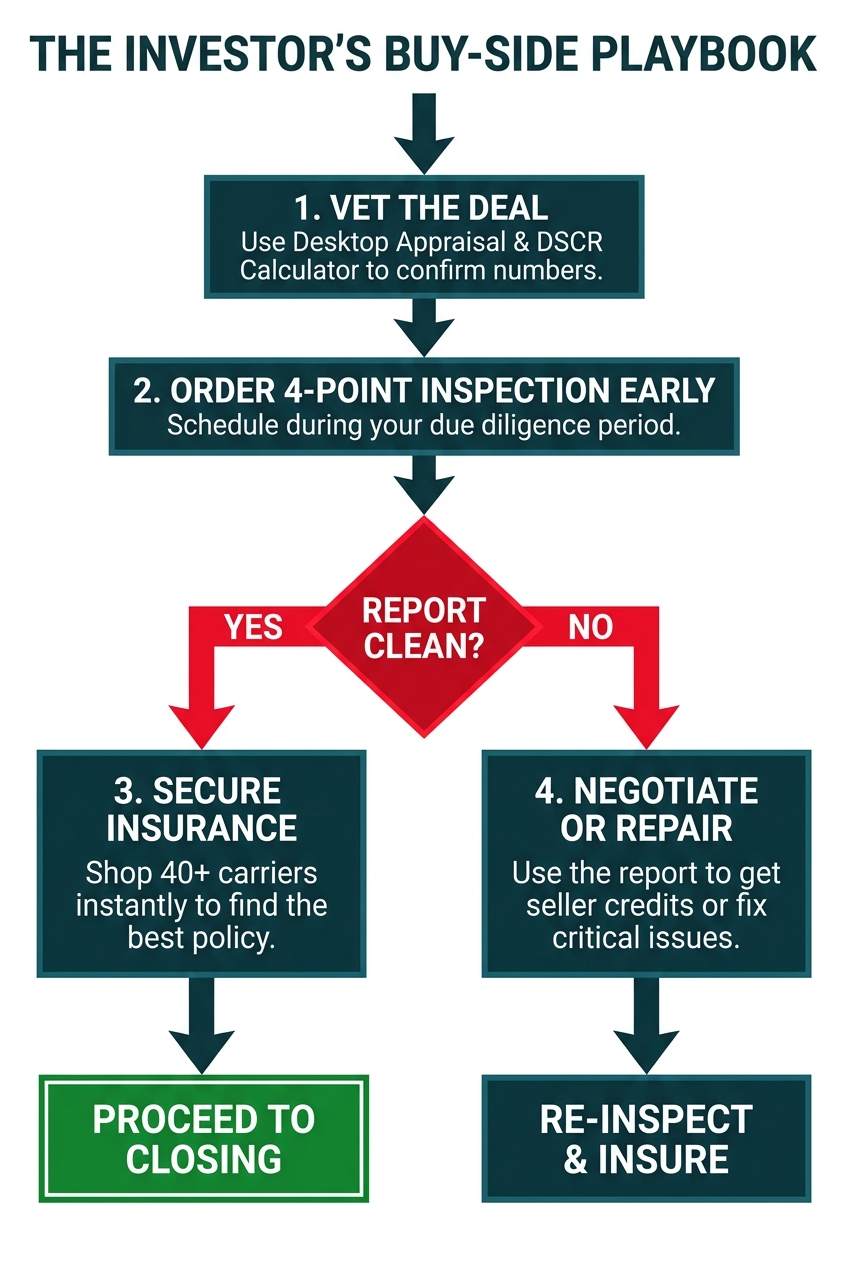
1. Vet the Deal Before You Spend a Dollar on Inspections
Too many investors order inspections on properties that never should have made it past the initial screen. Before you commit $50 to $175 on a 4-point inspection, confirm the deal actually pencils out. Start with OfferMarket's free AI Desktop Appraisal to get a property valuation in 30 seconds. If the asking price is 20% above what the data supports, you just saved yourself an inspection fee and a week of wasted due diligence.
Once the valuation looks reasonable, run the full numbers. If you're holding the property as a rental, use the DSCR Calculator to project cash flow, debt service coverage, and returns. If you're planning to rehab and sell, run it through the Fix and Flip Calculator to map out after-repair value, renovation budget, and after-tax profit.
Here's where this matters for older properties specifically. If the property is 25+ years old and you're seeing original systems still in place, you need those replacement costs baked into your offer before you get emotionally attached to the deal. A $7,000 to $15,000 roof replacement, a $3,000 to $8,000 electrical panel swap, or a full plumbing repipe in the $5,000 to $15,000 range will change your IRR, your monthly cash flow, and your deal score. The calculators help you see that gap before it shows up as a surprise on the inspection report.
2. Schedule the Inspection Early
Order the 4-point inspection as early as possible in your due diligence period, ideally at the same appointment as your full home inspection. Bundling them with the same inspector often saves money (many inspectors include the 4-point at a reduced rate or free when paired with a full inspection), and it compresses your timeline. The goal is to have the report in hand with maximum runway left in your inspection period. If the report surfaces issues that need to be addressed, you want time to negotiate, get repair quotes, or walk away. Not scramble.
For out-of-state investors, this is especially critical. You may not be able to visit the property yourself, so a detailed 4-point inspection report with photographs gives you documented, third-party insight into the condition of the four systems that matter most to your insurance carrier and your lender.
3. Negotiate with the Report in Hand
A clean 4-point inspection is great. A flagged one is still useful. If the report documents a 20-year-old water heater, a Federal Pacific electrical panel, or a roof with less than five years of remaining life, that is not just a problem. It is leverage. You now have a licensed, third-party professional documenting specific conditions that will affect your ability to insure the property. That gives you a defensible, data-backed basis to request a price reduction, ask the seller to complete repairs before closing, or negotiate a credit at the closing table to cover replacement costs.
Experienced investors use inspection reports the same way they use appraisals: as tools to align the purchase price with the actual condition of the property, not the listing price the seller hopes to get.
4. Shop a Denial, Don't Accept It
This is the part most investors get wrong. A denial from one insurance carrier is not the end of the road. It is one carrier's risk decision based on their specific underwriting guidelines. Different carriers have different appetites. One carrier might decline you outright for a 15-year-old asphalt shingle roof. Another might write the policy with an actual cash value roof endorsement. A third might offer conditional approval with a 30-day window to complete specific repairs after closing.
This is exactly why shopping multiple carriers matters, and why running your inspection report through OfferMarket Insurance is the logical next step.
OfferMarket shops 40+ insurance carriers in under a minute, and the in-house team reviews every quote to make sure the coverage actually meets your needs and your lender's requirements. No chasing individual agents. No wondering if a percentage-based wind/hail deductible slipped into the policy. No getting stuck with the first carrier that says yes without knowing if a better option exists. An investor who gets declined once and gives up is leaving money on the table.
Investor Strategy: The Sell-Side Playbook
If you're an investor selling an older rental property, being proactive about the 4-point inspection can protect your deal and lead to a smoother closing. Your buyer will face the same insurance and lending hurdles.
Order a Pre-Listing Inspection: For a small investment of around $100, you can identify the exact issues a buyer's insurance carrier will flag. This eliminates surprises late in the transaction.
Address Critical Issues: If the pre-listing report reveals a deal-killer like a Zinsco panel, you can replace it before listing. This removes a major obstacle for potential buyers and allows you to market the property with "new electrical panel" as a key feature.
Provide the Report to Buyers: A clean, recent 4-point report is a powerful marketing tool. By providing it to prospective buyers, you build confidence, demonstrate transparency, and remove uncertainty about the property's insurability. This can lead to faster, cleaner offers.
List with Confidence: When you list your property on a platform like the OfferMarket investment property marketplace, including a clean 4-point report can significantly accelerate the transaction by signaling to buyers that the property is ready for investor focused financing and insurance.
Navigating a 4-Point Report with Red Flags
Receiving a 4-point report with flagged items doesn't automatically kill your deal. It simply means you need a clear action plan.
Prioritize Denials: Focus on the issues that cause outright insurance denials first. An FPE panel or active roof leak must be addressed. Missing GFCI outlets are a much lower priority and may be accepted by some carriers as-is.
Get Contractor Quotes: Immediately contact licensed and insured contractors to get quotes for the necessary repairs. This gives you a hard number to use in negotiations with the seller.
Request a Conditional Approval: Ask your insurance provider if they will offer conditional approval. Some carriers will issue a policy on the condition that you complete specific repairs within 30 days of closing. This allows you to secure the loan and close the deal, then use your own funds (or funds held in escrow) to make the repairs.
Update the Report: Once repairs are complete, have the original inspector return to the property to verify the work and issue an updated, clean report. This updated report is what you will submit to the insurance carrier to finalize your policy.
What to Do After You Get Your 4-Point Inspection Report
Your post-inspection steps depend entirely on the results.
If the report is clean: Congratulations, you have the green light. Move immediately to secure insurance. A clean report is your ticket to satisfying lender requirements.
Get Insurance Quotes Now: Don't wait. Use the clean report to get an instant landlord insurance quote from OfferMarket. By shopping over 40 carriers, you ensure you get the best coverage at the most competitive price.
Verify Lender Requirements: If you're financing with a DSCR loan, the policy has specific requirements. The dwelling coverage must be for replacement cost, liability limits must be adequate, and loss of rent coverage is essential. The expert team at OfferMarket reviews your policy to ensure it meets these stringent lender guidelines, preventing last-minute closing delays.
Bind Coverage and Close: Once you select a policy, bind coverage and provide the proof of insurance (or "binder") to your lender. You are now clear to close your loan and take ownership of the property.
If the report has red flags: Follow the steps outlined in the "Navigating a Report with Red Flags" section above. Your goal is to methodically resolve the critical issues, document the repairs, and secure the necessary insurance to keep your deal moving forward. A flagged report is a problem to be solved, and with the right strategy, it rarely has to be a deal-killer.
Got Your 4-Point Inspection Report? Get Insured Next
Shop 40+ insurance carriers in under a minute. OfferMarket's in-house experts review every quote to close coverage gaps and make sure your policy meets lender requirements.
Get Insurance Quote →
OfferMarket Loans
Check your rate
60 seconds · no credit pull