Landlord Protection Insurance Policy Little Rock Ar
Last updated: July 19, 2026
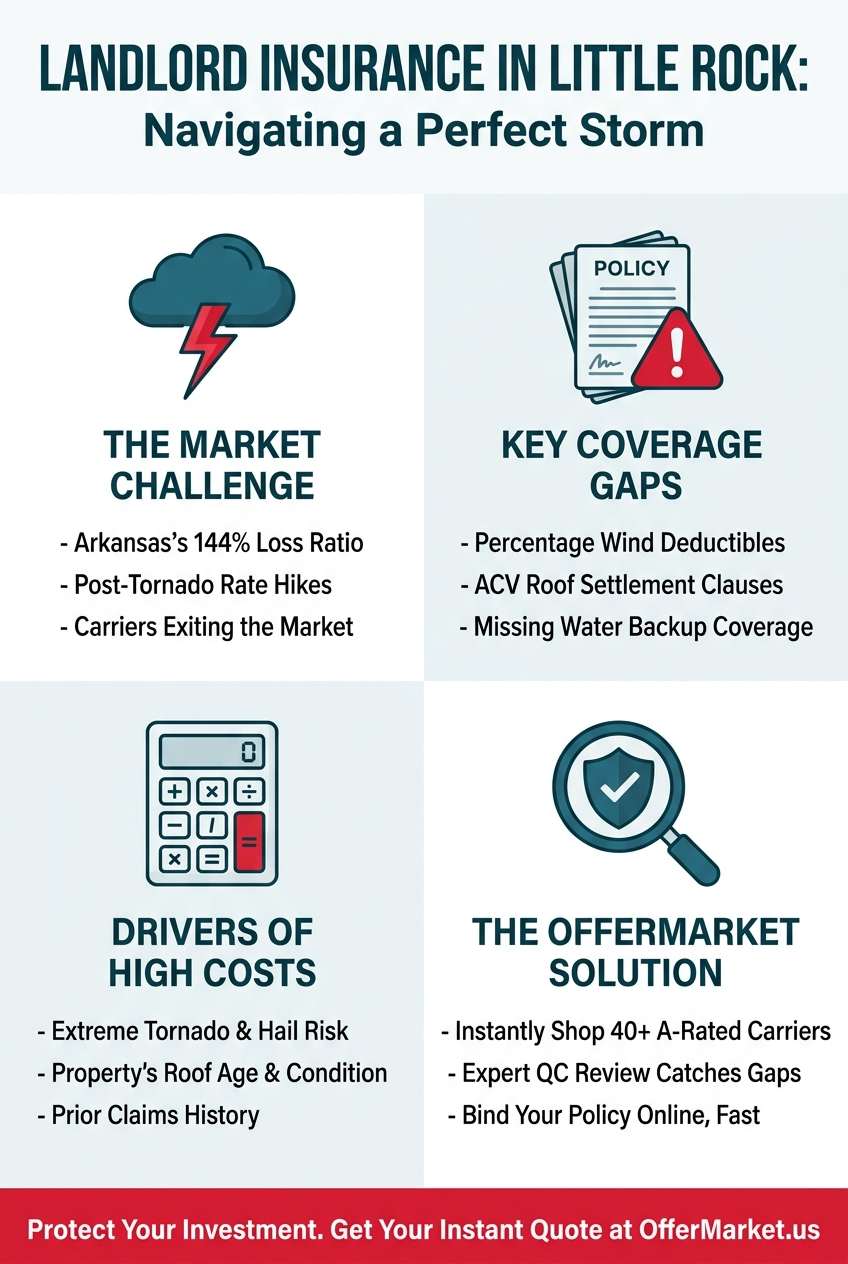
Add us on GoogleFor real estate investors in Little Rock, securing a landlord protection insurance policy has become a significant challenge. Arkansas’s property insurance market is currently one of the most volatile in the nation, directly impacting premiums, coverage availability, and underwriting requirements. In 2023, the state recorded a staggering 144% loss ratio, meaning for every $100 carriers collected in premiums, they paid out $144 in claims. This unsustainable financial pressure, ranking second-highest in the US, has forced insurers to take drastic measures.
The Little Rock Insurance Crisis For Landlords
The catalyst for this market turmoil was the catastrophic EF-3 tornado that struck Little Rock and surrounding areas on March 31, 2023. This single event generated over $345 million in insured losses in Pulaski County alone, according to the Arkansas Insurance Department. The storm damaged or destroyed thousands of homes and rental properties, fundamentally reshaping the risk landscape.
In response, many national insurance carriers have begun aggressively repricing their policies, with some landlords seeing renewal increases of 50-100% or more. Others have implemented stricter underwriting guidelines, non-renewing policies with older roofs or minor claim histories. A growing number of carriers have simply paused writing new business in Central Arkansas or have exited the state entirely. For a landlord, relying on a single-carrier quote in this environment is a critical mistake. It almost guarantees you're either overpaying or accepting a policy with dangerous coverage gaps. To properly protect your investment, you must compare multiple options from carriers still actively competing in the Little Rock market.
Decoding Your Landlord Insurance Policy: The DP-3
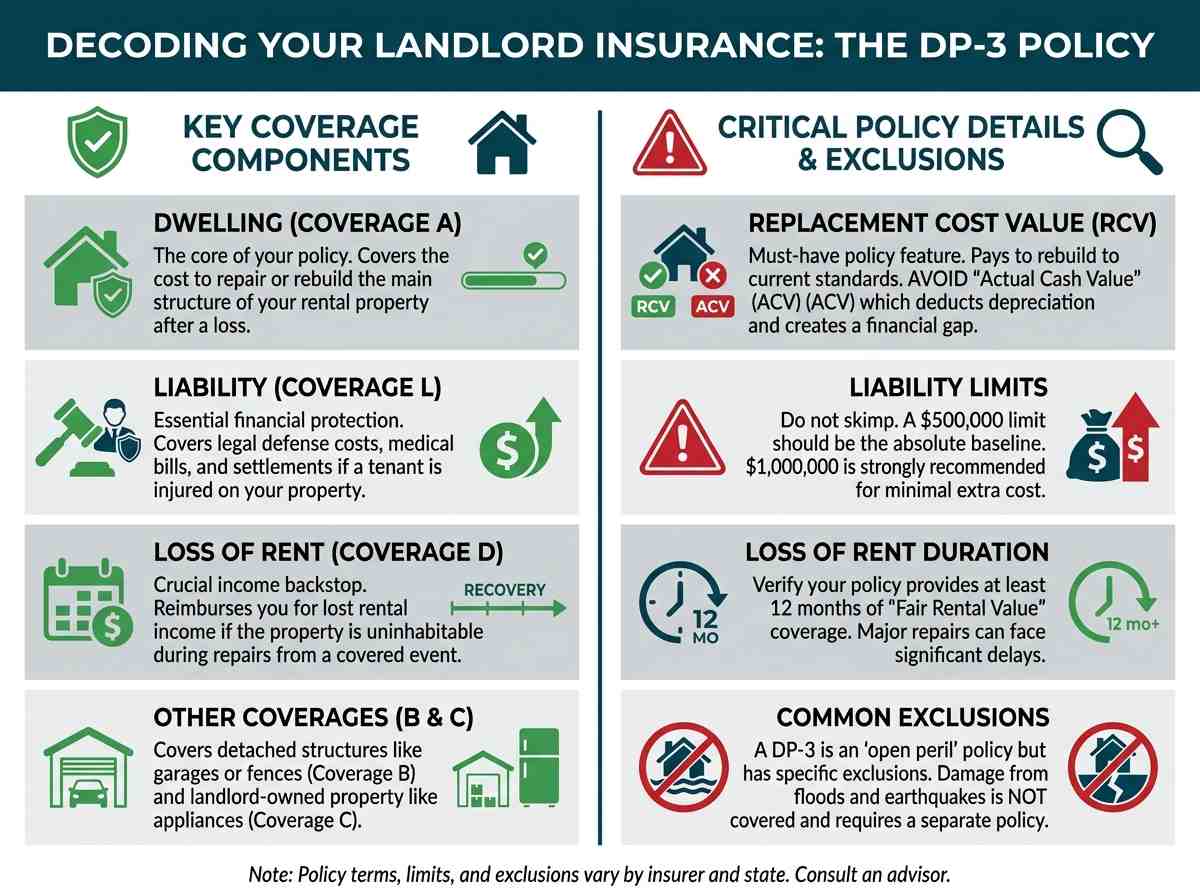
The standard for rental property insurance is the Dwelling Property Form 3, or "DP-3" policy. It is a "special form" or "open peril" policy, meaning it covers damage to the structure from all causes except those specifically excluded (like flood or earthquake). Understanding the key components of a DP-3 is the first step to ensuring your Little Rock asset is properly protected.
Dwelling Coverage (Coverage A)
This is the core of your policy. It covers the cost to repair or rebuild the main structure of your rental property. The most critical detail here is ensuring your policy is written for "Replacement Cost Value (RCV)", not Actual Cash Value (ACV).
Replacement Cost Value (RCV): Pays to rebuild the property to its current condition using similar materials and quality, without a deduction for depreciation. This is what you need.
Actual Cash Value (ACV): Pays the replacement cost minus depreciation. For an older property, this could leave you with a massive financial shortfall after a total loss.
Given the high construction costs in the post-tornado environment, underinsuring your dwelling is a catastrophic risk. You should work with your insurance advisor to calculate an accurate replacement cost, which can often be higher than the property's market value.
Liability Protection (Coverage L)
Liability coverage protects you financially if a tenant or their guest is injured on your property and you are found legally responsible. It covers medical bills, legal defense costs, and settlements.
In a state with landlord-friendly laws like Arkansas, you might be tempted to skimp here, but that's a mistake. A single slip-and-fall incident can lead to a lawsuit far exceeding typical minimums. For Little Rock investors, a $500,000 liability limit should be the absolute baseline, with a $1,000,000 limit being preferable and often available for a minimal additional premium.
Loss of Rent Coverage (Coverage D)
If a covered event (like a fire or tornado) makes your rental property uninhabitable during repairs, this coverage reimburses you for the lost rental income. Most standard policies provide coverage equal to 10-20% of your dwelling coverage limit for up to 12 months. In Little Rock, where major repairs can be delayed by contractor shortages and supply chain issues, ensuring you have at least 12 months of "Fair Rental Value" coverage is a crucial financial backstop.
Other Structures and Landlord Personal Property
Other Structures (Coverage B): This covers detached structures on the property, like a garage, shed, or fence. It's typically set at 10% of your Dwelling Coverage A limit.
Landlord Personal Property (Coverage C): This covers personal property you own and provide for tenant use, such as appliances (refrigerator, washer/dryer) or lawn equipment. It's important to note this does not cover the tenant's personal belongings; they need their own renter's insurance for that.
Critical Policy Details For Little Rock Investors
The standard DP-3 policy form is just the starting point. The endorsements and deductible choices make all the difference, especially in a high-risk area like Little Rock. Here are the details you must scrutinize.
The Wind and Hail Deductible Trap: Percentage vs. Flat Dollar
This is arguably the most important and most misunderstood part of a landlord policy in Arkansas. Due to the high frequency of severe thunderstorms, most policies have a separate deductible for damage caused by wind or hail.
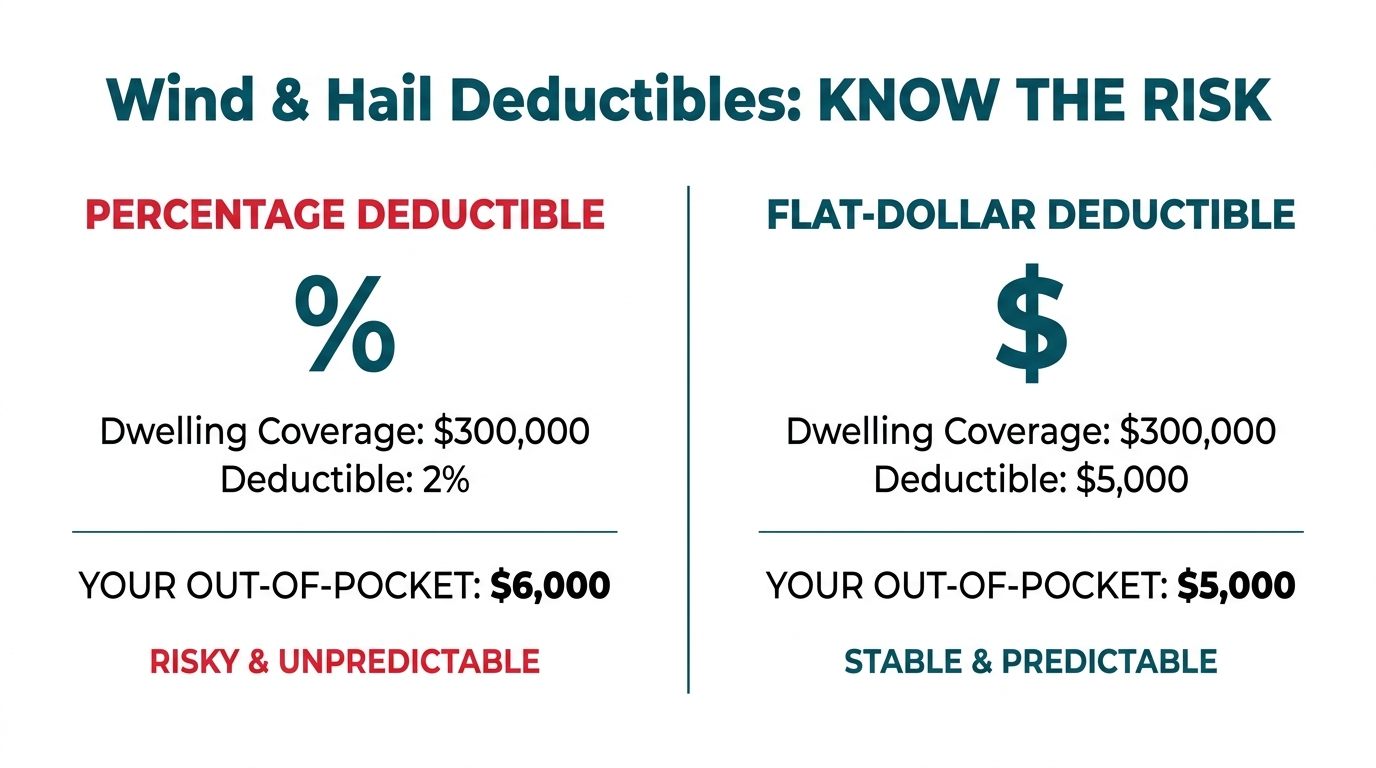
Percentage Deductible: This is calculated as a percentage (typically 1%, 2%, 3%, or 5%) of your total dwelling coverage. For a property insured for $300,000 with a 2% wind/hail deductible, your out-of-pocket cost for a hail-damaged roof would be $6,000.
Flat Dollar Deductible: This is a fixed amount, such as $1,000, $2,500, or $5,000. It's predictable and easier to budget for.
In the current market, many carriers are pushing for mandatory 2% or 3% deductibles. While this lowers the premium, it shifts significant risk onto you. A 3% deductible on a $400,000 property means you're on the hook for the first $12,000 of any tornado or hail damage. Always push for the lowest available flat dollar deductible you can afford.
Roof Settlement Clauses: Navigating Actual Cash Value (ACV)
Another common pitfall is the roof settlement endorsement. Due to the high volume of hail claims, many carriers will only offer Actual Cash Value (ACV) coverage for roofs older than 15 or 20 years. This means if your 18-year-old roof is destroyed by hail, the insurance payout will be significantly reduced for depreciation. A $20,000 roof replacement might only result in a $7,000 check, leaving you to cover the $13,000 difference.
When buying a property or renewing a policy, it is vital to know the age of the roof and confirm whether your policy provides RCV or ACV for it. If you have an older roof, finding a carrier that still offers RCV coverage is a top priority, even if it costs more.
Essential Endorsements
A base DP-3 policy is not enough. You need to add specific endorsements (also called riders) to cover common gaps:
Water Backup and Sump Overflow: This is one of the most common and damaging claims, yet it is excluded from a standard policy. It covers damage from a backed-up sewer line or failed sump pump. A minimum of $5,000 in coverage is recommended, with $10,000 or more being ideal.
Ordinance or Law: If your older property is significantly damaged, current building codes may require you to make expensive upgrades during the rebuild (e.g., new wiring, plumbing, or foundation requirements). This endorsement covers the increased cost of complying with those codes. It is a must-have for any older rental property in Little Rock.
How OfferMarket QC Flags These Issues
Navigating these details is complex. When you get a quote through the OfferMarket insurance platform, our team perform a quality control check.
We flag policies with high percentage-based deductibles, ACV roof clauses on newer roofs, and the absence of critical endorsements like Water Backup. This ensures you're not just finding a cheap price, but securing a policy that will actually protect you when a disaster strikes.
Calculating Landlord Insurance Costs in Little Rock
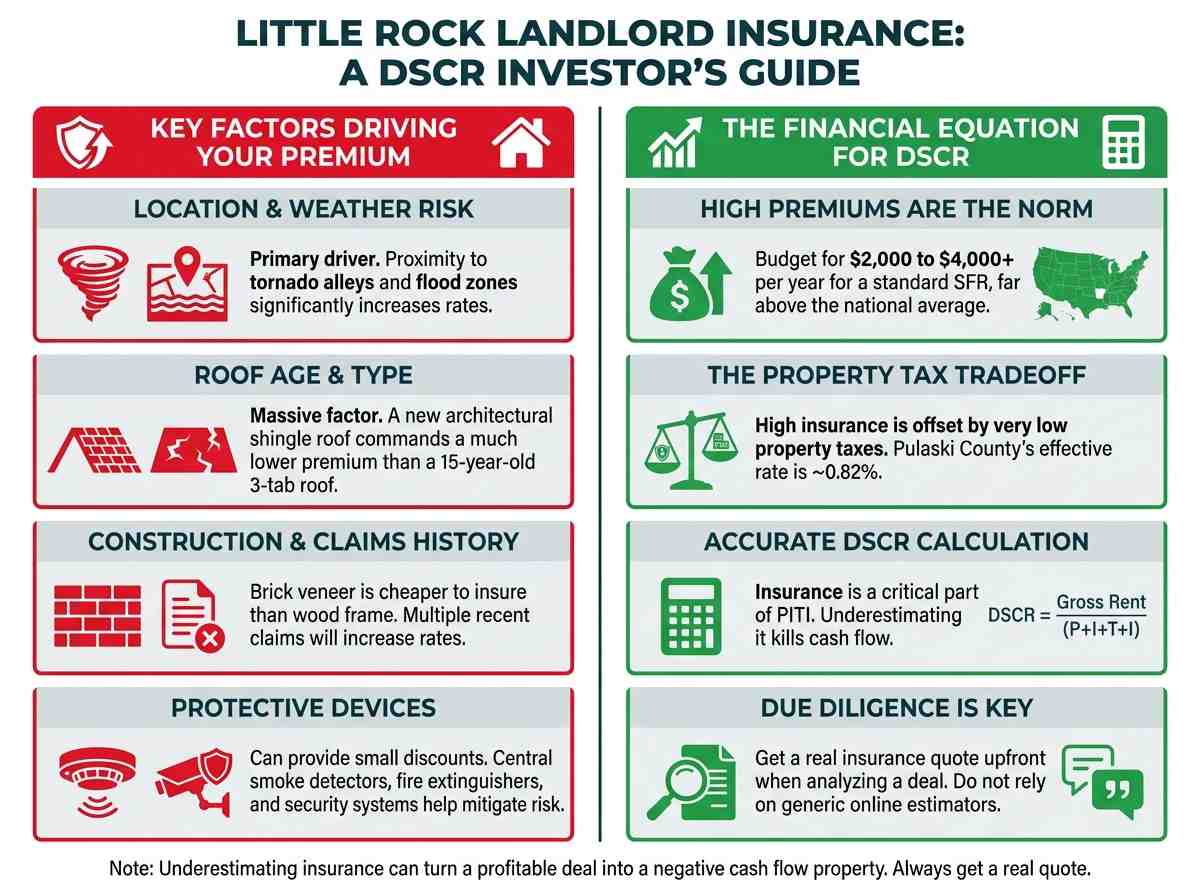
Due to the extreme weather risk, landlord insurance premiums in Little Rock are significantly higher than the national average. While a typical DP-3 policy in a low-risk state might cost $800-$1,200 per year, investors in Pulaski County should budget for $2,000 to $4,000+ per year for a standard single-family rental.
Key Factors Driving Your Rate
Several variables determine your final premium:
Location: Proximity to tornado alleys and flood zones is a primary driver. A property in West Little Rock may have a different risk profile than one in Sherwood.
Roof Age and Type: This is a massive factor. A brand-new architectural shingle roof will command a much lower premium than a 15-year-old 3-tab shingle roof.
Construction Type: A brick veneer home is generally cheaper to insure than a home with wood frame siding.
Claims History: If the property (or you as the insured) has had multiple claims in the past 3-5 years, your rates will be higher.
Protective Devices: Having central smoke detectors, fire extinguishers, and security systems can provide small discounts.
The Tradeoff: High Insurance Costs vs. Low Property Taxes
While the insurance premiums can be shocking, it's important to view them within the context of Little Rock's overall holding costs. Arkansas has some of the lowest property taxes in the country. The effective property tax rate in Pulaski County is around 0.82%, compared to over 2% in states like Texas or Illinois.
For many investors, the savings on property taxes can help offset the higher cost of insurance, keeping the total operating expenses manageable.
Modeling Insurance in Your DSCR Calculation
For investors using financing like a DSCR loan, accurately underwriting the insurance expense is non-negotiable. The Debt-Service Coverage Ratio (DSCR) is calculated as Gross Rental Income / (Principal + Interest + Taxes + Insurance).
Underestimating your insurance premium can turn a deal that looks profitable on paper into a negative cash flow property. When analyzing a Little Rock deal, get a real insurance quote upfront. Don't rely on generic online estimators or old data. Using a platform to get an instant landlord insurance quote is a crucial part of your due diligence.
Underwriting Little Rock’s Severe Weather Risks
Insurers in Little Rock are primarily underwriting for one thing: catastrophic weather. Understanding these specific perils helps you understand your policy and your pricing.
Tornadoes: The Defining Peril
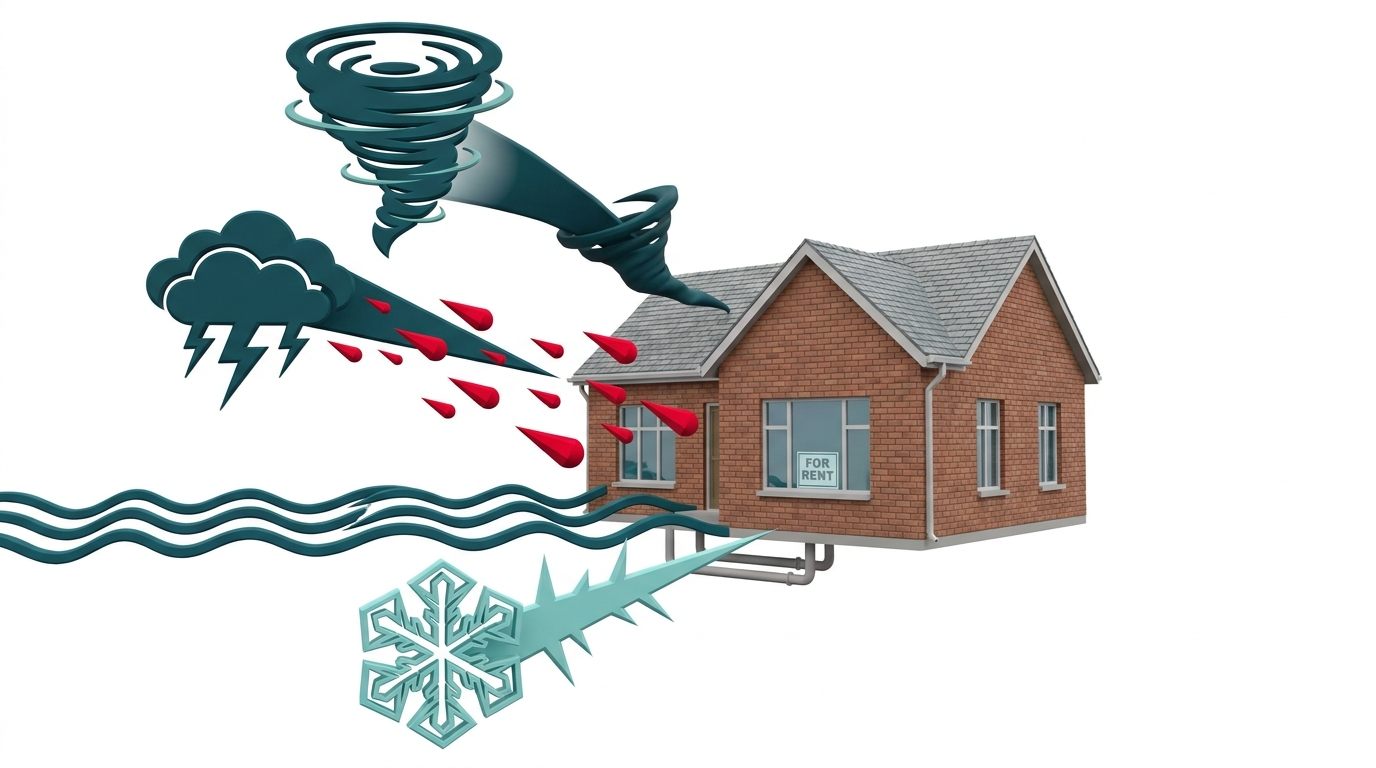
Central Arkansas is located in a high-risk zone for severe convective storms that produce tornadoes. The March 2023 event was a stark reminder of this. Insurance carriers model this risk down to the ZIP code. Your premium is a direct reflection of the statistical probability of a tornado striking your property. This is the main reason for the high cost of the wind/hail portion of your policy and the prevalence of separate, high deductibles.
Hail Damage: The Most Frequent and Costly Claim
While tornadoes are the most destructive, hailstorms are the most frequent cause of major claims in Arkansas. A single storm can cause widespread roof, siding, and window damage across entire neighborhoods. Hail is the primary driver behind carriers' strict underwriting on roof age and their use of ACV settlements. A well-documented, newer roof is your best defense against high premiums and poor claim outcomes.
Flood Risk: When a Separate Flood Policy is Non-Negotiable
It's crucial to remember that damage from flooding is excluded from all standard landlord insurance policies. This includes flooding from overflowing rivers, heavy rainfall, or storm surges. To be covered, you must purchase a separate flood insurance policy, either through the National Flood Insurance Program (NFIP) or a private carrier. Use the FEMA Flood Map Service Center to check if your property is in a designated high-risk flood zone. If it is, your lender will require flood insurance. Even if it's not, properties in low-lying areas or near creeks should strongly consider it.
Winter Perils: Ice Storms and Frozen Pipes
While not as frequent as tornadoes, severe ice storms can cause significant damage in Little Rock. The weight of ice can bring down trees and power lines, damaging roofs and structures. A more common winter claim is damage from frozen pipes bursting, especially in older homes with uninsulated crawl spaces. Your DP-3 policy will typically cover this "sudden and accidental" water damage, but it's another reason why having Water Backup coverage is so important, as plumbing system failures are often complex.
An Investor's Insurance Guide to Little Rock Neighborhoods
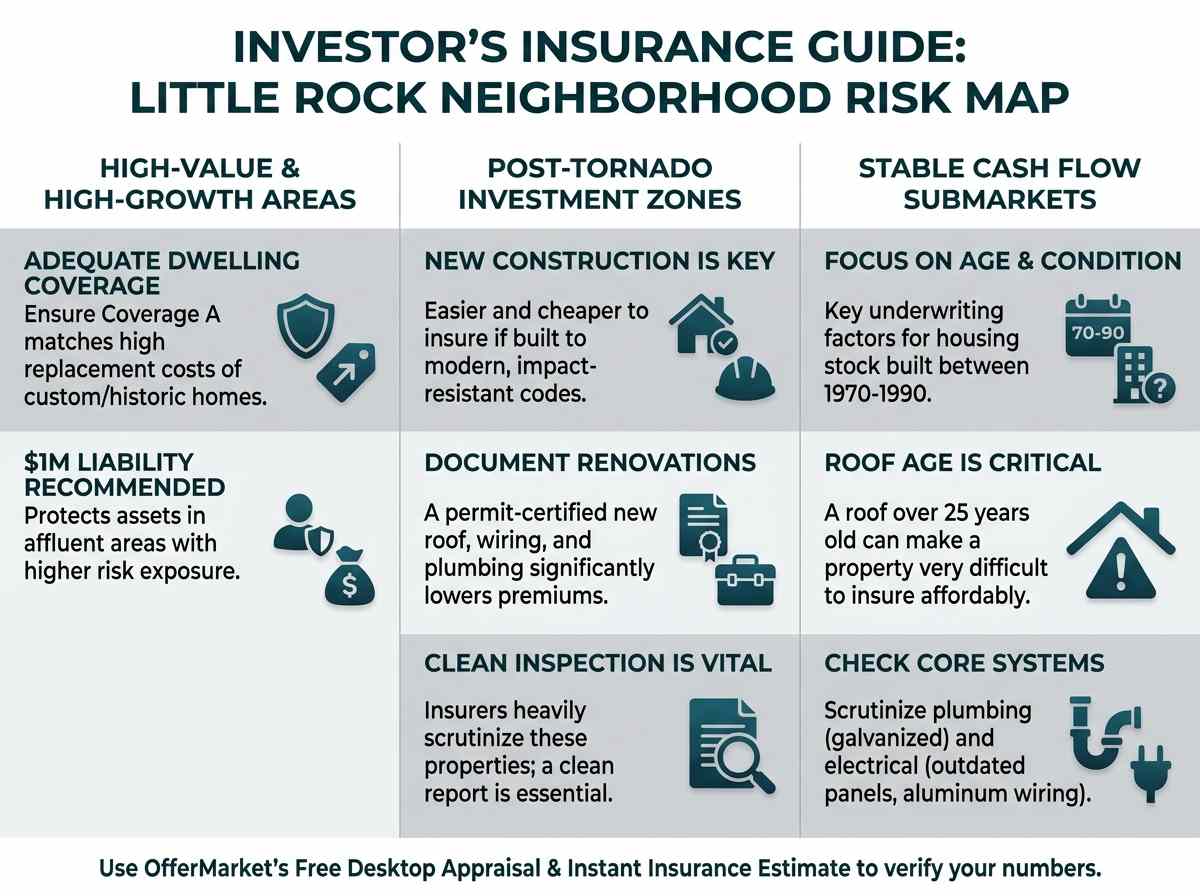
Insurance risk and premiums can vary even within the same city. Here’s a look at how insurance considerations might play out across different Little Rock submarkets.
High-Value and High-Growth Areas: Hillcrest, The Heights, River Mountain
In neighborhoods with higher property values like Hillcrest and The Heights, the primary insurance challenge is ensuring your Dwelling Coverage (Coverage A) is adequate. With custom features and older, historic homes, the replacement cost can easily exceed the purchase price. In newer high-growth areas like River Mountain, you may benefit from newer construction and roofs, but the high property values still mean a large Coverage A limit, driving up the premium. Liability coverage of $1,000,000 is highly recommended in these affluent areas.
Post-Tornado Investment Zones: Walnut Valley, West Little Rock
For investors buying damaged properties or new builds in areas directly impacted by the 2023 tornado, the insurance landscape is complex. New construction will be easier and cheaper to insure, especially if built to modern codes with impact-resistant materials.
For renovated properties, documentation is key. A permit-certified new roof, new wiring, and new plumbing can significantly lower your premiums. Insurers will be scrutinizing these properties heavily, so having a clean inspection report is vital. This is a prime area for investors doing fix-and-flip loans who need to secure robust builder's risk and subsequent landlord policies.
Stable Cash Flow Submarkets: Briarwood, Sherwood, Jacksonville
In established middle-income neighborhoods that provide steady cash flow, the main insurance focus is on the age and condition of the housing stock. Many homes in areas like Briarwood or the surrounding cities of Sherwood and Jacksonville were built between 1970-1990. The key underwriting factors will be the roof age, the type of plumbing (e.g., copper vs. old galvanized), and the electrical system (checking for aluminum wiring or outdated panels). A 25-year-old roof in these areas can make a property very difficult to insure at a reasonable cost.
Before making an offer, investors can use OfferMarket's Free Desktop Appraisal to get a property report and an instant insurance estimate to verify that the numbers work.
Arkansas Landlord-Tenant Law and Your Liability
Arkansas has a unique legal environment for landlords and tenants that directly influences your liability insurance needs. The state is widely considered one of the most landlord-friendly in the nation.
Key Legal Considerations:
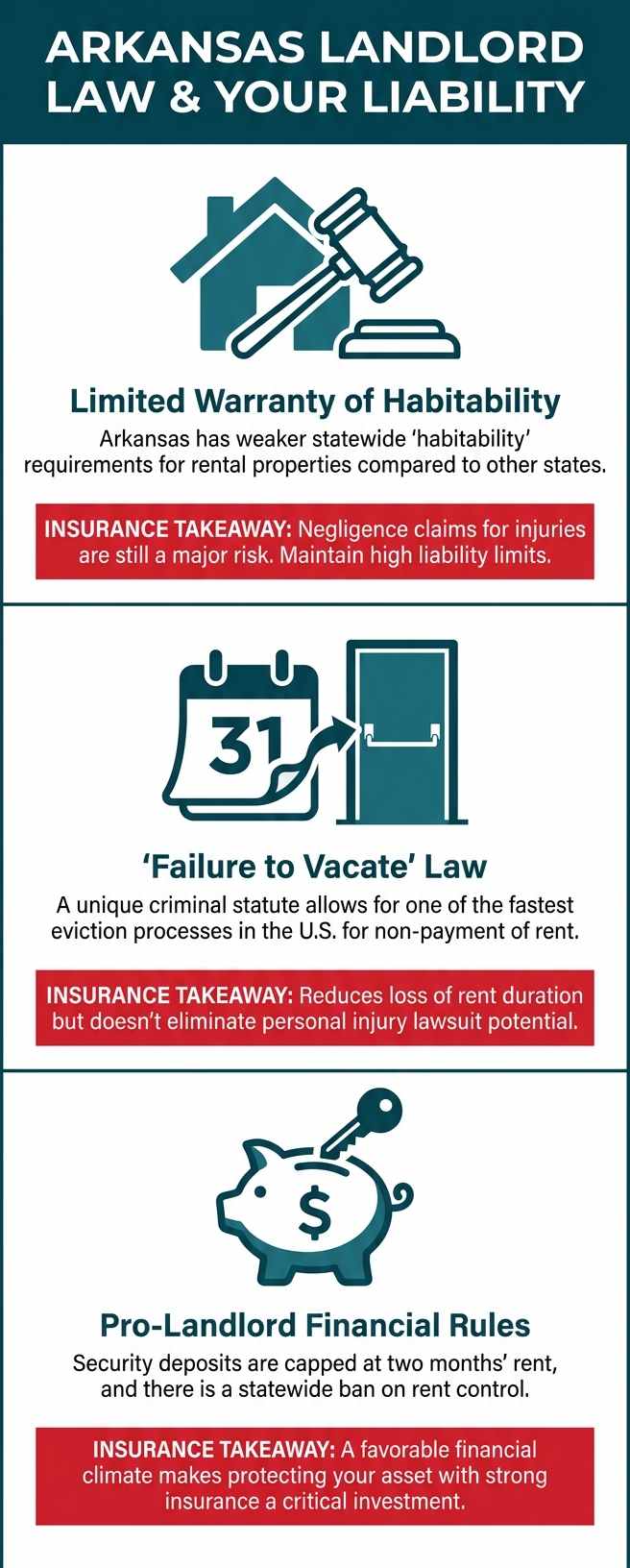
Limited Implied Warranty of Habitability: Arkansas is the only state that has not fully adopted the implied warranty of habitability, which requires landlords to maintain a property fit for human living. While some local ordinances exist, the statewide standard is lower, which can reduce certain types of tenant lawsuits. However, this does not absolve you of the duty to provide a safe property. A major injury due to negligence can still result in a significant lawsuit.
"Failure to Vacate" Statute: Arkansas has a unique criminal statute that makes it a misdemeanor for a tenant to remain in a property after failing to pay rent and receiving a 10-day notice to vacate. This can lead to a much faster eviction process than in most other states.
Security Deposits and Rent Control: State law caps security deposits at two months' rent, and there is a statewide ban on any form of rent control.
While this legal framework can reduce certain risks, it should not lead to complacency. A landlord-friendly court system doesn't prevent a tenant's guest from suing you for a dog bite or a fall on an icy sidewalk. The potential for a large liability claim is always present, reinforcing the need for high liability limits ($500k to $1M) on your landlord policy.
OfferMarket's Little Rock Specific Coverage Benchmarks
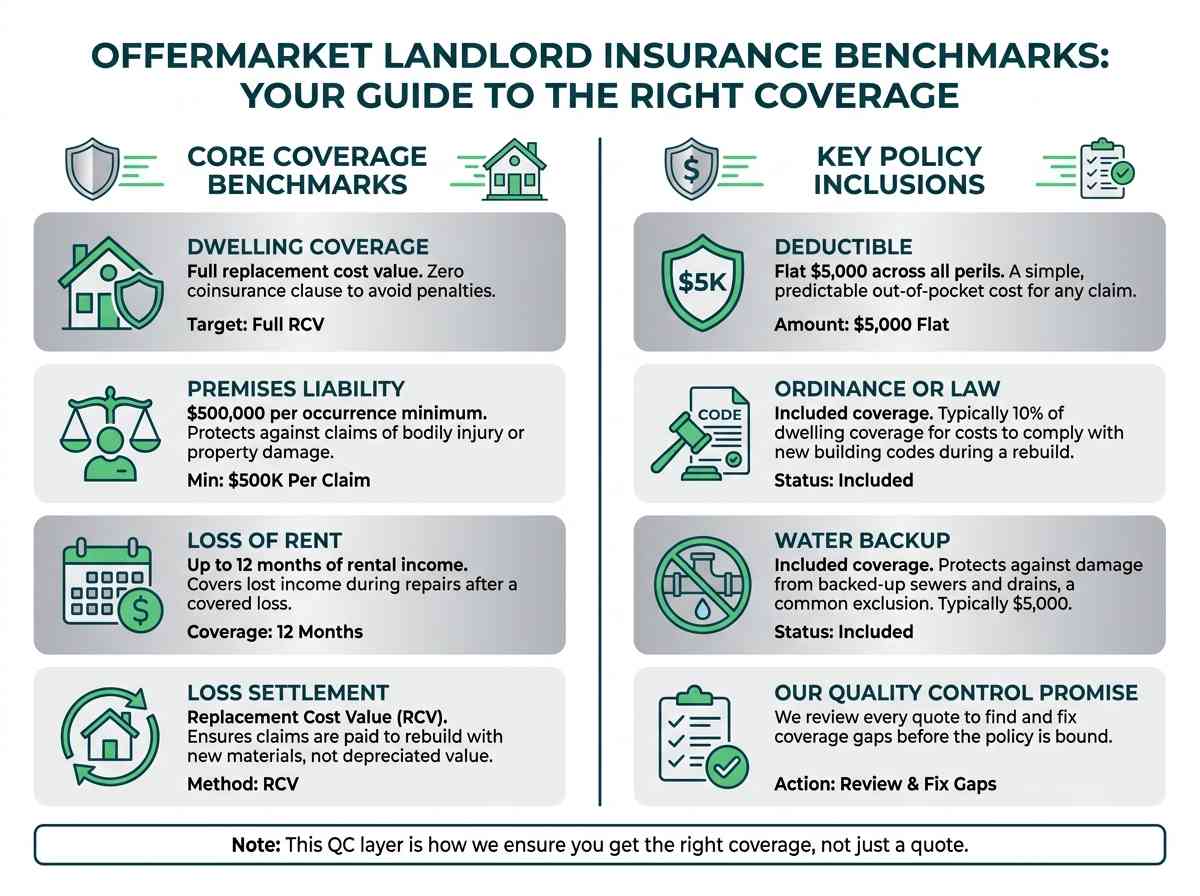
When you get a landlord insurance quote through OfferMarket, the in-house team reviews every quote against these benchmarks:
- 🏠 Dwelling Coverage: Full replacement cost value with zero coinsurance
- 💵 Deductible: Flat $5,000 across all perils
- ⚖️ Premises Liability: $500,000 per occurrence minimum
- 💸 Loss of Rent: Up to 12 months of rental income
- 📋 Ordinance or Law: Included (typically 10% of dwelling coverage)
- 🚰 Water Backup: Included (typically $5,000)
- 🏗️ Loss Settlement: Replacement Cost Value on dwelling, other structures, and personal property
If any of these are missing, below benchmark, or structured in a way that would leave you exposed, the team flags it and works to correct it before the policy is bound. This is the QC layer that separates getting a quote from getting the right coverage.
The OfferMarket Solution: Finding Coverage in a Hard Market
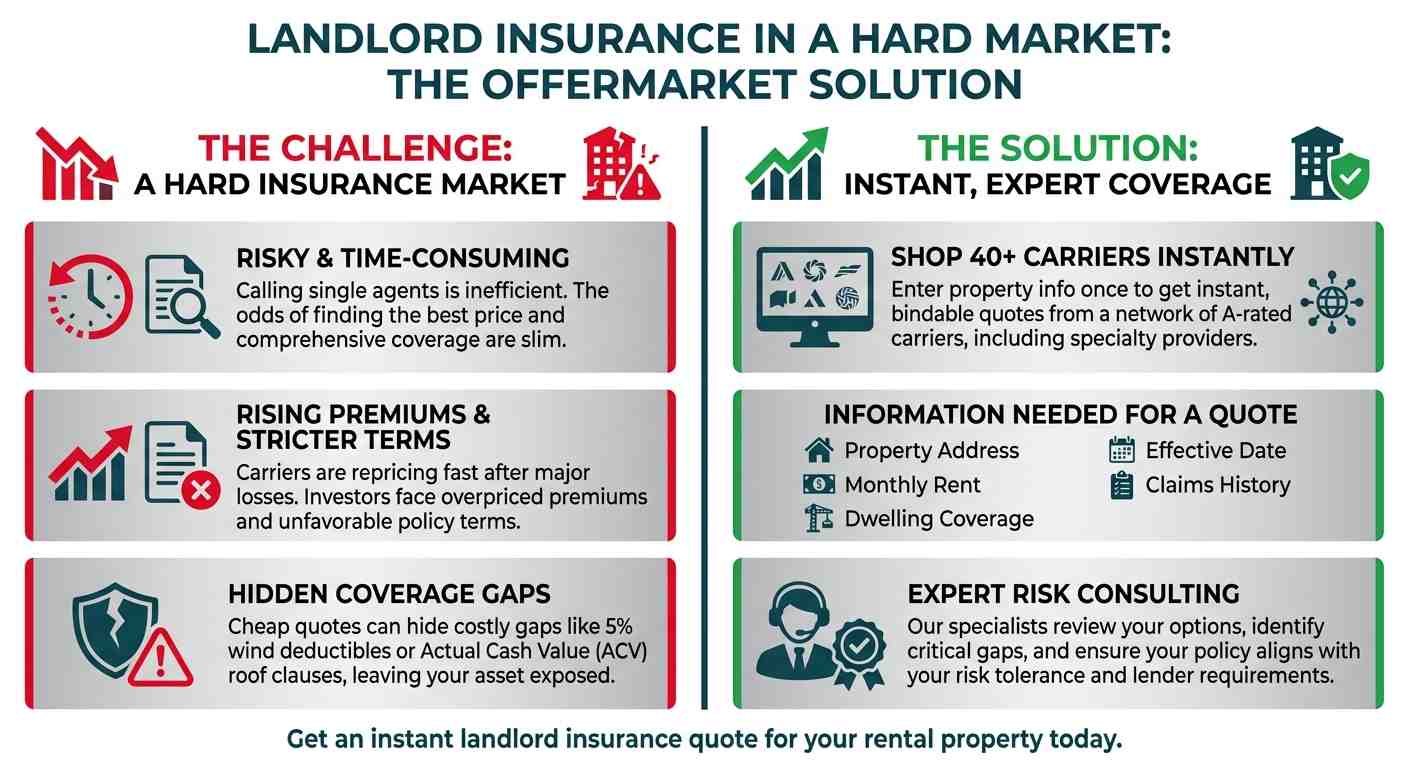
Navigating the turbulent Little Rock insurance market alone is time-consuming and risky. The odds of finding the best-priced, most comprehensive policy by calling a single agent are slim to none. This is where a modern, tech-enabled platform provides a decisive advantage.
Instantly Compare Quotes From Over 40 A-Rated Carriers
Instead of filling out multiple applications, you can enter your property information once on the OfferMarket platform and get instant, bindable quotes from our network of over 40 A-rated insurance carriers. Our technology shops the entire market in seconds, including specialty carriers that many local agents can't access, to find every available option for your Little Rock rental.
Information Needed for an Accurate Quote
Getting an accurate, bindable quote is a straightforward process. You will typically need to provide:
- 🏠 Coverage Type — Landlord or Fix and Flip
- 📍 Property Address — the rental you need insured
- 💵 Monthly Rent — current or projected
- 🏢 Entity Name — LLC, trust, or personal name
- 🏗️ Dwelling Coverage — estimated replacement cost to rebuild
- 📅 Effective Date — closing date, today, or rough estimate
- 📋 Claims History — number of claims in the last 5 years
- 📬 Mailing Address — your personal or business address
- 🎂 Date of Birth — standard carrier verification
Get Expert Review That Catches Costly Gaps
A cheap quote isn't a good quote if it contains a 5% wind deductible or an ACV roof clause. Our team who specialize in real estate investment properties, reviews your options with you. We act as your risk consultant, pointing out critical coverage gaps and ensuring the policy you choose truly aligns with your risk tolerance and protects your asset.
Streamline Acquisitions with Integrated Insurance and Lending
For investors actively growing their portfolios, OfferMarket provides a seamless experience. You can finance your next rental property with a competitive DSCR loan and secure the necessary landlord insurance all on one platform. This integration saves you time, reduces hassle, and ensures your insurance is in place and compliant with lender requirements long before closing day.
Don't let the hard market leave your Little Rock investment unprotected or your cash flow drained by overpriced premiums. Take control of your insurance costs and coverage.
Get an instant landlord insurance quote for your Little Rock rental property today.
Shop 40+ Carriers for Your Little Rock Rental Property
Arkansas carriers are repricing fast after the 2023 tornado losses. Enter your property address and get an instant DP-3 quote in under a minute. OfferMarket's team catches percentage-based wind/hail deductibles and verifies your policy meets lender requirements.
Get Insurance Quote →


OfferMarket Loans
Check your rate
60 seconds · no credit pull