*Quote takes 1 minute, no credit pull
Insurance*1 quote from 40+ carriers
Listings*New listings daily
Wholesale Real Estate
Last updated: November 10, 2025
"Price is what you pay. Value is what you get." - Benjamin Graham
In the high-stakes world of real estate investing, sustained success hinges on a single, non-negotiable principle: profit is made on the purchase, not the sale. This definitive guide is crafted for the serious investor seeking to move beyond market inefficiencies and unreliable inventory by mastering the acquisition of discounted, off-market, wholesale contracts. By embracing this roadmap, you will learn to source exclusive deal flow, apply rigorous financial analysis, and leverage the integrated financing, marketplace, and insurance solutions of the OfferMarket ecosystem to build a robust, scalable rental property portfolio founded on instant equity and maximum cash flow.
1: The Paradigm Shift – Why Off-Market is the New MLS
For the serious real estate investor, the Multiple Listing Service (MLS) has become a battleground of bidding wars and thin margins. The path to true wealth in rental property investing no longer lies in competing against every other buyer for retail listings. It lies in the shadows of the market in the realm of off-market, wholesale properties.
You are not a traditional home buyer; you are an investor, and your objective is simple: to acquire assets below their true market value. This comprehensive guide is your roadmap to achieving that objective, detailing exactly how to find, fund, analyze, and close profitable wholesale deals consistently.
1.1 Defining Wholesale Real Estate, From the Investor’s Chair
Most literature defines wholesaling from the seller's perspective—a middleman putting a distressed property under contract to assign it for a fee.
However, from your perspective, the real estate investor (the cash buyer), a wholesale deal is an exclusive, pre-vetted investment opportunity that delivers instant equity.
A Wholesale Deal is a Pre-Packaged Investment:
- Discounted Price: The contract is secured by a wholesaler from a motivated seller (due to distress, tax liens, probate, etc.) at a significant discount (often adhering to the 70% Rule).
- Assignment of Contract: You, the investor, purchase the right to close on that original contract through an Assignment Agreement, paying the wholesaler an assignment fee.
- Instant Equity: You close on the property at the discounted price, immediately gaining equity. You have bypassed the arduous, time-consuming process of finding and negotiating with a distressed seller yourself.
| Traditional MLS Purchase | Off-Market Wholesale Acquisition |
|---|---|
| High Competition: Bidding wars, often resulting in paying asking price or higher. | Exclusive Deals: Low competition, direct access to hidden inventory. |
| Slow Process: Subject to traditional financing, appraisals, and lengthy inspection periods. | Speed and Efficiency: Requires cash or private/hard money financing, allowing for fast, decisive closing. |
| Zero/Negative Equity at Purchase: Margin for profit must be created through market appreciation. | Built-in Equity: Properties acquired at a discount, offering profit margin from day one. |
1.2 The Off-Market Mandate for Portfolio Growth
Why must your strategy center on off-market and wholesale properties? Because they are the engine of aggressive portfolio growth:
Higher Cash-on-Cash Returns: Buying at a deep discount fundamentally lowers your cost basis, maximizing your returns whether you fix-and-flip or hold the asset as a rental.
The Single-Family Advantage (SFR): As highlighted in our discussion on What is an SFR?, single-family residences (SFRs) are the backbone of most successful rental portfolios. Wholesalers frequently target distressed SFRs because they appeal to the broadest base of end buyers (flippers and landlords), ensuring a fast disposition for the wholesaler and a consistent supply of inventory for you.
Access to Specific Geographic Niches: Wholesalers are hyper-focused on areas with motivated sellers. This grants you, the buyer, access to specialized markets like those detailed in our blogs on St. Louis Wholesale Real Estate or Off-Market Properties in Tampa, allowing for targeted, data-driven investing.
2: The Gateway to Off-Market Success — The OfferMarket Ecosystem
A successful wholesale investor needs more than just a deal; they need a seamless, integrated platform for sourcing, funding, and securing their assets. This is where OfferMarket transforms the investment process, acting as your indispensable co-pilot for every transaction.
OfferMarket is not just a platform; it is a three-pillar ecosystem built to accelerate your investment career:
2.1 Pillar 1: The Investment Property Marketplace
Finding reliable, high-quality wholesale inventory is the number one challenge for investors. OfferMarket solves this by creating a highly efficient, high-trust marketplace that cuts through the noise.
How OfferMarket’s Marketplace Benefits the Investor-Buyer:
Exclusive Off-Market Deal Flow: The platform is purpose-built for off-market transactions. Wholesalers list their assignable contracts here, giving you access to properties that will never hit the MLS.
Verified Inventory: Every listing focuses on properties relevant to investors: single-family homes, distressed assets, and turnkey rentals. The listings often provide detailed data points crucial for underwriting, reducing your due diligence time.
Direct-to-Wholesaler Communication: The platform facilitates direct, transparent communication between you and the wholesaler, streamlining negotiations, site visits, and the crucial exchange of the wholesale real estate offer letter details.
Proof of Funds Verification: OfferMarket provides pre-approval letter through its private lending devision for investors to easily verify their Proof of liquidity. This simple step is critical, as it signals to the wholesaler that you are a serious, cash-ready buyer capable of closing quickly, instantly prioritizing your offer over unverified competitors.
Investor Action Item: Subscribe to OfferMarket's deal flow alerts for your target zips (e.g., 21213 or 32561). This is your automated source for consistent, exclusive deal flow.

2.2 Pillar 2: OfferMarket Capital – Your Private Lending Division
Wholesale deals demand speed. Traditional bank financing is too slow for a 14-day or 30-day close. You need agile capital solutions, and that's precisely what OfferMarket Capital provides. By cross-selling its lending division directly into the marketplace, OfferMarket ensures that capital is never the bottleneck in your deal pipeline.
Financing Products for the Wholesale Buyer:
Fix & Flip Loans (Bridge/Hard Money): If you acquire a distressed wholesale property with the intention of renovating and selling it, OfferMarket Capital provides competitive Fix & Flip Loans. These short-term loans cover the acquisition and renovation costs, structured around a quick closing timeline that aligns perfectly with wholesale contracts.
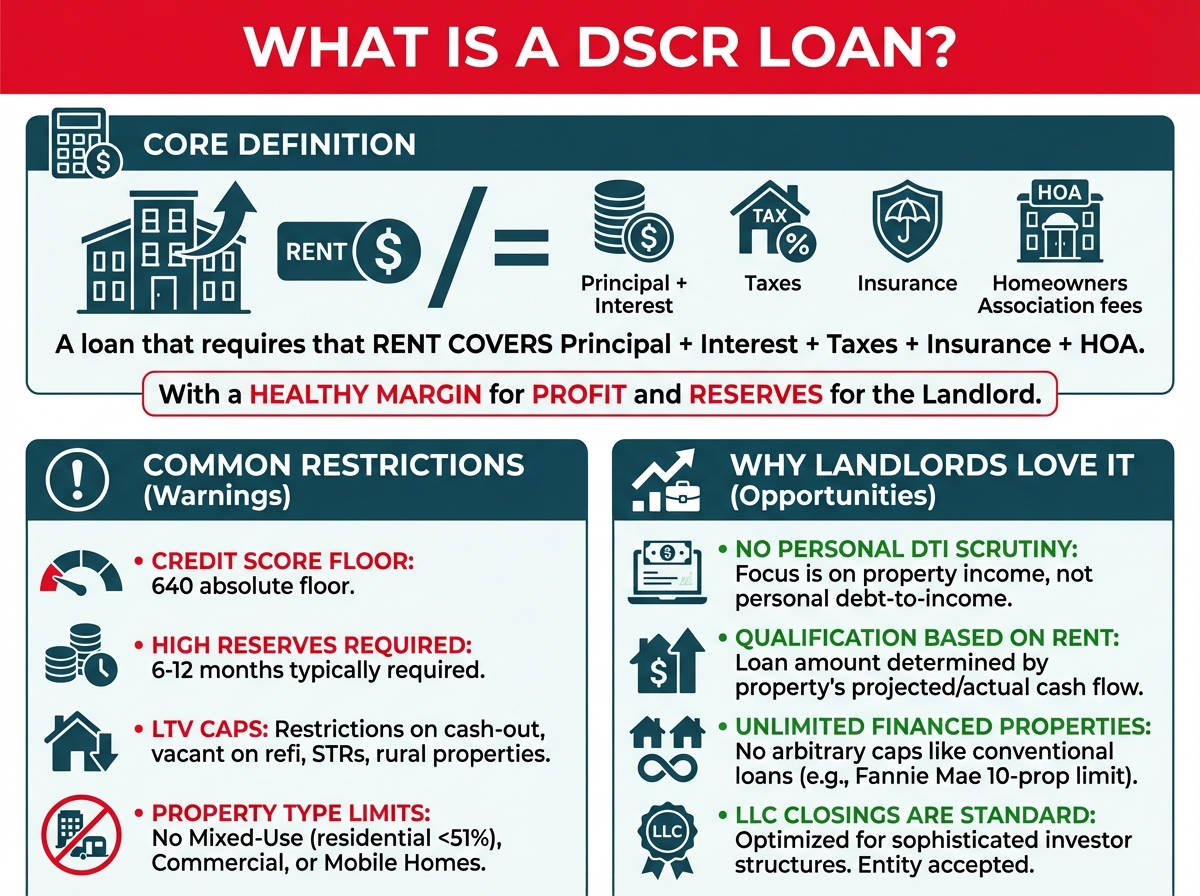
DSCR Loans (Debt Service Coverage Ratio): For the long-term landlord investor, the ultimate goal is to hold the asset as a rental. OfferMarket provides DSCR Loans specifically designed for rental properties. Crucially, these loans qualify the borrower based on the property’s projected rental income, not solely on the borrower’s personal income, allowing you to scale your portfolio rapidly without traditional income verification constraints.
| Financing Solution | Best For | OfferMarket Advantage |
|---|---|---|
| Fix & Flip Loans | Distressed properties requiring heavy rehab (Flips). | Fast underwriting and closing to meet assignment deadlines. |
| DSCR Loans | Turnkey or light-rehab properties (Long-term Rentals). | Qualifies based on property cash flow, facilitating portfolio scale. |

2.3 Pillar 3: Insurance Rate Shopping and Protection
Acquiring a wholesale property whether a distressed asset or a new rental requires immediate, appropriate insurance coverage. Investors often overpay or fail to get the right coverage (e.g., insuring a vacant rehab as a standard homeowner's policy).
OfferMarket’s Insurance Rate Shopping Service:
Landlord Insurance: For your buy-and-hold assets, OfferMarket allows you to rate shop across 40+ top carriers to find the most competitive Landlord Insurance policy. This is critical for protecting your cash flow and ensuring your investment is secure against liabilities and perils.
Fix & Flip Insurance: During the renovation phase, you need a specialized Builder’s Risk/Renovation policy. OfferMarket helps investors secure the right coverage to protect the property and materials while it is vacant and undergoing construction.
The Integrated Advantage: Imagine finding a deal on the OfferMarket Marketplace, securing a Fix & Flip loan from OfferMarket Capital in days, and simultaneously shopping for the cheapest Landlord Insurance quote—all within one unified platform. This is the competitive edge necessary to thrive in wholesale acquisition.

3: Sourcing the Deal: How to Find Wholesale Properties (The Buyers Guide)
While the OfferMarket Marketplace is your primary hub, a savvy investor must understand the wholesale sourcing landscape. Knowing how wholesalers find deals will help you identify the best partners and anticipate deal flow. This section draws directly from the strategies outlined in our How to Find Wholesale Properties guide.
3.1 Vetting Your Wholesaler Network
Before you buy, you must vet the source. A good wholesale deal is only as good as the wholesaler who secured the contract.
Look for Professional Lead Generation: The best wholesalers aren't relying on chance; they are deploying calculated strategies:
Direct Mail Campaigns: Are they targeting specific lists (tax delinquency, pre-foreclosure, absentee owners)? This indicates a high probability of a truly motivated seller.
Driving for Dollars & Technology: Wholesalers using tools like DealMachine to track down property owners of distressed homes are diligent. This work translates into a better discount for you.
Verify Due Diligence: A reputable wholesaler provides a full "Deal Package" for you, the end buyer, including:
- The original Purchase Agreement (with the assignment clause).
- Preliminary Title Report (or confirmation of clean title).
- Photos/Video of the property's condition.
- Solid, recent comparable sales (Comps) that justify the ARV (After Repair Value).
3.2 The Best Places to Buy Wholesale Properties
Choosing the right market is paramount. As your investment assistant, I recommend focusing on markets that exhibit the following traits, aligning with our analysis in Best Places to Wholesale Real Estate:
- Strong Job Growth and Population Inflow: Demand for rental housing must be consistently high.
- Landlord-Friendly Legislation: Markets with streamlined eviction processes and reasonable property taxes favor buy-and-hold investors.
- Median Home Price and Rent-to-Value Ratio: Look for markets where the median home price allows the 70% rule to be applied easily, and where rental income strongly covers the mortgage and operating expenses (high DSCR potential).
Case Study Example: Markets like St. Louis and Tampa are often prime targets because they offer a favorable balance of distressed inventory (high wholesale potential) and steady rental demand (strong exit strategy). Your market selection is a strategic decision that affects every deal you close.
Mastering Deal Flow: Sourcing Off-Market Properties 💰
For the wholesale investor, deal flow is the lifeblood of your business. While Part I established why wholesale is the superior acquisition strategy, Part II focuses on the how: how you, the buyer, can efficiently and consistently access the best off-market contracts. The goal is to move from passively hoping for deals to actively managing a predictable pipeline of investment-grade opportunities.
4: The Two Pillars of Wholesale Sourcing for Buyers
As an investor, you have two primary avenues for acquiring wholesale properties, each with its own benefits and vetting requirements:
4.1 Pillar A: The Direct-to-Seller Strategy (DIY Sourcing)
While wholesale typically involves a middleman, the most lucrative deals are those you secure yourself, bypassing the assignment fee entirely. This requires you to implement the same lead generation tactics that wholesalers use, but with the goal of securing the property directly for your portfolio.
Lead Generation Strategies You Must Master:
Driving for Dollars (The Gold Standard): Physically scouting neighborhoods with high potential (distressed properties, pre-foreclosures, high-vacancy areas). Use technology like PropStream to pull owner information on the spot.
Targeted Direct Mail: Focus your campaigns on specific, motivated-seller lists: Absentee Owners, Tax Delinquencies, and Probate Leads. A distressed seller is motivated by speed and certainty, qualities you, the cash-ready investor, offer.
Public Records & Court Houses: Systematically checking for Code Violations, Lis Pendens (pre-foreclosures), and Notice of Default filings. These are genuine signals of seller distress.
OfferMarket Intelligence (OMI): Instead of spending hours and money on skip tracing, OMI provides a curated list of off market and distressed properties. Including foreclosures, delinquent HELOCs, and other motivated seller situations. With OMI, you can unlock seller contact info instantly for just $1, making it one of the most cost effective and reliable ways to reach owners who are actually motivated to sell.
Why It Works for the Buyer: By cutting out the wholesaler, you save the 3%–10% assignment fee, which translates directly into deeper discounts and higher immediate equity on acquisition.
4.2 Pillar B: The Wholesaler Network Strategy (The Efficiency Play)
This is where speed and volume dominate. Working with a network of reliable wholesalers provides a continuous, passive stream of deals, freeing your time to focus on analysis, financing, and property management.
The Power of the Marketplace: Platforms like OfferMarket serve as a critical filter. Instead of chasing leads from countless unsolicited emails and "Bandit Signs," the Marketplace aggregates vetted, ready-to-close deals, making it the most efficient source of inventory.
Networking with Wholesalers: Attend local Real Estate Investor Association (REIA) meetings and investor meetups. Don't go to sell; go to buy. Clearly communicate your "Buyer Box" — your exact criteria (e.g., "SFRs, 3/2, 1,200 sq ft minimum, $100K–$150K range, 78% of ARV, in zip codes X, Y, Z"). This instantly elevates you from a generic contact to a preferred cash buyer.
5: Vetting Your Wholesaler: The Investors Due Diligence 🛡️
The biggest risk in the wholesale game is a bad wholesaler whose lack of due diligence, inflated numbers, or legal negligence costs you time and money. Your role is to vet the wholesaler as rigorously as you vet the property.
| Red Flag 🚩 | Investor Vetting Question | OfferMarket Solution |
|---|---|---|
| Inflated ARV/Repair Estimate | "Can I see the itemized scope of work and the three most recent comparable sales used for your ARV?" | Always use your own OfferMarket Deal Analysis tools to verify their numbers. Never trust their projections. |
| Lack of Experience | "How many deals have you personally closed in this market, and can I speak to two of your repeat buyers?" | Look for wholesalers with a proven transaction history and established profiles within the community or on the Marketplace. |
| Ambiguity on Contract | "Is the assignment clause explicitly included in the Purchase Agreement, and is the title clear of liens?" | Demand to see the signed Purchase Agreement before signing the Assignment Agreement. Use a reputable title company that you trust. |
| Lack of POF Verification | (This applies to the wholesaler vetting you, but a good wholesaler will ask for your POF.) | Use OfferMarket's Proof of Funds feature to establish immediate credibility and trust, signaling you can close fast. |
The Golden Rule of Wholesale Buying 💡: Trust but Verify. The wholesaler's incentive is to maximize their assignment fee; your incentive is to maximize your discount. Their interests are not perfectly aligned with yours. You must run your own numbers on every single deal.
6: Evaluating Property Types: SFR vs. Multi-Family Wholesale 🏠
Wholesale deals are predominantly single-family residences (SFRs), as they have a larger motivated seller pool and a broader exit strategy (both flippers and landlords). However, the savvy investor must weigh the merits of both.
6.1 Single-Family Wholesale Acquisitions
The SFR is the ideal entry point and scaling tool for a wholesale portfolio.
Pros:
Larger Buyer Pool: Easy exit strategy (can sell to flipper, long-term landlord, or even a first-time homebuyer if the renovation is turnkey).
Easier Financing: Qualify for conventional financing or, more efficiently, OfferMarket Capital DSCR Loans when the property is stabilized.
Lower Initial Capital: Wholesale SFR deals are accessible to investors with moderate capital, as the overall purchase price is lower than a multi-family property.
Cons:
- Single Income Stream: A vacancy means 100% loss of rental income for that period.
6.2 Multi-Family Wholesale Acquisitions (2–4 Units)
Wholesale multi-family properties (Duplex, Triplex, Quadplex) are rare but represent a massive opportunity when they appear.
Pros:
Economies of Scale: One roof, one tax bill, one insurance policy (easily rate-shopped on OfferMarket), one location for a contractor. Costs are shared across multiple units.
Mitigated Vacancy Risk: If one unit is vacant, the others continue to generate cash flow, protecting your DSCR and debt service.
Accelerated Scaling: Buying a four-unit property is far faster than acquiring four separate SFRs.
Cons:
Higher Barrier to Entry: The all-in purchase price and subsequent renovation is significantly higher, requiring a larger capital outlay or more sophisticated Fix & Flip financing.
More Complex Management: Increased tenant turnover, shared common areas, and more complex landlord-tenant laws.
The Investor's Decision 💡: Start with SFR wholesale deals to build a reliable cash-flow engine. Once you have banked several successful deals and accumulated capital, strategically pursue wholesale multi-family opportunities to aggressively scale your unit count and cash flow.
7: Leveraging Technology for Off-Market Dominance
To compete with full-time wholesalers and large institutional buyers, you must leverage technology to analyze, organize, and act fast.
OfferMarket Marketplace Alerts: Set up automated alerts for properties matching your "Buyer Box." This is your first line of defense against missing a high-quality deal.
CRM/Lead Management: Use systems like Podio or REI BlackBook to track your interactions with various wholesalers and the status of properties you are analyzing.
Data Platforms (PropStream/BatchLeads): Even as a buyer, these tools are invaluable for:
Verifying Comps: Quickly pulling recent sales data to confirm the wholesaler’s After-Repair Value (ARV).
Skip Tracing: If you find a distressed property yourself, use these services to instantly find the owner’s contact information, facilitating your direct-to-seller acquisition.
By integrating a consistent deal-flow strategy, meticulous vetting, and a data-driven approach, you transform yourself from a passive buyer into an active participant who commands the best off-market wholesale inventory.
The Art and Science of Property Analysis 📊
The goal of acquiring a wholesale property is to secure an instant equity position. This is not achieved by chance; it is the direct result of disciplined, standardized financial analysis. If you cannot analyze a deal in under 30 minutes, you will lose it.
8: The Foundation of Profit – Calculating After Repair Value (ARV)
The ARV is the cornerstone of every wholesale deal analysis. It represents the estimated market value of the property after all necessary renovations and repairs have been completed. If your ARV is wrong, your maximum offer will be wrong, and your profit margin will be jeopardized.
8.1 The Comparable Sales (Comps) Standard
The only reliable way to calculate ARV is by performing a Comparative Market Analysis (CMA) using recently sold, renovated properties—your comps.
The Four Golden Rules for Vetting Comps:
Time: The comp must have sold within the last 3–6 months. Older sales data is unreliable, especially in markets experiencing rapid change (up or down).
Distance: The comp must be located within 0.5 to 1 mile of the subject property. Focus on properties within the same subdivision, school district boundaries, or street traffic patterns.
Features: The comp must be as similar as possible in:
- Bedrooms/Bathrooms (Beds/Baths): This is the most critical match.
- Square Footage: Within a 10–20% range of the subject property.
- Style: Ranch to ranch, two-story to two-story.
Condition: The comp must reflect the expected finished condition of your investment. Use comps that were fully renovated and sold to retail buyers—not other distressed sales.
8.2 The ARV Calculation Method
While complex adjustments are done by appraisers, investors use a reliable simplified method to quickly determine ARV:
Find 3–5 Ideal Comps: Identify the best comparable sales that meet the criteria above.
Calculate Average Price Per Square Foot: Sum the sold prices of the comps and divide by their total square footage. This gives you a market-specific price metric.
Determine Estimated ARV: Multiply the calculated Average Price Per Square Foot by the actual square footage of your subject property.
Example ARV Calculation:
Comp 1: $250,000 (1,500 sq ft)
Comp 2: $260,000 (1,600 sq ft)
Comp 3: $245,000 (1,450 sq ft)
Average Price/Sq Ft: ($250K + $260K + $245K) / (1,500 + 1,600 + 1,450) = $163.74/sq ft
Your Subject Property: 1,550 sq ft
Estimated ARV: $163.74 * 1,550 = $253,700
9: The Investor’s Safeguard – The 70% Rule
Once you have a reliable ARV, you must determine your Maximum Allowable Offer (MAO). The industry standard for setting the MAO on a wholesale acquisition is the 70% Rule.
9.1 The 70% Rule Formula
The 70% Rule dictates that an investor should pay no more than 70% of the ARV, minus the estimated costs of repairs (ERC). This 30% margin is essential—it covers your holding costs, closing costs (buying and selling), and, most importantly, your profit.
Maximum Allowable Offer (MAO) = (ARV × 0.70) - Estimated Repair Costs (ERC)
- Why 70%? The remaining 30% is a built-in safety buffer that typically breaks down as:
- 10%–15%: Profit Margin for the investor (your minimum acceptable return).
- 10%–12%: Selling Costs (Real estate commissions, title, taxes).
- 3%–5%: Holding Costs (Interest payments on your OfferMarket Fix & Flip Loan, utilities, insurance—easily rate-shopped on OfferMarket).
9.2 Applying the MAO to a Wholesale Deal
The wholesale property is sold to you via an assignment of contract. The price you pay the wholesaler is the original purchase price plus their assignment fee.
Your Offer to Wholesaler = Original Contract Price + Assignment Fee
Your Goal: Your offer (Original Contract Price + Assignment Fee) must be less than or equal to the MAO.
Example 70% Rule Application (Using the ARV of $253,700):
- ARV: $253,700
- ERC (Estimated Repair Costs): $35,000
- MAO: ($253,700 × 0.70) - $35,000
- MAO: $177,590 - $35,000 = $142,590
If a wholesaler presents this deal to you for an Original Contract Price of $130,000 and a $15,000 assignment fee (total cost of $145,000), you must decline or negotiate because their price exceeds your calculated MAO of $142,590.
9.3 The OfferMarket Cash Offer Calculator
The OfferMarket Cash Offer Calculator empowers investors to evaluate deals with real-world accuracy—factoring in not just ARV and repair costs, but the full spectrum of transaction expenses.
Unlike the simple 70% Rule, this calculator integrates holding costs, closing costs, loan interest, property taxes, insurance, and resale fees, giving you a true net profit projection. You can instantly adjust assumptions like repair timelines, financing method (cash or OfferMarket Fix & Flip Loan), and resale duration to see how they affect profitability.
Key Benefits:
- Comprehensive cost modeling: Incorporates all soft costs to prevent profit erosion.
- Scenario analysis: Quickly compare outcomes across different repair budgets or financing options.
- Smart deal filters: Identify which properties meet your target ROI or minimum equity instantly.
- Data-backed confidence: Built using OfferMarket’s proprietary investor insights and market data.
By combining the 70% Rule framework with this calculator, investors can move from “rules of thumb” to data-driven precision, making faster and safer acquisition decisions in competitive markets.

10: The Hidden Killer – Accurate Repair Cost Estimation 🛠️
Inaccurate repair costs are the most common reason investors lose money. When you buy a wholesale deal, you are inheriting the rehab risk. Your due diligence must be thorough.
10.1 The Three Levels of Rehab Assessment
You must classify the property's renovation scope to quickly estimate the costs:
| Rehab Level | Description | Typical Costs (Per Sq Ft) |
|---|---|---|
| Light | Cosmetic only (paint, flooring, fixtures, minor landscaping). | $10 – $25 / sq ft |
| Medium | New kitchen, new bathrooms, HVAC repair/replace, roof repair. | $25 – $40 / sq ft |
| Heavy (Gut Rehab) | Structural issues, foundation, full roof replacement, electrical rewiring, new plumbing, full floor plan reconfiguration. | $40+ / sq ft |
- Rule of Thumb: Use the cost-per-square-foot method for your initial, rapid assessment. For a $1,550 sq ft house, a "Medium" rehab would be roughly $46,500 ($30/sq ft * 1,550). This ballpark figure is what you plug into your MAO formula to quickly filter deals.
10.2 The Detailed Scope of Work (SOW)
Once the deal is under contract, the ballpark must turn into a precise estimate.
- Walkthrough Checklist: Use a standardized SOW checklist. Focus on the big-ticket items first: Roof, Foundation, HVAC, Plumbing, and Electrical. These are the elements that can crush a budget.
- Get Contractor Bids: Always get bids from at least three trusted, local contractors. This ensures you are paying fair market rates for labor and materials.
- The Contingency Fund: Never estimate repairs without adding a 10%–15% contingency budget to the total repair cost. This covers unforeseen issues (e.g., discovering termites or bad wiring behind a wall during demolition).
10.3 Utilizing OfferMarket Calculators
The final step in your analysis is confirmation. Instead of relying solely on spreadsheets, use dedicated tools:
OfferMarket's Deal Analyzer: Plug your ARV, MAO, and ERC into a specialized investment calculator. This ensures all fees (closing, holding, financing costs) are correctly factored, giving you a definitive profit projection.
Cash-on-Cash Return Calculator: For investors buying to hold, don't stop at the MAO. Use the Cash-on-Cash return calculator to ensure the expected rent roll delivers an acceptable annual return on the capital you invest. This is critical for optimizing your DSCR loan qualification from OfferMarket Capital in the next phase.
By applying these rigorous financial analysis techniques, you turn a wholesaler’s lead into a vetted, profitable investment opportunity, allowing you to move to the next stage: securing competitive financing and insurance through the OfferMarket ecosystem.

Financing Your Wholesale Acquisition 🤝
Wholesale deals are defined by their urgency. They demand cash or non-traditional private lending to close within the typical 14- to 30-day assignment window. Relying on slow, conventional bank financing will guarantee you miss every profitable opportunity. This section details how to leverage OfferMarket Capital to secure the right funds at the required speed.
11: Speed is Currency – The Need for Private Lending ⏱️
Traditional lenders require lengthy appraisals, extensive borrower documentation, and standard closing periods (30–60 days). Wholesalers require fast closing to satisfy their motivated sellers.
11.1 Why OfferMarket Capital is the Investor’s Choice
OfferMarket Capital is structured specifically to serve the real estate investor, providing capital solutions that align with the high-speed demands of wholesale acquisition:
Speed and Certainty: Underwriting is centered on the asset's value (ARV) and your experience, not solely your personal income. This accelerates approval and funding.
Focus on Investor Products: OfferMarket Capital offers the two specific loan products necessary for a wholesale exit strategy: the Fix & Flip Loan for renovations and the DSCR Loan for buy-and-hold rentals.
Integrated Ecosystem: The financing process is streamlined because it is linked directly to the Marketplace and your deal analysis, minimizing documentation delays.

12: Financing the Flip – The Fix & Flip Loan (Hard Money) 🔨
If your wholesale acquisition requires significant repairs (a "Medium" or "Heavy" rehab) and your exit strategy is to sell the renovated asset for profit, the Fix & Flip Loan (often called a Bridge or Hard Money Loan) is your solution.
12.1 Key Components of a Fix & Flip Loan
- Short Term: Typically 6 to 18 months.
- Asset-Based: The loan is primarily underwritten based on the property's ARV and the Loan-to-Value (LTV) ratio.
- Draw Schedule: Funds for the repair costs (ERC) are released in installments ("draws") as specific phases of renovation are completed and inspected, protecting both the lender and the investor.
- Fast Closing: OfferMarket Capital can provide pre-approvals and close loans far faster than conventional banks, allowing you to confidently submit offers that meet the wholesaler's timeline.
| Fix & Flip Loan Metric | Investor Consideration | OfferMarket Capital Advantage |
|---|---|---|
| LTV / LTC | Typically funds 80%–90% of the Purchase Price and 100% of the Rehab. | Competitive LTVs based on a strong ARV verified through your due diligence. |
| Interest Rate | Generally higher than conventional loans (due to risk and speed), but short-term. | Transparent rates, clearly outlining the cost of capital against your MAO's built-in profit margin. |
| Origination Points | Upfront fees paid to the lender, expressed as a percentage of the loan amount. | Competitive point structure that you must factor into your MAO calculation (Holding Costs). |
12.2 How Fix & Flip Loans Facilitate Wholesale
Your ability to close quickly with a Fix & Flip Loan is your bargaining chip with the wholesaler. It allows you to:
- Meet the Timeline: Guarantee closing within the 14-30 day assignment period.
- Cover Full Cost: The loan can often cover 100% of the renovation, minimizing your out-of-pocket expenses beyond the down payment and closing costs.
- Increase Offer Certainty: Wholesalers prefer offers backed by verified, ready-to-deploy private capital, giving you a competitive edge over retail buyers.

13: Financing the Hold – The DSCR Rental Loan 🏘️
If your wholesale exit strategy is Buy-and-Hold (acquiring the property to turn it into a long-term rental), the Debt Service Coverage Ratio (DSCR) Loan is the most powerful tool for scaling your portfolio. It is the core financial instrument for capital recycling.
13.1 The DSCR Advantage: Lending Based on the Property's Performance
The primary obstacle for scaling a rental portfolio with conventional financing is the Debt-to-Income (DTI) ratio, which traditional banks rely on. The DSCR Loan eliminates this barrier by focusing strictly on the property's ability to cover its own debt.

No Income Verification: OfferMarket Capital does not require W-2s, tax returns, or personal income history to qualify. This is paramount for full-time investors or self-employed individuals who write off expenses.
Minimal DSCR Threshold: OfferMarket often allows a DSCR as low as 1.0, meaning the property's expected rental income must minimally cover the monthly Principal, Interest, Taxes, Insurance, and HOA fees (PITIA). A DSCR of 1.25 or higher typically unlocks better rates.
Qualification: Your loan approval is based on three core factors: the property's cash flow (DSCR), your credit score (minimum 660, with 720+ yielding better terms), and your liquidity reserves.
13.2 Strategically Leveraging DSCR for Capital Recycling
The wholesale investor must use a two-step financing process to execute the "Buy-Rehab-Rent-Refinance-Repeat" (BRRRR) strategy, with the DSCR loan being the critical Refinance step.
- Phase 1: Acquisition (Quick Close): Use a cash offer or a short-term OfferMarket Fix & Flip Loan to secure the wholesale contract quickly (15–30 days).
- Phase 2: Refinance (The Exit): Once the property is stabilized (rehabbed, rents confirmed by appraisal, and a tenant is placed), you transition to a long-term OfferMarket DSCR Loan.
The power of this refinance is the No Seasoning Cash-Out Refi feature. Unlike banks that make you wait 6–12 months after purchase to access equity, OfferMarket allows you to execute a cash-out refinance with minimal or no seasoning period after stabilization.
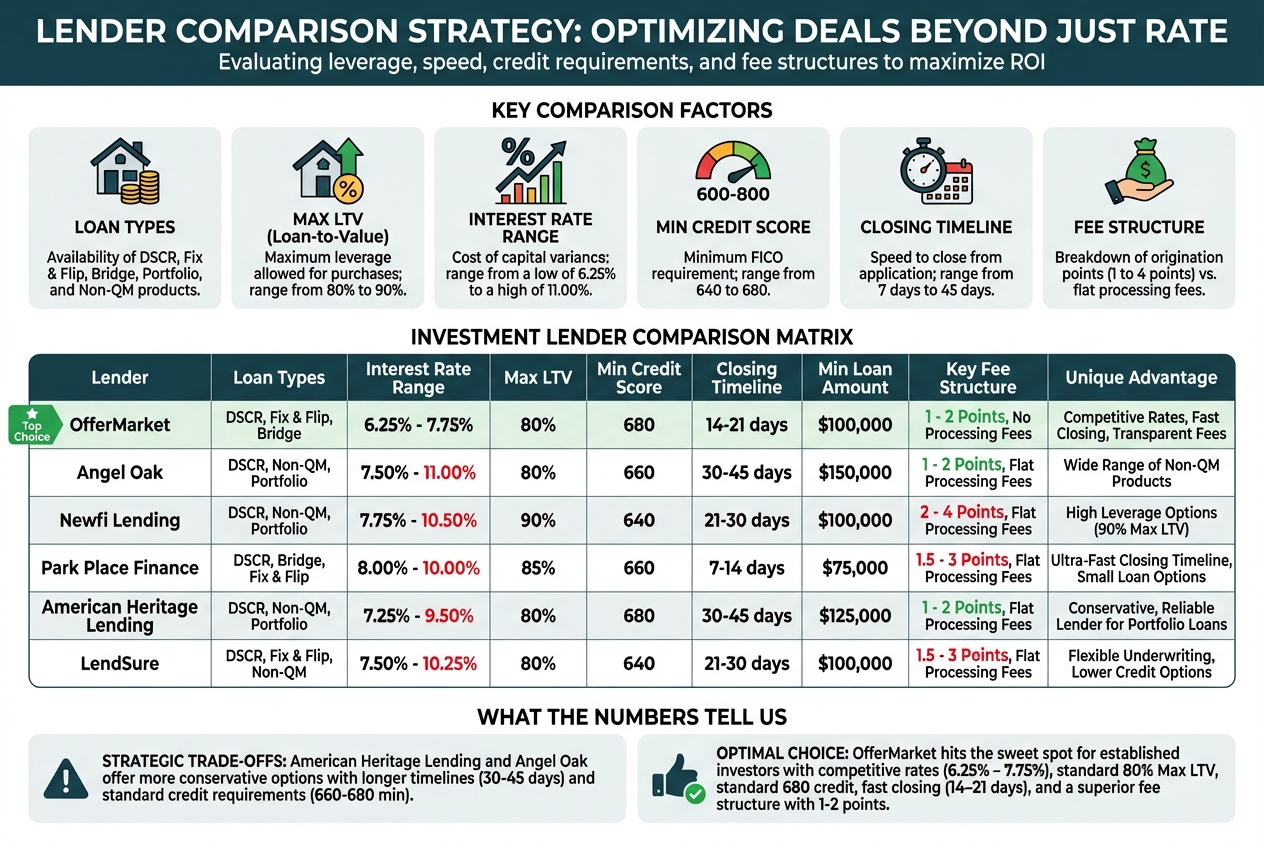
- Maximum Leverage: For a purchase, OfferMarket provides up to 80% Loan-to-Value (LTV), and up to 75% LTV for a Cash-Out Refinance.
- Recycling Your Capital: By pulling out up to 75% of the property's new, stabilized value (ARV), you retrieve your initial cash investment, down payment, and even some repair costs. This process immediately frees up your capital to acquire the next wholesale deal, accelerating your portfolio growth exponentially.
| DSCR Loan Feature | Benefit to Wholesale Investor |
|---|---|
| No Income/Tax Docs | Eliminates borrower DTI constraints, enabling aggressive portfolio scaling. |
| Fast Closing | Target of 15–25 days for the refinance, minimizing carrying costs. |
| No Seasoning Cash-Out | Immediately unlocks tied-up capital for re-deployment into the next wholesale deal. |
| LLC/Entity Borrowing | Loans are made to your investment entity (LLC, Corporation, Trust), separating personal and business liability. |
| 30-Year Fixed Term | Secures predictable, long-term cash flow for retirement planning. |
13.3 Optimizing Your DSCR: Interest-Only Options
OfferMarket Capital also offers flexible amortization structures, including Interest-Only (IO) DSCR Loans (e.g., 5-year IO/25-year amortizing term). This structure strategically boosts your DSCR and cash flow in the short term:
By paying only interest for the first few years, your Total Debt Service (PITIA) is reduced to ITIA (Interest, Taxes, Insurance, HOA), thus increasing the DSCR ratio and resulting in higher immediate cash flow.
This strategy is powerful when buying a property in a rapidly appreciating area where rents are expected to increase, allowing you to maximize leverage early in the investment cycle.

14: Protecting Your Investment – Insurance Rate Shopping ☂️
A wholesale property, especially one that is vacant or distressed, is a high-risk asset. Protecting it from the moment of closing is non-negotiable.
14.1 The Specific Insurance Needs of Wholesale Buyers
Vacant Property/Builder’s Risk (During Rehab): If the property is vacant and under renovation (Fix & Flip), you require a specialized Builder’s Risk policy. Standard homeowner’s insurance will deny claims on vacant properties. OfferMarket's insurance service helps you shop rates for this high-risk period.
Landlord Insurance (Buy-and-Hold): Once you transition to a rental, you need a Landlord (Dwelling Fire) policy, which covers the structure and your liability as a business owner—not the tenant's personal belongings.
14.2 The OfferMarket Insurance Advantage
By providing instant, comparative rate shopping across 40+ carriers, OfferMarket ensures you get the most cost-effective coverage for your specific needs (vacant rehab or occupied rental). This small detail impacts the Holding Costs and Operating Expenses you factored into your maximum allowable offer, ultimately protecting your calculated profit margin.

By leveraging OfferMarket's integrated financing and insurance solutions, you gain the financial agility required to dominate the wholesale acquisition market, turning the speed of the deal from a constraint into your competitive advantage.
Navigating the Transaction: Contracts and Closing ✍️
You have sourced the deal, analyzed the numbers, and secured the capital. Now, you must execute the transaction with precision. Wholesale closing involves a distinct legal mechanism—the Assignment of Contract—that demands careful attention from the investor-buyer.
15: The Assignment of Contract Mechanism
The Assignment of Contract is the core legal process of wholesale investing. It is what allows the wholesaler to profit without ever taking ownership of the property, and it is what allows you, the investor, to acquire the property at the deep discounted price.
15.1 The Two Critical Contracts
As the investor-buyer, you must understand and approve both legal documents involved:
The Original Purchase and Sale Agreement (PSA): This contract is between the Wholesaler (acting as the original Buyer) and the Motivated Seller.
Investor’s Focus: You must ensure this contract contains an "Assignability Clause" (e.g., "Buyer may assign this contract to a third party.") If this clause is missing or explicitly prohibited, the deal is not legally assignable.
The Price: This is the discounted price you are paying for the property (the Original Contract Price).
The Assignment Agreement: This contract is between the Wholesaler (Assignor) and You (Assignee/Investor-Buyer).
The Assignment Fee: This is the wholesaler's profit, paid by you at closing.
The Terms: It states that the Wholesaler transfers all their rights and obligations under the original PSA to you.
Total Cost to Investor = Original Contract Price + Wholesaler's Assignment Fee
15.2 The Investor’s Offer Letter to the Wholesaler
While the wholesaler has the primary purchase agreement, you are the one making the offer to buy their contract. Your offer must be professional and direct, often referencing elements discussed in our Wholesale Real Estate Offer Letter guide:
Financial Terms: Clearly state your Total Cost and the breakdown between the Original Price and the Assignment Fee.
Proof of Funds (POF): Always include your OfferMarket Pre Approval Letter for trust. This is the single most important trust signal you can send, indicating you have the immediate capacity to close.
Timeline: Stipulate a short, firm closing date (e.g., 14 or 21 days), backing up your use of rapid private capital from OfferMarket Capital.
Due Diligence: State your limited or non-existent inspection period, consistent with a cash offer.
16: Managing Risk Through Title and Escrow 🛡️
The closing agent—the title company or attorney—is responsible for ensuring you receive clear title (meaning no unexpected liens, taxes, or encumbrances). Your choice of closing agent is paramount.
16.1 Investor’s Due Diligence on Title
Demand a Title Commitment: This document from the title company outlines any current liens, mortgages, or judgments on the property. Your funds should never be disbursed until the title company confirms that all exceptions (liens) will be resolved and paid off at closing.
The Double Closing vs. Assignment: While an Assignment is simpler (one closing), some deals require a Double Close (two closings back-to-back) if the original seller or lender prohibits assignments. Be prepared to execute either, though the Assignment is typically faster and cheaper.
Working with an Investor-Friendly Title Company: Choose a title company that is experienced with assignments, as many traditional agents are unfamiliar with the process and can cause delays.
16.2 Escrow and Earnest Money Deposit (EMD)
Investor’s EMD: As the assignee, you typically inherit the EMD placed by the original wholesaler, or you are required to place your own EMD. The EMD should be held securely in the Title Company’s escrow account (never directly by the wholesaler).
Protecting Your Funds: Ensure the terms of the Assignment Agreement explicitly state the conditions under which your EMD is refundable (e.g., if the title fails to clear or the original seller defaults).
17: Legal Compliance and Disclosure
While wholesale investing focuses on speed and efficiency, it must always operate within the confines of local real estate law.
17.1 Required Disclosures
As the ultimate buyer, you are dealing with a person (the wholesaler) who is not a licensed agent. Transparency is key.
- Wholesaler's Role: Ensure the original seller was fully aware that the wholesaler was not the end buyer, and that the contract would be assigned.
- Your Intent: If you are buying to rent, your intent should be clear for insurance and future financing purposes.
17.2 The Role of a Real Estate Attorney
In some states, attorneys must handle closing. Regardless of local law, it is highly recommended that a real estate attorney reviews the following documents before you sign the Assignment Agreement and wire funds:
- The Original Purchase and Sale Agreement.
- The Assignment Agreement.
- The Title Commitment.
This minor investment protects you from potential legal disputes related to misrepresentation or unclear title.
18: The Final Close
On closing day, your due diligence culminates in the transfer of the deed.
Funding: Your private capital (from OfferMarket Capital or your cash reserves) is wired to the title company. This must include the Original Contract Price plus the Assignment Fee.
Disbursements: The title company pays the motivated seller, the wholesaler receives their assignment fee, and all closing costs and liens are settled.
The Deed: The property's deed is recorded in your name, making you the legal owner and officially transferring the wholesale opportunity into a revenue-generating asset in your investment portfolio.
With the deed secured, you immediately pivot to the next phase: securing your long-term financing (DSCR Loan) and activating the renovation plan. This seamless transition is only possible because you leveraged the integrated tools of the OfferMarket ecosystem.
Scaling Your Portfolio and Future-Proofing 🚀
A robust wholesale acquisition strategy is not an end in itself; it is the engine for building a significant rental portfolio. Scaling requires discipline in three key areas: Geographic Expansion, Team Building, and Systematizing Capital Management.
19: Strategic Geographic Expansion
You may have started in a specific market (like St. Louis or Tampa, per our previous discussions), but true scaling demands the ability to move capital where the returns are best.
19.1 Identifying the Next "Best Place to Wholesale Real Estate"
As referenced in our guide on the Best Places to Wholesale Real Estate, expanding your footprint is a data-driven exercise. Look for markets that score highly on the following metrics:
Cash Flow Potential (High Rent-to-Value): The average monthly rent should be a significant percentage of the median home price. A high ratio ensures strong DSCR qualification.
Job and Population Growth: Markets with expanding economies and inward migration guarantee sustainable tenant demand.
Landlord-Friendly Legislation: Minimize risk by investing in areas with clear, efficient eviction processes and stable property taxes.
Wholesaler Density: A healthy ecosystem of wholesalers indicates both a supply of distressed property and a robust network of cash buyers (flippers and landlords) to serve as a fast exit strategy if needed.
19.2 The Power of Remote Investing
Scaling through wholesale often means remote investing. Your strategy shifts from physically driving for dollars to managing data and relationships:
Vetting Local Wholesalers: Rely heavily on the OfferMarket Investment Property Marketplace to vet and transact with high-volume, reliable wholesalers in new markets. They become your eyes and ears on the ground.
Building a Remote Team: You need local partners who act as your fiduciary: an Investor-Friendly Title Agent, a Property Manager who understands your goals, and a reliable Contractor for post-closing stabilization.
Remote Analysis: Use online data tools (like PropStream) for remote comparative analysis and OfferMarket Calculators to underwrite deals sight-unseen, based on photos and detailed wholesaler reporting.
20: Building Your World-Class Team 👷
You cannot scale as a solo operator. Your business is a chain of partnerships; strengthening each link is critical.
20.1 Key Partners for the Wholesale Investor
| Partner Role | Critical Function | How They Support Scaling |
|---|---|---|
| Wholesalers/Sourcing Agents (OfferMarket Marketplace) | Consistent flow of discounted, off-market contracts. | Provides passive deal-flow, allowing you to focus on funding and management. |
| Private Lender (OfferMarket Capital) | Provides rapid funding for acquisition (Fix & Flip) and long-term leverage (DSCR). | Recycles your capital rapidly, allowing you to buy more deals faster. |
| Property Manager (PM) | Handles tenant placement, maintenance, and rent collection. | Crucial for remote investing; ensures consistent cash flow for DSCR qualification. |
| Real Estate Accountant/CPA | Optimizes tax strategies (depreciation, passive losses) and legal structure. | Protects profits and maximizes tax efficiency across multiple states/properties. |
| Insurance Agent (OfferMarket Rate Shopping) | Secures the best rates for specialized Landlord Insurance and Builder’s Risk. | Minimizes operating expenses, maximizing net operating income (NOI). |
20.2 Delegating the Right Tasks
Focus your time only on tasks that generate the highest return on investment (ROI): Acquisition Strategy (Underwriting) and Capital Management (Financing). Everything else should be delegated:
- Outsource: Lead generation (to wholesalers), property management, bookkeeping, and tax preparation.
- Your Focus: Vetting the deal, securing financing, and reviewing monthly performance reports.
21: Systematizing Capital and Wealth Creation 💸
The ultimate future-proofing strategy is the efficient management of your invested capital. Wholesale acquisition is the entry point; DSCR refinancing and portfolio optimization is the wealth accelerator.
21.1 The Capital Recycling Loop
This is the core mechanic of aggressive scaling, perfectly facilitated by OfferMarket Capital's dual loan products:
- Wholesale Acquisition: Use cash or an OfferMarket Fix & Flip Loan to secure the deeply discounted property fast.
- Stabilization: Complete light/medium repairs and place a qualified tenant (3–6 months).
- The DSCR Cash-Out Refinance: Immediately apply for a long-term OfferMarket DSCR Loan. This loan is often based on the property’s new, stabilized value, allowing you to pull out most, if not all, of your original capital, down payment, and closing costs.
- RE-DEPLOYMENT: Take the cash pulled out of Property A and use it as the down payment for your next wholesale acquisition (Property B).
💡 This loop allows you to acquire multiple assets with the same finite pool of capital, multiplying your unit count and cash flow exponentially.
21.2 Future-Proofing with Technology
OfferMarket Platform Integration: Use the platform not just for finding deals but for managing your ongoing needs:
- Set reminders for when a rental property is ready for a DSCR Refinance.
- Use the Insurance Rate Shopping tool annually to re-shop for lower landlord insurance rates.
- Stay updated on OfferMarket Capital rate indices to time your refinances optimally.
The DSCR Portfolio Advantage: By focusing on the DSCR metric (which measures the property's financial health), you are building a portfolio that is inherently attractive to future institutional buyers or lenders, securing your long-term exit strategy.
By mastering the wholesale acquisition process and systematically leveraging the integrated services of OfferMarket for sourcing, financing, and insurance, you transition from searching for deals to building an automated, multi-market investment machine. The deep discount secured through wholesale acquisition becomes the foundational advantage for decades of passive income and wealth creation.
Frequently Asked Questions (FAQ) ❓
1. What is the single biggest advantage of buying a wholesale property over an MLS property?
The biggest advantage is instant equity. Wholesale properties are secured at a significant discount (typically 70% of the After Repair Value), meaning you purchase the asset below its market value and bypass the bidding wars inherent in MLS listings.
2. Is the 70% Rule (MAO) mandatory, or can I offer more?
The 70% Rule is a protective safeguard. While you can offer more, every percentage point above 70% of ARV directly reduces your profit margin and safety buffer (which covers holding costs, selling costs, and unexpected repairs). Investors focused on long-term rentals may sometimes stretch to 75% if cash flow is exceptional, but it must be done with extreme caution.
3. How can I verify the wholesaler's ARV and Repair Estimate?
You must Trust but Verify. Use your own data. Pull at least three recent, fully renovated comparable sales (Comps) within a 1-mile radius of the property. For repairs, use the Cost-Per-Square-Foot method for quick filtering, and if the deal moves forward, get an independent quote from your trusted local contractor.
4. What are the biggest red flags to watch for when working with a wholesaler?
The top red flags are: a wholesaler refusing to show you the original Purchase Agreement; inflated, non-conservative ARV or repair estimates; or demanding you pay the Earnest Money Deposit (EMD) directly to them (it should always go to a neutral title company/escrow agent).
5. How quickly should I expect to close a wholesale deal?
Wholesale deals are typically structured for speed. You should be prepared to close in 14 to 30 days. This is why fast, reliable financing from sources like OfferMarket Capital (Fix & Flip Loans) is essential.
6. I don't have all cash. How can I still buy wholesale properties?
You can use specialized private lending or hard money loans, such as the OfferMarket Fix & Flip Loan. These loans focus on the asset's value (ARV) rather than your personal DTI, allowing for the rapid closings required by wholesalers.
7. What is the purpose of the DSCR Loan for a rental property portfolio?
The DSCR Loan is the ultimate scaling tool. It allows you to qualify for a loan based on the property's projected rental income (the Debt Service Coverage Ratio) rather than your personal income or tax returns. This frees your DTI and enables you to continuously add new assets without running into bank limits.
8. How does OfferMarket Capital help me recycle my cash?
OfferMarket facilitates the Cash-Out Refinance using the DSCR Loan with minimal or no seasoning period after stabilization. This means you can quickly pull your initial down payment, acquisition, and rehab costs out of Property A and redeploy that capital into the next wholesale deal (Property B), multiplying your buying power.
9. Do I need a separate insurance policy for a vacant rehab property?
Absolutely. A standard homeowner’s policy will not cover a vacant property under renovation. You need a specialized Builder’s Risk or Vacant Dwelling policy. You should use OfferMarket's Insurance Rate Shopping service to secure the correct, cost-effective coverage immediately upon closing.
10. How does the OfferMarket Marketplace help me find better wholesale deals?
The Marketplace acts as a centralized, verified hub for off-market inventory. It filters out the noise, providing direct access to pre-vetted assignable contracts posted by reliable wholesalers. It also allows you to submit your Proof of Funds (POF) to gain credibility with sellers instantly.
11. Can I use the OfferMarket platform if I invest outside of major cities?
Yes. The platform is designed to facilitate remote investing. You can use the Marketplace alerts and OfferMarket Capital lending solutions to source and fund deals in geographically diverse markets with high cash flow potential, aligning with the principles of strategic expansion.
12. How does OfferMarket's Cash Offer Calculator differ from a manual 70% rule formula?
The Cash Offer Calculator is more accurate because it integrates all the soft costs (closing, holding, financing interest, and desired profit margin) into the calculation, not just the ARV and ERC. It provides a safer, more precise (MAO) than a simple manual formula.
13. What is the difference between an Assignment of Contract and a Double Closing?
In an Assignment, you, the investor, pay the wholesaler’s fee and the contract price in one transaction. In a Double Close, the wholesaler actually closes on the property (buying it), and then immediately sells it to you (a second closing). The Assignment is usually simpler and cheaper, but a Double Close may be required if the seller prohibits contract assignment.
14. When should I switch from using Fix & Flip Loans to DSCR Loans?
You use a Fix & Flip Loan for the Acquisition and Rehab phase. You switch to a DSCR Loan for the Refinance phase, once the property is stabilized (rented or ready to rent). The DSCR loan secures the long-term, low-rate debt necessary for passive cash flow.
15. What is the first team member I should hire when I decide to scale my portfolio?
The most critical partner for scaling is a reliable Property Manager (PM). A PM handles the day-to-day operations (tenant screening, maintenance, rent collection), freeing your time to focus on the highest-value activities: sourcing new wholesale deals and securing financing.
Grow and optimize your portfolio with OfferMarket
OfferMarket is a real estate investing platform focused on serving rental property investors, small builders, flippers and wholesalers. We focus exclusively on 1-4 unit residential properties in non-rural markets.
We hope you will accept our invitation to join us and over 20,000 registered members.
Membership is entirely free and comes with the following benefits:
🏚️ Off market properties 💰 Private lending ☂️ Landlord insurance rate shopping 💡 Market insights
Our mission is to help you build wealth through real estate and we look forward to contributing to your success!

OfferMarket Loans
Check your rate
60 seconds · no credit pull