*Quote takes 1 minute, no credit pull
Insurance*1 quote from 40+ carriers
Listings*New listings daily
80 LTV Hard Money Loans
Last updated: January 7, 2026
If you're a real estate investor looking for 80 LTV hard money loans, it's important to make sure we are on the same page. This article will explain the most common scenarios for which real estate investors seek 80% LTV financing. In each scenario we will evaluate 80 LTV feasibility, and how it can be used to grow and optimize your real estate investing business.
Scenario 1: Property Needs To Be Rehabbed
If you're about to purchase or you already purchased a property that needs to be renovated, you are in the right place.
Purchase Transaction
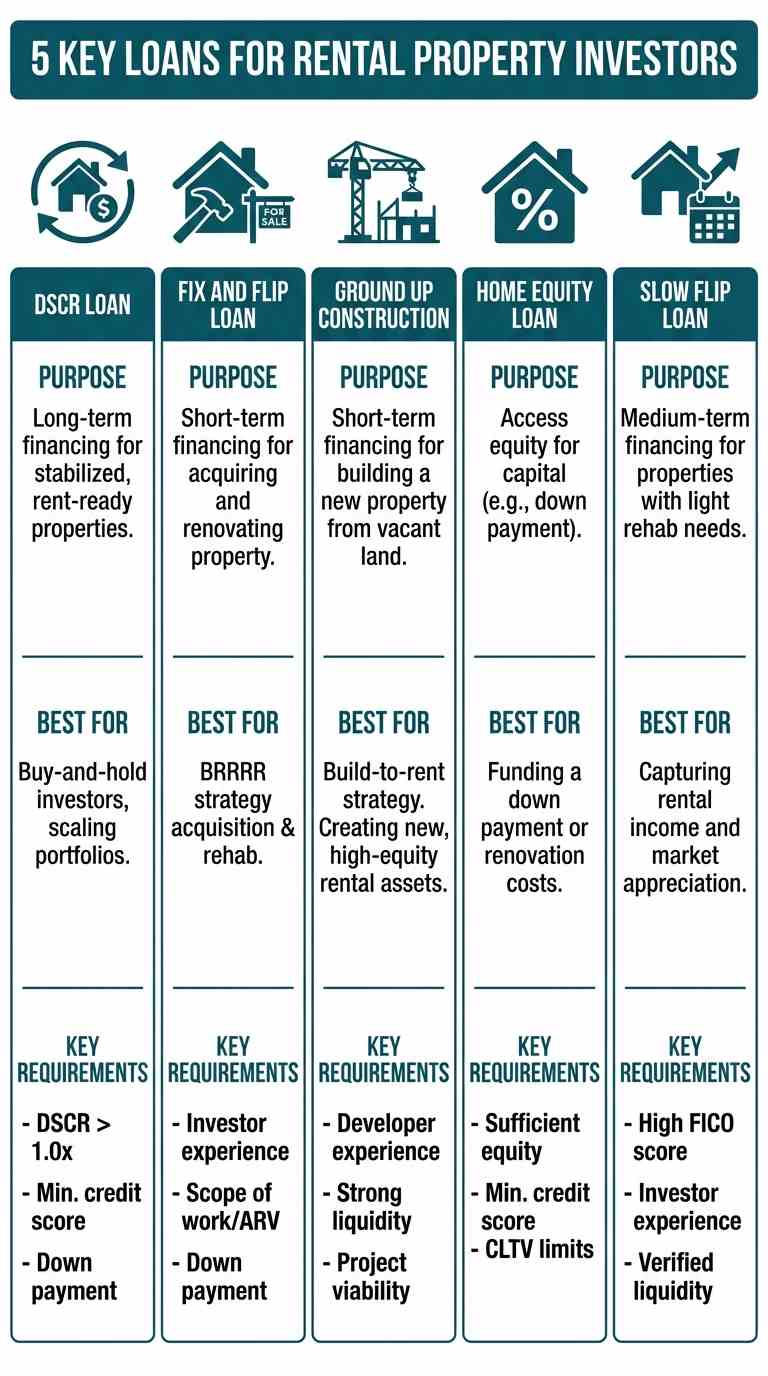
So you've found a property that needs work and you want a loan to purchase and rehab it. This is called a "fix and flip loan", "hard money loan", and some lenders call it a residential transition loan (RTL) -- they are the same thing.
Most lenders will offer the following terms:
- Loan to purchase price ("initial advance"): up to 90%
- Loan to rehab budget ("construction holdback"): up to 100%
- Loan to after-repair value (LTARV): up to 75%
- Interest rate: ~12% (get lower rates from OfferMarket)
- Term: 12 to 18 months
- Structure: interest only
Let's look at an example purchase with a hard money loan:
- Purchase price: $100,000
- Rehab budget: $50,000
- ARV estimate: $200,000
- Initial advance: $90,000
- Construction holdback: $50,000
- Total loan amount: $150,000
- LTARV: 75%
- Credit score: 750
- Experience: 5+ similar verifiable rehabs
In this example, we are right at the max of 75% LTARV. The construction holdback is funded via reimbursement "draw processing" based on verifiable progress against your scope of work. At OfferMarket, we use a geolocation picture app for self-serve draw processing with review and wire processed as soon as same-day.
It would not be safe and should not be expected for a lender to offer 80% LTARV, if that is what you are looking for. Needing 80% LTARV is a clear sign that your deal is not a good deal. The best real estate investors are typically at 60% to 70% LTARV because they find off market properties well below market value, and they are able to cost effectively rehab. Therefore, the total loan they require is low relative to the after repair value as determined by 3rd party appraiser or in-house valuation.
If your experience is low (i.e. 0 to 3 verifiable similar rehabs), then you should expect your max LTARV to be 70% instead of 75%, and your max initial advance to be 80% to 85% instead of 90%. You should also expect your interest rate to be slightly higher and your lender will likely want you to work with a licensed general contractor.
Ultimately, low experience is higher risk for lenders and the "compensating" factors for loan approval are as follows:
- excellent credit (i.e. 720+)
- strong liquidity
- working with a licensed general contractor
- light/cosmetic scope of work
- good profitable deal (i.e. 30%+ ROI)
- located close to subject property (in-state investor)

Refinance Transaction: No Existing Debt
Now let's look at a scenario where you already own the property free and clear (you paid cash, there is no existing debt) and you want to refinance into a hard money loan.
Most hard money lenders can offer the following terms:
- Loan to purchase price: up to 90%
- Loan to rehab budget: up to 100%
- Loan to after-repair value (LTARV): up to 75%
- Interest rate: ~12% (get lower rates from OfferMarket)
- Term: 12 to 18 months
- Structure: interest only
For example:
- Purchase price: $200,000
- Rehab budget: $100,000
- ARV estimate: $425,000
- Initial advance: $180,000
- Construction holdback: $100,000
- Total loan amount: $280,000
- LTARV: 66%
- Credit score: 680
- Experience: 5+ similar verifiable rehabs
This looks like a good deal because the borrower will be profitable even if the property appraises lower than the ARV estimate once the rehab is complete and it is time to refinance into a DSCR loan or sell the property.
Refinance Transaction: Existing Debt
If you already own the property with existing debt (i.e. a hard money loan from a different lender), then lenders will very cautious. They will want to understand the following:
- why does the current lender need to be paid off? Why are they unwilling to hold the current loan?
- is the project "mid-construction" where the rehab has been started but not yet completed? Why were you unable to complete the rehab?
- is there a viable exit strategy once the rehab is completed? Do the numbers make sense?

Scenario 2: Property Is Rent Ready
If you're about to purchase a rent-ready, "turnkey rental property" or you already purchased and rehabbed a property that needs to be refinanced, you are in the right place.
Purchase Transaction
Rental property investors are utilizing a fast-growing financing program called a "DSCR loan" to purchase rent ready properties with 80% LTV. This means the real estate investor is responsible for a 20% down payment plus closing costs.
Let's take a look at purchase example using an 80 LTV DSCR loan:
- Purchase price : $200,000
- As Is value: $200,000
- Loan amount: $160,000 (80% LTV)
- Interest rate: 6.25%
- Annual taxes: $2,000
- Annual insurance: $1,000
- Annual HOA: $0
- Monthly rent: $2,000
- Monthly payment (PITIA): $1,235
- DSCR: 1.62
- Borrowing entity: LLC
- Personal guarantor (borrowing entity member): 720
- Cash to close: $45,020 (includes lender and title fees)
- Liquidity to verify: $56,135
In this example, the DSCR (1.62) is significantly above the 1.0 minimum, and the guarantor's soft trimerge credit report has a middle score of 720 which is safely above the typical 680 minimum.
You will notice the liquidity to verify is higher than the cash to close. That is because your DSCR lender needs to verify that you have additional liquidity for risk management. 9 months of PITIA is a conservative expectation to set if you are looking for 80% LTV. These "reserves" simply need to be verified that they exist, they do not need to be moved from your financial account(s).

Refinance Transaction
If you already own a property in rent ready condition and you are looking to refinance into an 80% LTV DSCR loan, then you are in luck.
Let's take a look at refinance example using an 80 LTV DSCR loan:
- As Is value: $250,000
- Loan amount: $200,000 (80% LTV)
- Interest rate: 6.5%
- Annual taxes: $3,000
- Annual insurance: $1,500
- Annual HOA: $0
- Monthly rent: $2,500
- Monthly payment (PITIA): $1,235
- DSCR: 1.53
- Existing debt: $0
- Borrowing entity: Personal name
- Personal guarantor (borrowing entity member): 720
- Cash to close: $45,020 (includes lender and title fees)
- Liquidity to verify: $0
- Cash out proceeds: $193,520
In this example, the DSCR (1.53) is once again safely above the typical 1.0 minimum. Note that 1.1+ is our recommendation for proper risk management. You will notice that the liquidity to verify is $0 because the cash out proceeds satisfy the liquidity required to cover reserves.
You may also notice that 80% LTV is offered for a cash out when most DSCR lenders offer only 75% LTV for cash out refi (a cash out is when your cash to borrower proceeds on the settlement statement are $2,000+). This is a new addition to OfferMarket's DSCR loan program and we encourage you to read more about it cash out refi 80 LTV.

Frequently Asked Questions
Is it possible to get an 80 LTARV hard money loan?
Most hard money loan programs (aka "fix and flip") are capped at 75% LTARV. We have never seen a hard money lender offer higher than 75% LTARV and you should be careful dealing with any lender that offers 80% LTARV terms.
Do DSCR loans report to personal credit?
If you are using a business entity (i.e. LLC, Corporation, LP, Trust) then no, the loan will not appear on the entity member or guarantor personal credit report. If you are borrowing in personal name (title is in your name, not a business entity), then you should expect the servicer will report to your personal consumer credit report.
Do DSCR loans require a personal guarantee?
For 1-4 unit residential properties, you should expect that at least 1 personal guarantor will be required. Some DSCR loan programs allow 25% of the borrowing entity's membership to serve as guarantor while other DSCR loan programs require 51% or even 81% of the member ownership to personally guarantee the loan.

Join OfferMarket
OfferMarket is a real estate investing platform focused on serving rental property investors, small builders and flippers. We focus exclusively on 1-4 unit residential properties and serve investors across the continental United States.
We hope you will accept our invitation to join us and over 22,000 registered members.
Membership is entirely free and comes with the following benefits:
🏚️ Off market properties 💰 Private lending ☂️ Landlord insurance rate shopping 💡 Market insights
Our mission is to help you build wealth through real estate and we look forward to contributing to your success!


OfferMarket Loans
Check your rate
60 seconds · no credit pull