*Quote takes 1 minute, no credit pull
Insurance*1 quote from 40+ carriers
Listings*New listings daily
Deconstructing the Wealth: Pace Morby's Core Income Streams
Pace Morby's net worth is estimated to be around $40 million as of 2024. This figure is not the result of a single lucky deal or a traditional, slow-growth career path. Instead, it’s the product of a sophisticated, interconnected ecosystem of businesses built on one core principle: mastering the art of the creative offer. While the $40 million number is impressive, it serves primarily as validation. The real value for an aspiring investor lies in understanding the machinery that built this wealth. His fortune is derived from three primary pillars: a massive educational community known as Subto, an extensive real estate portfolio acquired through creative finance, and a network of ancillary businesses that support his core operations.
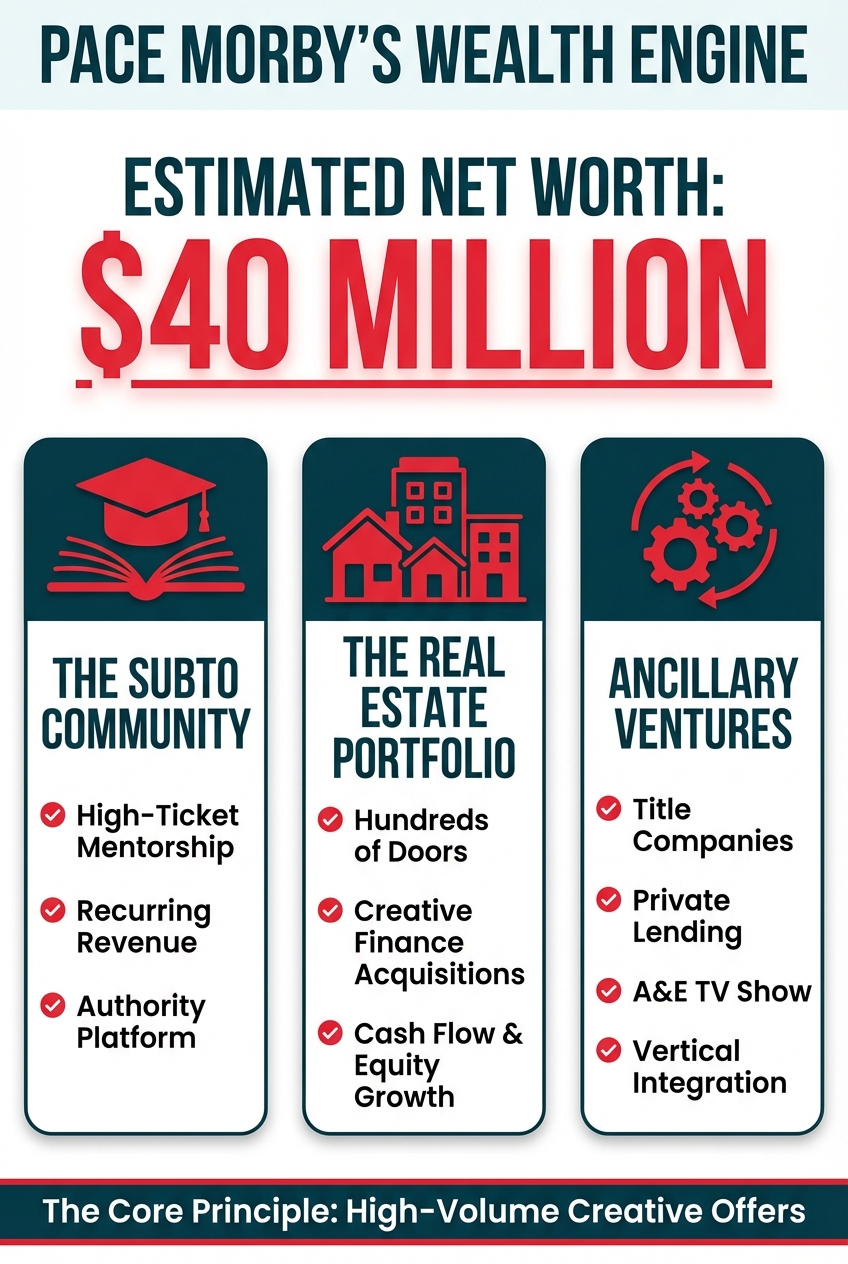
The engine driving this entire enterprise is a relentless, high-volume approach to making offers. Morby’s success is a direct result of his philosophy that real estate is a numbers game, where a massive quantity of well-structured, creative offers will inevitably lead to a percentage of acceptances. He didn't start with a high success rate; he started, like all investors, with "bad quotes" and countless rejections. The key was turning the process of finding, analyzing, and submitting offers into a streamlined system. This article will deconstruct each pillar of his wealth, explain the creative finance strategies he uses, and show you how to apply the same high-volume principles using the OfferMarket marketplace to begin building your own real estate empire.
Deconstructing the Wealth: Pace Morby's Core Income Streams
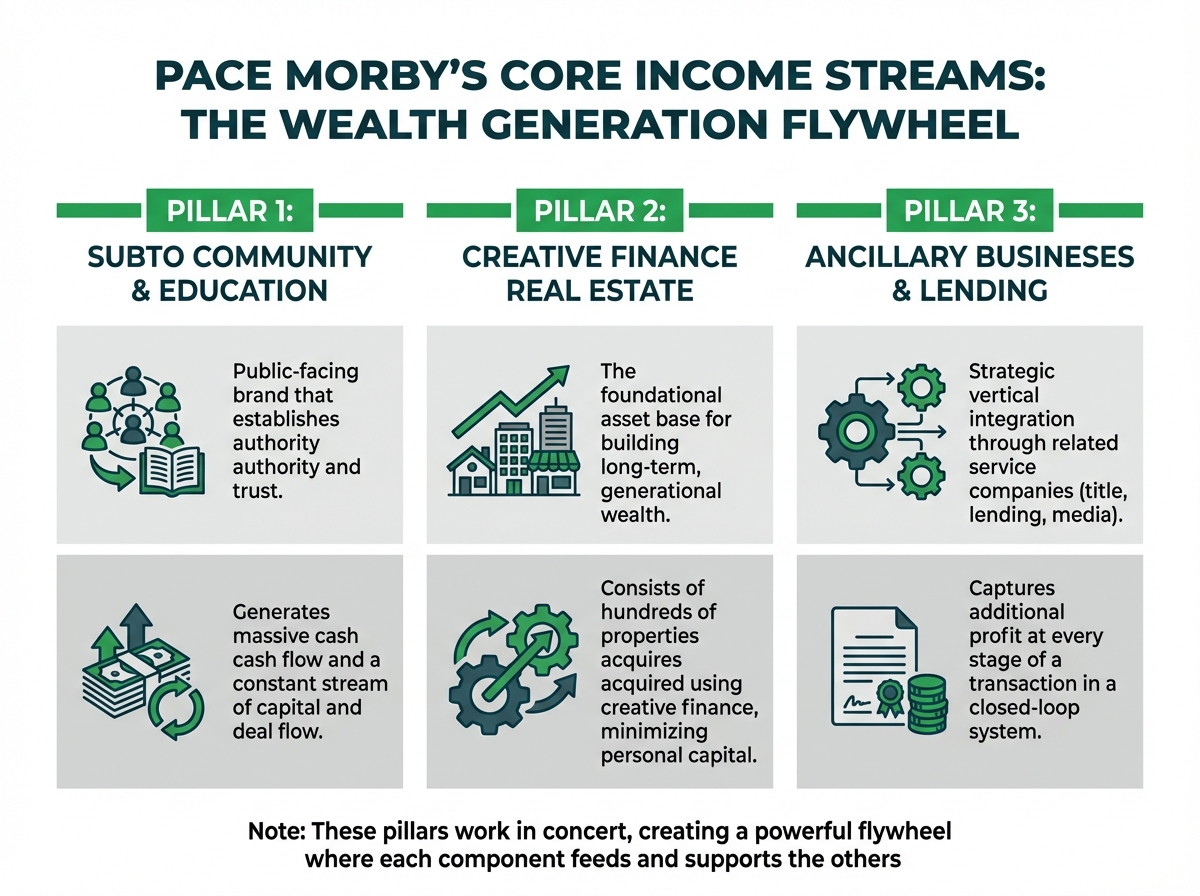
Pace Morby’s $40 million net worth is not a monolithic structure. It's a carefully engineered ecosystem where each component feeds and supports the others, creating a powerful flywheel of wealth generation. Understanding this structure is crucial for anyone looking to replicate his success. His financial empire rests on three distinct but deeply interconnected pillars:
The Subto Community and Education Empire: This is his public-facing brand and a massive revenue generator. It serves as an education platform that teaches his creative finance strategies, but more importantly, it establishes his authority and generates a constant stream of capital and deal flow.
The Expansive Creative Finance Real Estate Portfolio: This is the foundational asset base. While the education business produces cash flow, the real estate portfolio is where long-term, generational wealth is built. It consists of hundreds of properties acquired primarily through creative finance, minimizing the need for his own capital or bank debt.
Ancillary Businesses and Private Lending: This pillar represents strategic vertical integration. By owning or partnering in businesses that service the real estate industry—like title companies, lending operations, and even a TV show—he captures additional revenue from his own deals and the deals of others, creating a closed-loop system that maximizes profit at every stage of a transaction.
These three pillars work in concert. The education platform generates cash and deal opportunities, the real estate portfolio uses those opportunities to build equity and passive income, and the ancillary businesses provide the services needed to execute the deals efficiently while adding another layer of profit. Let's break down each of these pillars in detail.
Pillar 1: The Subto Community - A Multi-Million Dollar Education Platform
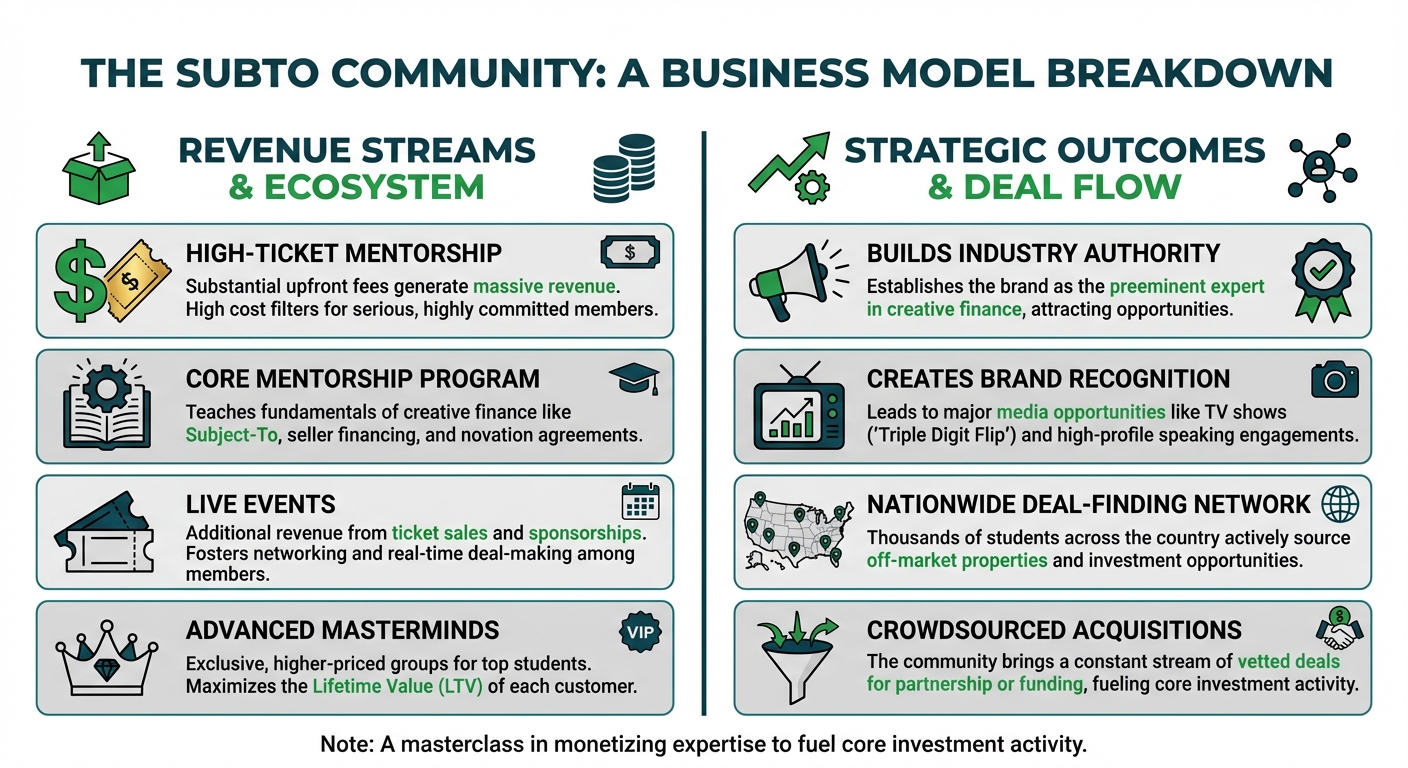
The most visible part of Pace Morby's empire is his education company, primarily centered around the Subto community. This is far more than a simple online course; it's a high-ticket mentorship program that has become a multi-million dollar business in its own right. The business model is sophisticated and highly profitable, leveraging a combination of membership fees, live events, and exclusive mastermind groups.
The High-Ticket Business Model
Subto is not a cheap entry point. The cost of joining the community is substantial, often cited in the tens of thousands of dollars. This high-ticket model serves two purposes:
Significant Upfront Revenue: With thousands of members, the upfront revenue is massive and provides the capital for other investments and business operations.
High-Commitment Members: The price point filters for serious individuals who are heavily invested in their own success, creating a more engaged and effective community.
The revenue doesn't stop with the initial fee. The Subto ecosystem includes multiple tiers of engagement:
Core Mentorship: The main program that teaches the fundamentals of creative finance, including Subject-To, seller financing, and novation agreements.
Live Events: Multi-day events where community members can network, learn from Pace and other experts, and do deals in real-time. These events are an additional revenue stream through ticket sales and sponsorships.
Advanced Masterminds: For the most successful students, there are higher-level, more expensive mastermind groups that offer more direct access to Pace and other high-level investors.
This tiered structure creates a powerful LTV (Lifetime Value) for each customer, as engaged members continue to invest in their education and community access.
The Flywheel Effect: Authority and Deal Flow
The Subto community does more than just generate cash. It's a powerful engine for building authority and creating deal flow. By teaching his methods to thousands of students, Pace establishes himself as the preeminent expert in creative finance. This authority leads to:
Brand Recognition: He becomes the go-to person for creative finance, attracting media opportunities like his A&E show, "Triple Digit Flip," and speaking engagements.
A Nationwide Deal-Finding Network: His students, spread across the country, are actively looking for deals. Many of them bring their deals to Pace or his inner circle for funding, partnership, or advice. The community effectively becomes a crowdsourced acquisitions team, bringing him a constant stream of vetted, off-market opportunities that he would never find on his own.
The Subto community is the top of Pace's funnel. It generates enormous cash flow, solidifies his expert status, and feeds a steady diet of deals into his other two pillars. It's a masterclass in how to monetize expertise while simultaneously using it to fuel your core investment activity.
Pillar 2: The Real Estate Portfolio - The Foundation of His Wealth
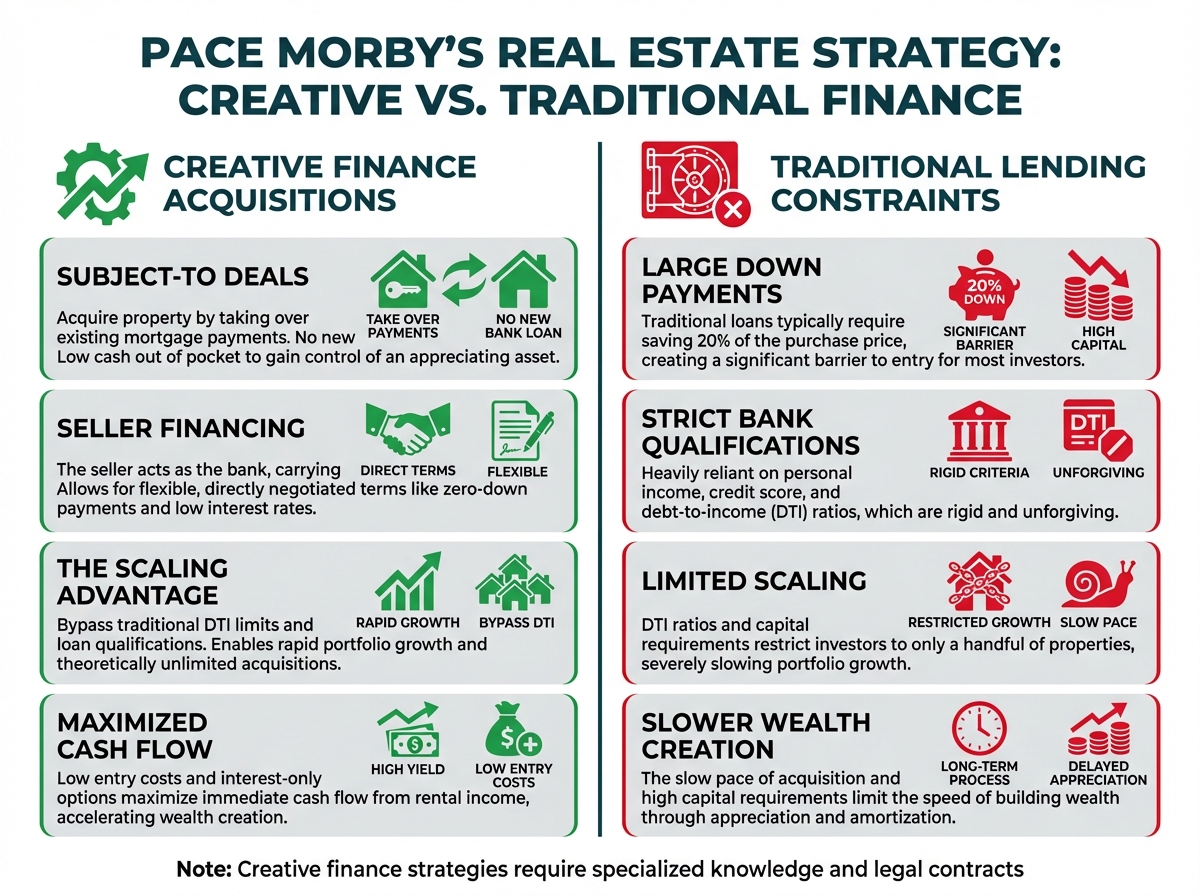
While the education business generates impressive cash flow, the bedrock of Pace Morby’s net worth is his vast real estate portfolio. This is where true, lasting wealth is created through appreciation, amortization, and passive income. His portfolio isn't built on the traditional model of saving up 20% down payments and slowly acquiring properties. Instead, it's a testament to the explosive scaling potential of creative finance.
The Power of "Other People's Money" (and Mortgages)
The core of Morby’s acquisition strategy is to use as little of his own money as possible. He does this by mastering techniques that bypass traditional banks. His two primary methods are:
Subject-To: This is where he takes title to a property "subject-to" the existing mortgage. He doesn't formally assume the loan; he simply takes over the payments. This allows him to acquire a property for just the cost of the seller's equity (if any) and closing costs, often for just a few thousand dollars out of pocket. He gains control of an appreciating asset with a fixed-rate loan already in place.
Seller Financing: In this scenario, the seller acts as the bank. Instead of the buyer getting a loan from a lender, the seller "carries the note." Pace negotiates a down payment, interest rate, and term directly with the seller. This can be incredibly flexible, allowing for zero-down-payment deals, low interest rates, or interest-only periods that maximize early cash flow.
By using these methods, he removes the single biggest constraint for real estate investors: access to capital and loan qualifications. While a traditional investor might be limited by their debt-to-income ratio to just a handful of properties, Pace's model allows for theoretically unlimited acquisitions.
Building Wealth in Three Ways Simultaneously
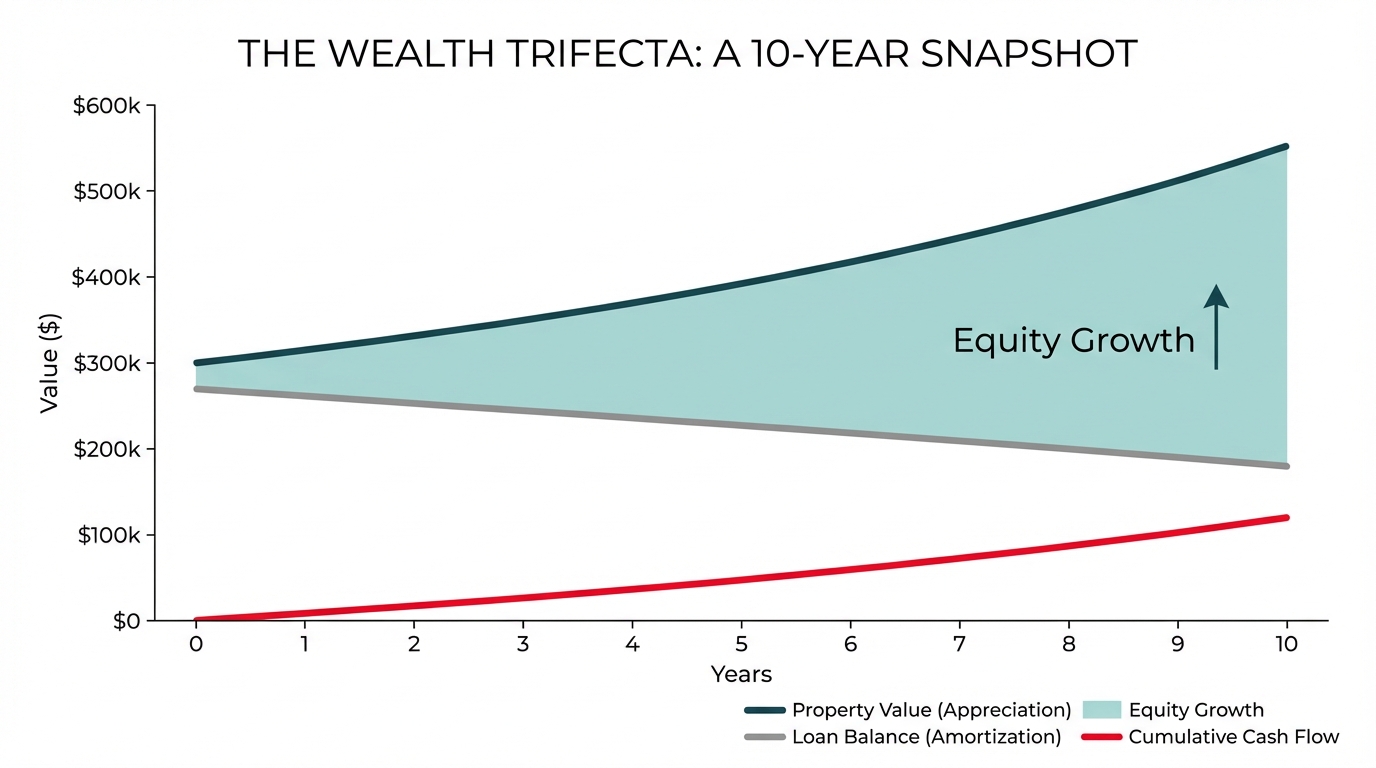
A creatively financed real estate portfolio builds wealth through a powerful trifecta of returns:
Monthly Cash Flow: After the mortgage payment (to the original lender in a Subto deal, or the seller in a seller finance deal) and all operating expenses (taxes, insurance, maintenance) are paid, the remaining rental income is pure profit. With hundreds of doors, this passive income stream becomes a significant monthly revenue source.
Debt Paydown (Amortization): Every month, a portion of the mortgage payment made by the tenant's rent goes towards paying down the principal balance of the loan. This is a form of forced savings that builds the investor's equity in the property without them contributing any additional capital.
Appreciation: Over the long term, real estate values have historically trended upward. This market-driven growth in the property's value is the most powerful wealth-building component, and it's amplified by leverage. If you control a $500,000 property with only $5,000 invested, a 5% increase in value ($25,000) represents a 500% return on your cash.
Pace's portfolio, comprising hundreds of single-family homes, multifamily units, and even commercial assets, is a massive machine constantly working to increase his net worth through these three mechanisms. It's the stable, long-term foundation that allows him to take risks and innovate in his other ventures.
Pillar 3: Ancillary Ventures and Private Money Lending
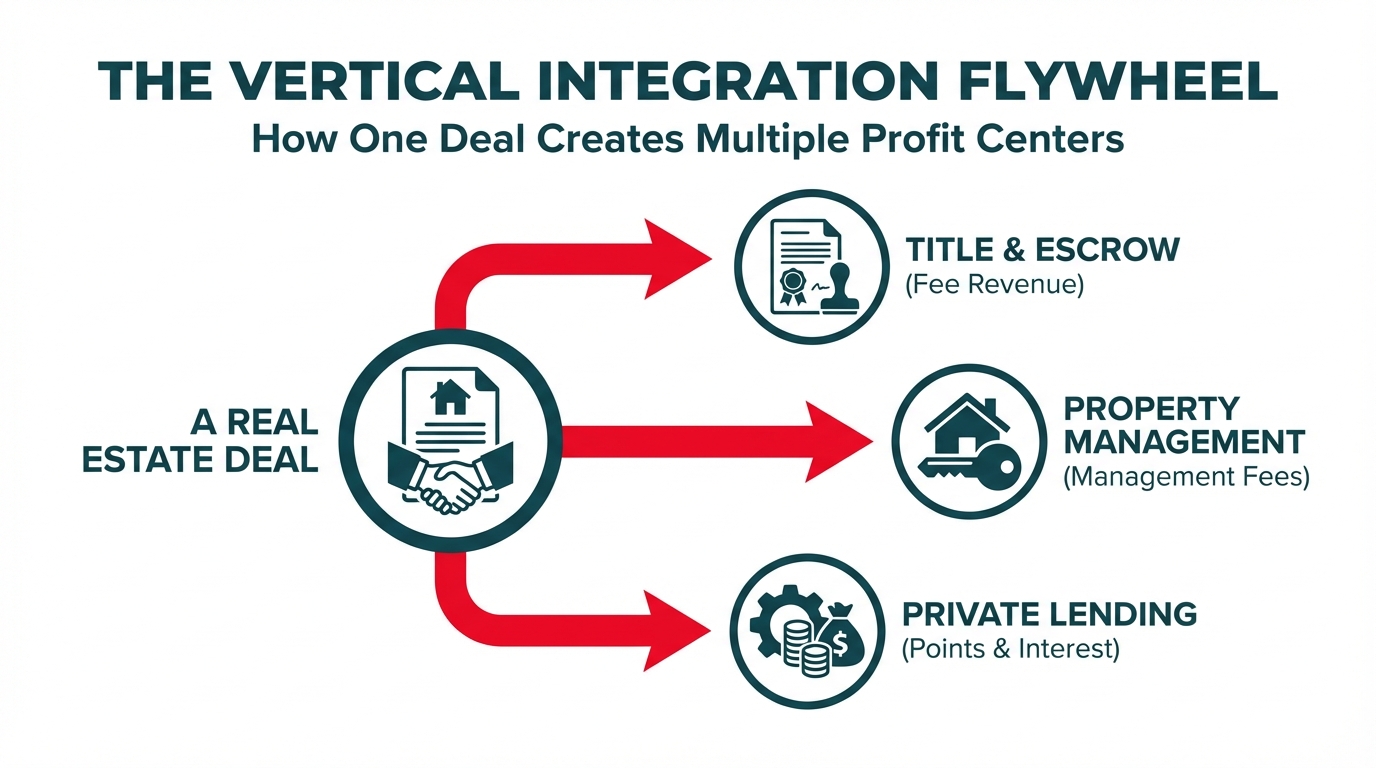
The third pillar of Pace Morby's wealth is a masterstroke of business strategy: vertical integration. He understands that a real estate transaction involves numerous service providers, each taking a slice of the profit. By owning or partnering in these ancillary businesses, he ensures that the money spent on his deals—and the deals of his students—often circles back into his own ecosystem. This strategy dramatically increases the profitability of every single transaction.
Creating a Closed-Loop Ecosystem
Pace has ownership or strategic partnerships in a variety of businesses that service the real estate investment lifecycle:
Title and Escrow Companies: Every real estate transaction requires title insurance and escrow services. By having an interest in a title company, he not only ensures a smooth closing process for his complex creative finance deals but also earns revenue from the title fees on hundreds or thousands of transactions per year.
Property Management: A large rental portfolio requires management. Owning a piece of the property management company that oversees his assets turns a major expense category into a revenue stream.
Lending Operations: Pace is a well-known figure in the private money lending space. He acts as a lender to other investors (often from his own community), earning high-interest returns on short-term loans for flips or bridge financing. This allows him to profit from deals he isn't directly involved in as an owner.
Media and Brand Building: His role as the star of A&E's "Triple Digit Flip" is not just a side project; it's a strategic ancillary venture. The show provides massive brand exposure, enhances his credibility, and serves as a powerful source of deal flow, as motivated sellers and wholesalers seek him out directly.
The Power of Vertical Integration
This ecosystem creates a powerful competitive advantage. When Pace evaluates a deal, his profit calculation is different from that of a typical investor. He isn't just looking at the potential cash flow or flip profit. He's also calculating the revenue from the title fees, the loan origination points, the future property management fees, and the potential to syndicate the deal to his network.
This model also creates immense resilience. If the real estate market slows down and acquisition volume decreases, the property management and lending businesses can still provide steady income. If the lending market tightens, his ability to acquire properties with creative finance becomes even more valuable. Each business unit hedges against risks in the others, creating a robust and diversified financial foundation. This pillar demonstrates a shift from simply being an investor in the real estate market to becoming the market's infrastructure.
The Engine Behind the Empire: Mastering The Art of the Creative Offer
Understanding Pace Morby's three pillars of wealth is only half the story. The question remains: how does he acquire the hundreds of properties that form the foundation of his portfolio? The answer lies in one core competency that powers his entire enterprise: mastering the art of the creative offer.
Creative finance isn't a single trick or a loophole. It's a fundamental shift in how one approaches a real estate transaction. Instead of seeing a deal through the binary lens of "can I get a loan for this?", a creative finance expert sees a problem to be solved for the seller. The purchase price is often secondary to the terms. This skill is what allows for the unlimited scalability that traditional methods lack.
The Creative Finance Toolkit
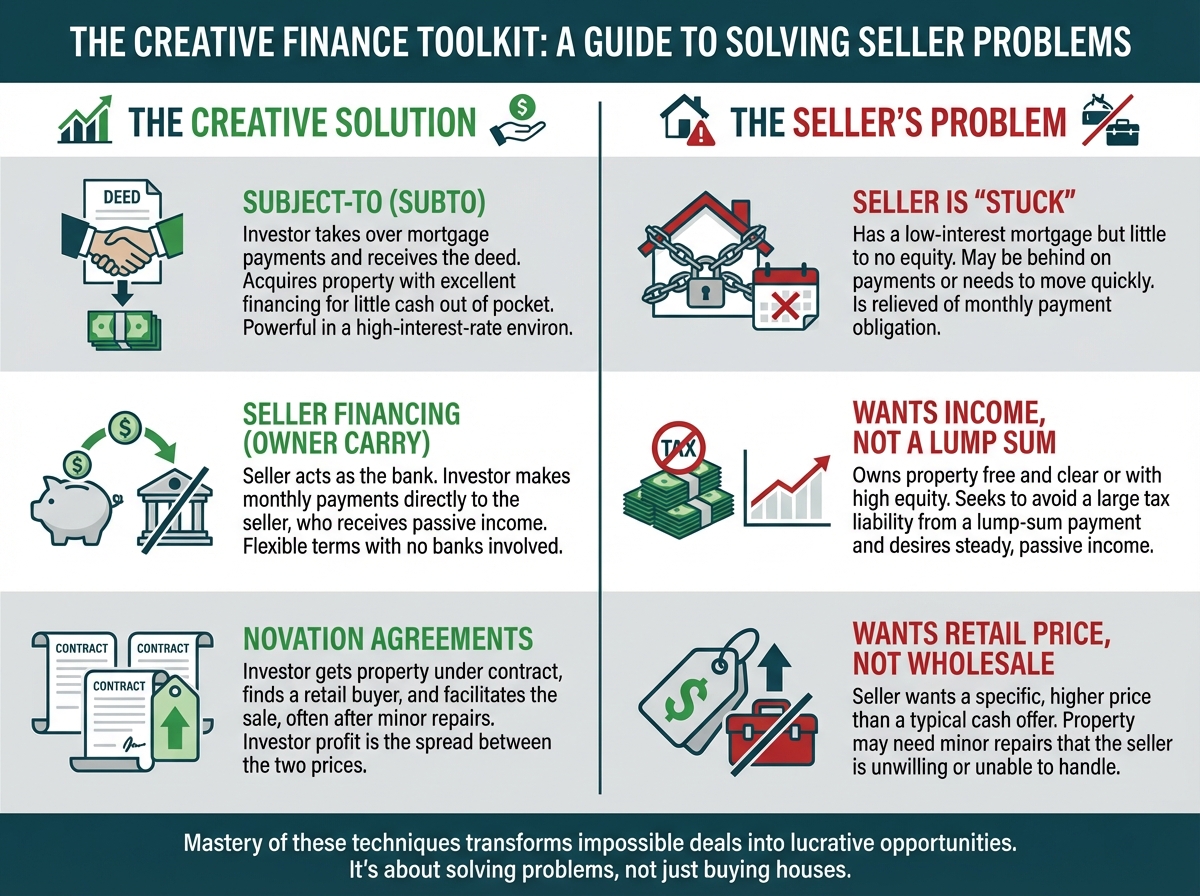
Pace primarily uses a handful of key strategies, each designed to solve a different seller problem:
-
- The Seller's Problem: The seller has a property with an existing, low-interest mortgage. They may have little to no equity, be behind on payments, or need to move quickly without the hassle of a traditional sale. They are "stuck."
- The Creative Solution: The investor takes over the seller's mortgage payments and receives the deed to the property. The seller is relieved of their monthly payment obligation and can walk away. The investor acquires a property with excellent financing already in place, often for very little cash out of pocket. This is a powerful tool in a high-interest-rate environment.
Seller Financing (Owner Carry):
- The Seller's Problem: The seller owns the property free and clear or with significant equity. They may be more interested in receiving steady monthly income than a large lump-sum payment, which would create a significant tax liability. They want to become the bank.
- The Creative Solution: The investor and seller agree on a purchase price, down payment, interest rate, and term. The seller deeds the property to the investor, and the investor makes monthly payments directly to the seller. This provides the seller with passive income and allows the investor to acquire a property with flexible, negotiated terms, often with no banks involved.
Novation Agreements:
The Seller's Problem: The seller wants a specific price for their property, which may be more than a wholesaler can offer for a cash deal. The property might need minor repairs that the seller doesn't want to handle.
The Creative Solution: This is a more advanced strategy that blends wholesaling and fixing-and-flipping. An investor gets the property under contract and then, instead of assigning the contract, they find a retail buyer, complete any necessary repairs, and facilitate the sale. The original contract with the seller is "novated" (replaced) with the new end-buyer's contract. The investor's profit is the spread between the two prices, minus repair costs. It allows them to capture a larger profit than a standard wholesale deal.
Mastery of these techniques transforms the investment landscape. Suddenly, deals that are invisible or "impossible" to traditional investors—those with no equity, tired landlords, or complex financial situations—become the most lucrative opportunities. It's about solving problems, not just buying houses.
The Unseen Grind: From Countless Rejections to a 1% "Yes" Rate
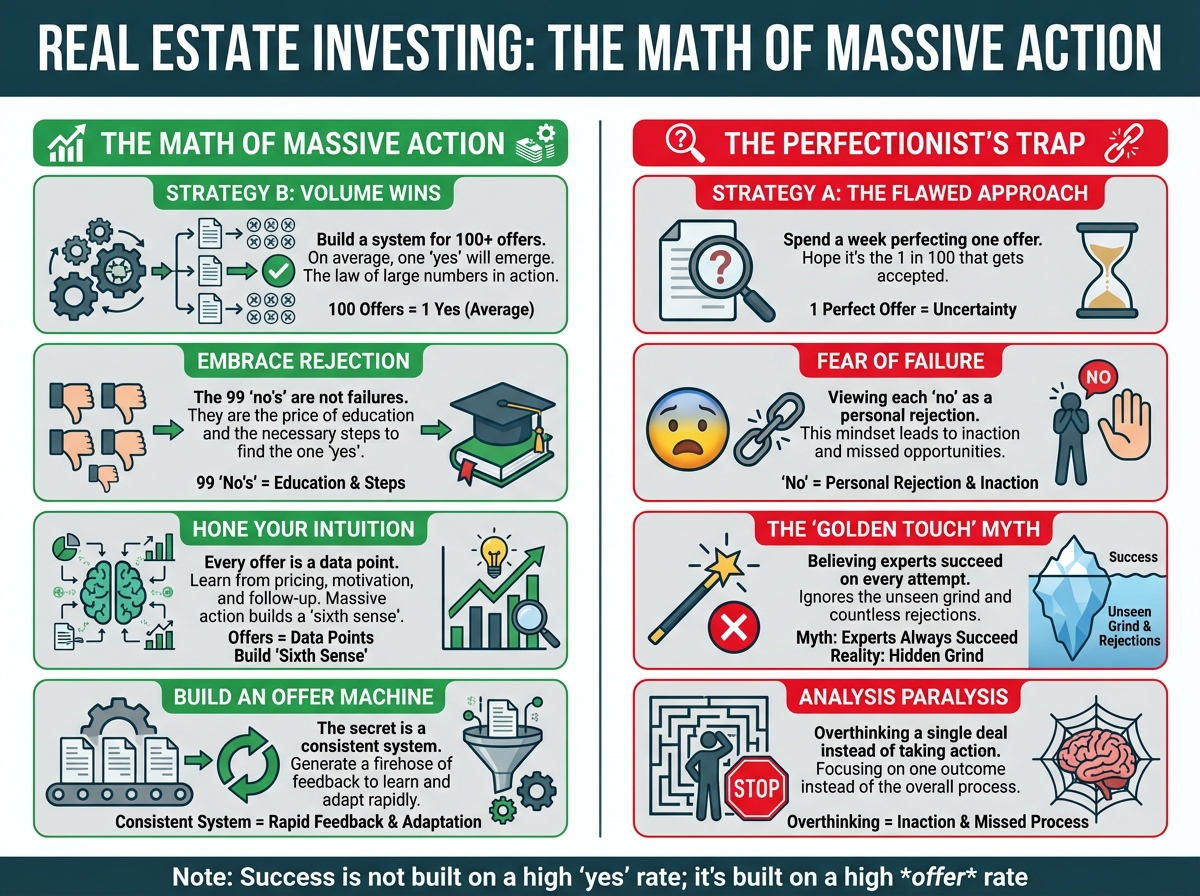
The success stories and the $40 million net worth figure can create a misleading perception of ease. It's easy to assume that experts like Pace Morby have a "golden touch" where every offer they make is a winner. The reality is the exact opposite. His success is not built on a high "yes" rate; it's built on an extraordinarily high offer rate.
The foundation of his philosophy is the law of large numbers. In real estate investing, this means that if you make enough offers, you will eventually get a "yes," regardless of how many "no's" you get along the way. Pace and other elite investors understand that rejection is not a failure—it is the unavoidable cost of doing business and the price of their education.
The Math of Massive Action
Think about it in simple terms. If your "yes" rate is only 1%, what's the better strategy?
- Strategy A: Spend a week perfecting one offer, send it, and hope it's the 1 in 100 that gets accepted.
- Strategy B: Build a system to send 100 offers in that same week, knowing that, on average, one of them will likely be accepted.
The most successful investors choose Strategy B every time. They embrace the rejections. They understand that the 99 "no's" are just the necessary steps to find the one "yes." This requires a profound mental shift away from the fear of rejection and toward a focus on process and volume.
From "Bad Quotes" to Expert Intuition
Every expert, including Pace, started by making what they would now consider "bad quotes." They offered too low, structured the terms incorrectly, or misjudged the seller's motivation. But each of those rejected offers was a data point. Each conversation with a seller was a lesson in negotiation.
- A "no" teaches you about market pricing.
- A counter-offer teaches you about seller motivation.
- A ghosted seller teaches you about follow-up.
The grind of making hundreds of offers is what hones an investor's intuition. You start to recognize patterns in seller responses. You learn how to frame an offer to solve their specific problem. You develop a sixth sense for which deals have potential and which are dead ends. This intuition isn't magic; it's the result of massive, repetitive action. The key to Pace's empire wasn't finding a secret technique; it was building a system—a machine—to submit a massive volume of offers consistently, day in and day out, and learning from the firehose of feedback that this activity generated.
Your Turn: Shifting from Passive Follower to Active Deal-Maker
You now have the blueprint. You understand that Pace Morby’s net worth is a function of a multi-pillared business ecosystem, fueled by a mastery of creative finance, and built on a foundation of massive, relentless action. You've moved beyond the vanity of the net worth number and grasped the strategy behind it: high-volume creative offers.
The journey from passively consuming this information to actively building your own portfolio is where most aspiring investors fail. The primary obstacle is not a lack of knowledge, but a lack of action caused by friction.
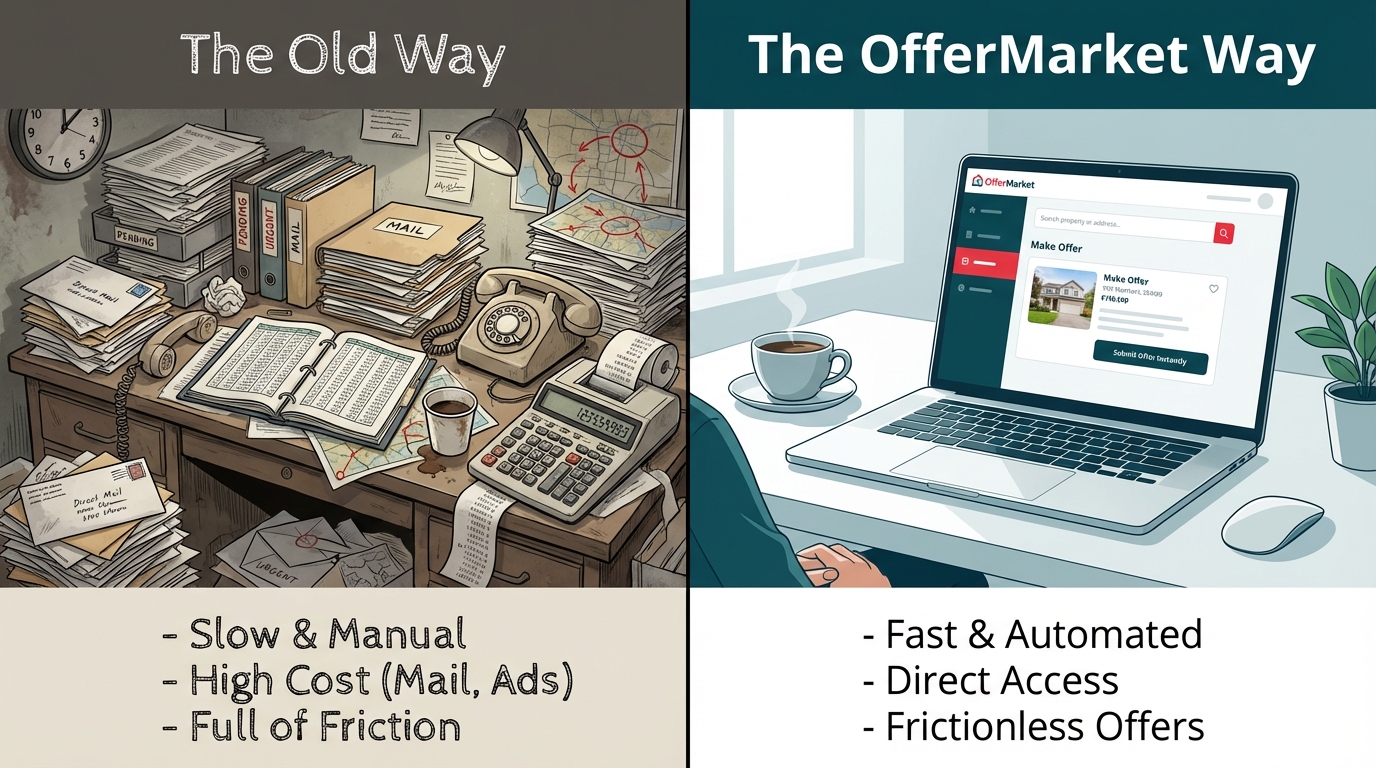
The traditional methods of finding and making offers are riddled with it:
*Finding Deals:* You could spend thousands on direct mail campaigns with a 1% response rate, hours upon hours cold calling or driving for dollars, or trying to compete with hedge funds on the MLS. These methods are slow, expensive, and have a steep learning curve.
Analyzing Deals: Once you find a potential deal, you have to manually run the numbers. You're pulling comps, estimating repair costs, calculating your After Repair Value (ARV), and trying to formulate an offer. This can take hours for a single property.
Submitting Offers: You then have to draft a professional offer, find the right person to send it to, and follow up. The entire process is clunky and inefficient.
To replicate Pace's success, you cannot use these archaic, high-friction methods. You need a modern tool designed for speed, volume, and efficiency. You need to remove the friction so you can focus on the one activity that actually matters: making offers.
The OfferMarket Advantage: Your High-Volume Offer Engine
This is where the theory ends and practical application begins. To execute a high-volume offer strategy, you need a platform built for it. The OfferMarket marketplace is designed from the ground up to be your high-volume offer engine, removing the friction that paralyzes most new investors.
Instead of hunting for deals across a dozen different channels, OfferMarket provides a centralized, constantly updated stream of investment opportunities, many of which are off-market properties perfect for creative offers. Our platform is a system for action, not just a list of properties.
Here’s how OfferMarket directly solves the friction points:
Access to Deal Flow: We aggregate listings from a wide variety of sources, giving you a single place to find potential deals. You can stop spending your time and money on inefficient marketing and start spending your time analyzing actual opportunities.
Eliminate Gatekeepers and Commissions: Many of our listings are direct from sellers or wholesalers, allowing you to communicate and negotiate more directly. This removes the layers and commissions associated with traditional agent-led transactions, creating more room in the deal for a creative solution that works for both you and the seller.
Designed for Speed: The entire platform, from browsing to submission, is built to help you move quickly. In the time it takes a traditional investor to analyze one property, you can analyze and submit offers on ten. This is how you put the law of large numbers into practice.
OfferMarket isn't just a website with listings; it's a tool that empowers you to implement the very strategy used by top investors like Pace Morby. It turns a week's worth of manual, frustrating work into a focused, efficient hour of activity.
Feature Spotlight: Frictionless Quoting and Streamlined Submissions
The core of any high-volume strategy is the ability to analyze and offer quickly without sacrificing accuracy. This is where OfferMarket's proprietary tools give you an edge that was previously only available to investors with teams of analysts.
Get an Instant Quote on Any Deal
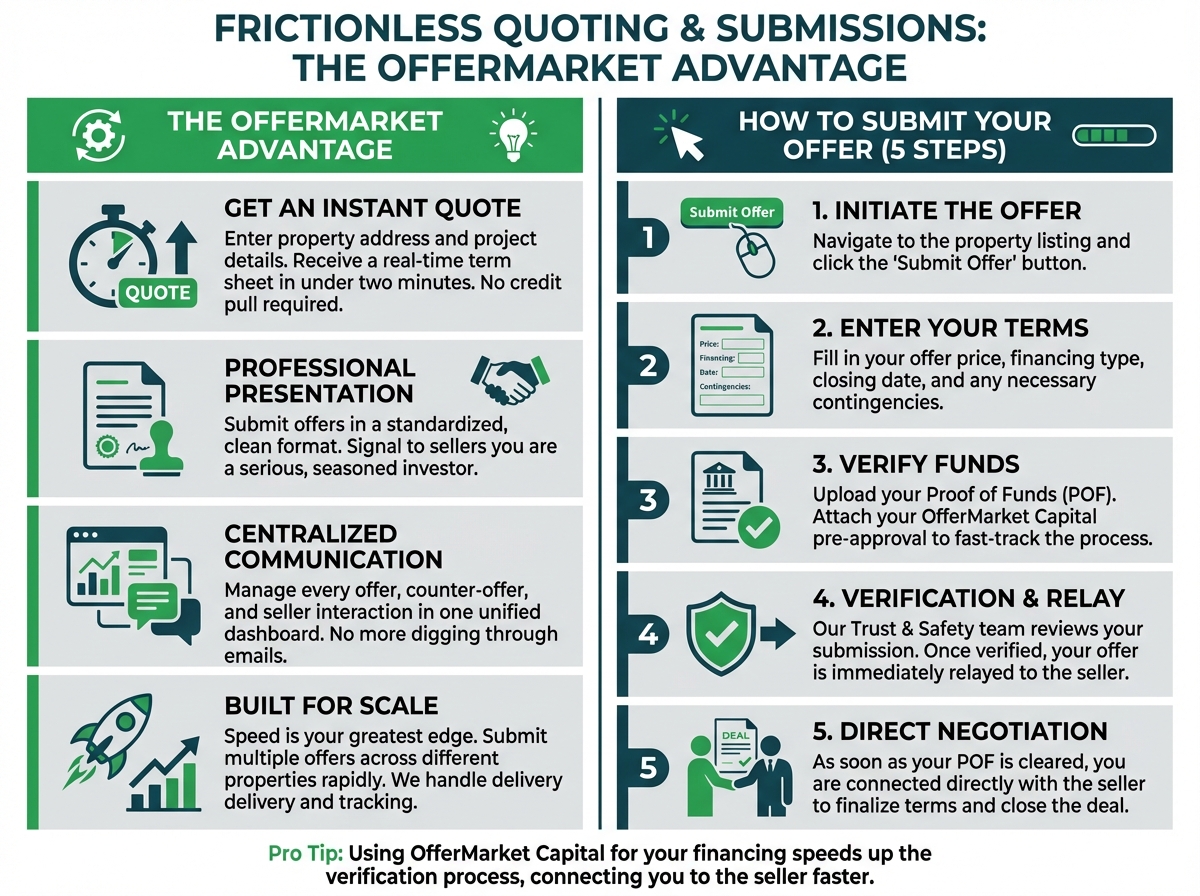
Start by entering your property address and project details into our instant quote tool. In less than two minutes, you'll receive a real-time term sheet outlining your estimated loan amount, interest rate, leverage, and key terms—without a credit pull.
Submit Offers with a Click
Once you have your numbers, the OfferMarket's marketplace provides a clean, professional, and user-friendly listing interface to submit your offer directly. No more drafting emails from scratch or fumbling with PDF forms.
Why It Works
Professional Presentation: Your offers are delivered in a standardized, clean format that signals to sellers you are a serious, seasoned investor.
Centralized Communication: No more digging through emails. Manage every offer, counter-offer, and seller interaction in one unified dashboard.
Built for Scale: Speed is the investor’s greatest edge. Our system allows you to submit multiple offers across different properties rapidly, while we handle the delivery and tracking.
How to Submit Your Offer
Using 10908 Hampden Ave as an example, here is how you move from "interested" to "under contract":
- Initiate the Offer: Navigate to the property listing and click the "Submit Offer" button.
- Enter Your Terms: Fill in your offer price and select your financing type (e.g., OfferMarket Capital. Set your closing date, offer expiration, and any necessary contingencies.
- Verify Funds: Upload your Proof of Funds (POF). If you are using OfferMarket Capital, simply attach your pre-approval letter to fast-track the process.
- Verification & Relay: The OfferMarket Trust & Safety team reviews your submission for completeness. Once verified, your offer is immediately relayed to the seller.
- Direct Negotiation: As soon as your POF is cleared, you are connected directly with the seller to finalize terms and close the deal.
Pro Tip: Using OfferMarket Capital for your financing often speeds up the verification process, as our team can validate your pre-approval internally and connect you to the seller faster.
A Practical Guide: Making Your First 10 Offers on OfferMarket
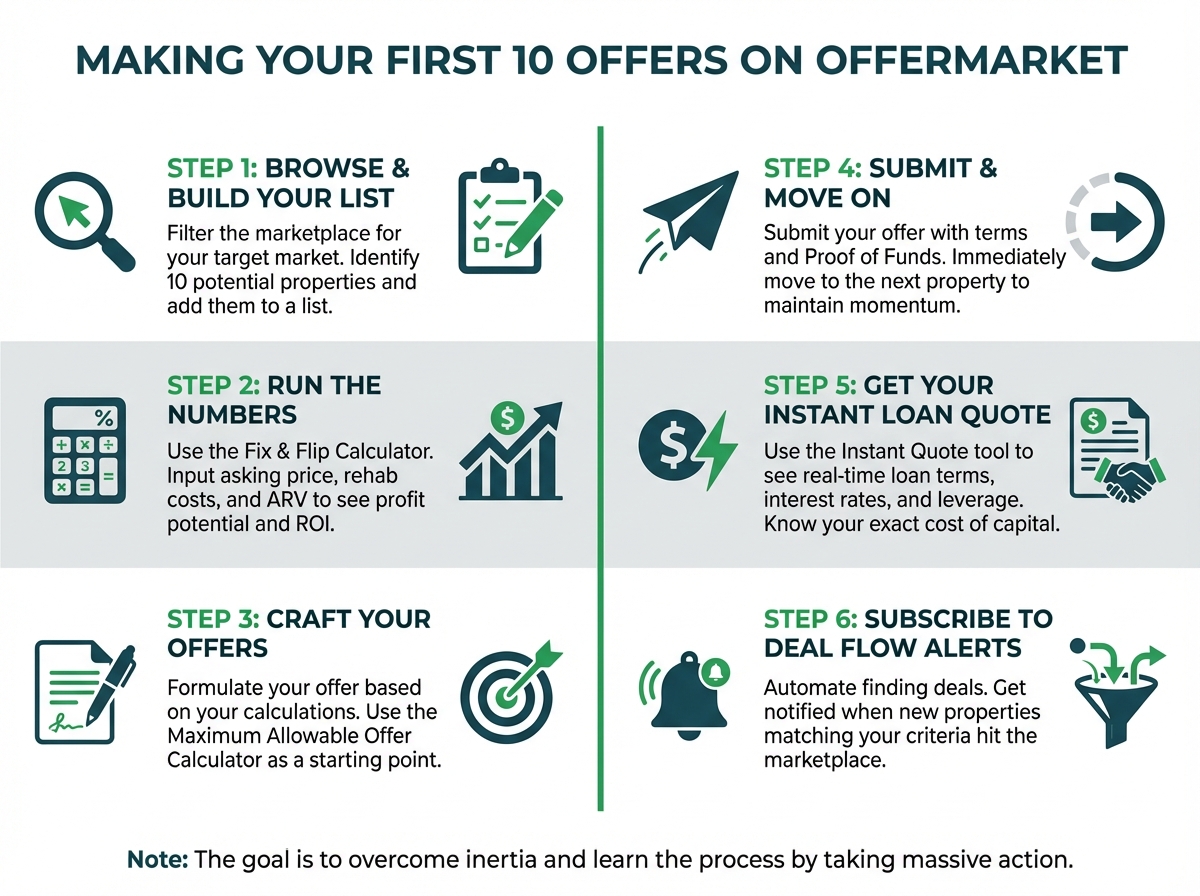
Knowledge without action is worthless. It's time to put this into practice. The goal here is not to land a deal on your first try. The goal is to break the seal, overcome inertia, and learn the process by doing. Follow these five steps to make your first 10 offers on OfferMarket this week.
Step 1: Browse the Marketplace and Build Your List
- Go to the OfferMarket marketplace and filter for your target market. Don't overthink it. Look for properties that appear to have potential—they might look dated, be listed by a wholesaler, or have descriptions that hint at a motivated seller. Your goal is to identify 10 potential properties. Add them to a list.
*Step 2: Run the Numbers with Fix and Flip Calculator
- For each property on your list, use the Fix & Flip Calculator. Plug in the asking price, estimated rehab costs, and your projected ARV (After Repair Value). This tool helps you move past "gut feelings" to see the actual profit potential and ROI before you ever hit "Submit."
Step 3: Craft Your Offers (Embrace the "Bad Quote")
- Using your calculator results, formulate your offer. A standard starting point is often using OfferMarket's Maximum Allowable Offer Calculator
Step 4: Submit and Move On
- Click "Submit Offer" on the listings. Enter your terms, upload your Proof of Funds, and let the OfferMarket Trust & Safety team handle the rest. Once you hit send, move on immediately. Do not wait for a ping; the power of this strategy lies in detached, continuous momentum.
Step 5: Get Your Instant Loan Quote Once your offer is in, you need to know your exact cost of capital. Use the Instant Quote tool to see real-time loan terms, interest rates, and leverage options from OfferMarket Capital. Knowing your monthly debt service and closing costs ensures there are no surprises when the seller says "Yes."
Step 6: Subscribe to Deal Flow Alerts
- To keep your pipeline full, subscribe to OfferMarket's deal flow alerts. You'll get notified when new properties that match your criteria hit the marketplace. This automates the "finding deals" part of the process, allowing you to focus your energy on analysis and offers.
By following these steps, you will have done more in one week than most aspiring investors do in a year. You will have gained practical experience, generated real feedback from the market, and started building the most important habit for success in this business: taking massive action.
Conclusion: Your Net Worth Journey Starts with a Single Quote
Pace Morby’s $40 million net worth is a lagging indicator. It's the result of a process, not the goal itself. The real secret to his success is not the final number, but the thousands of small actions, rejected offers, and lessons learned that built the foundation of his empire. His wealth wasn't created by watching others or endlessly analyzing deals in a spreadsheet; it was forged in the trenches by taking massive, consistent action.
The number that should matter to you today is not $40 million. It's one. One offer.
You have the blueprint. You have the strategy. And with OfferMarket, you have the tool. The friction that stops 99% of aspiring investors has been removed. The path from passive follower to active deal-maker is clearer than it has ever been. Stop analyzing and start acting. The journey to your first deal, your first portfolio, and your own financial freedom begins with your first quote.
Browse the listings on OfferMarket now. Get an instant quote, submit your offer, and begin your journey.

OfferMarket Loans
Check your rate
60 seconds · no credit pull