Landlord Insurance Quote Charlotte
Last updated: July 17, 2026
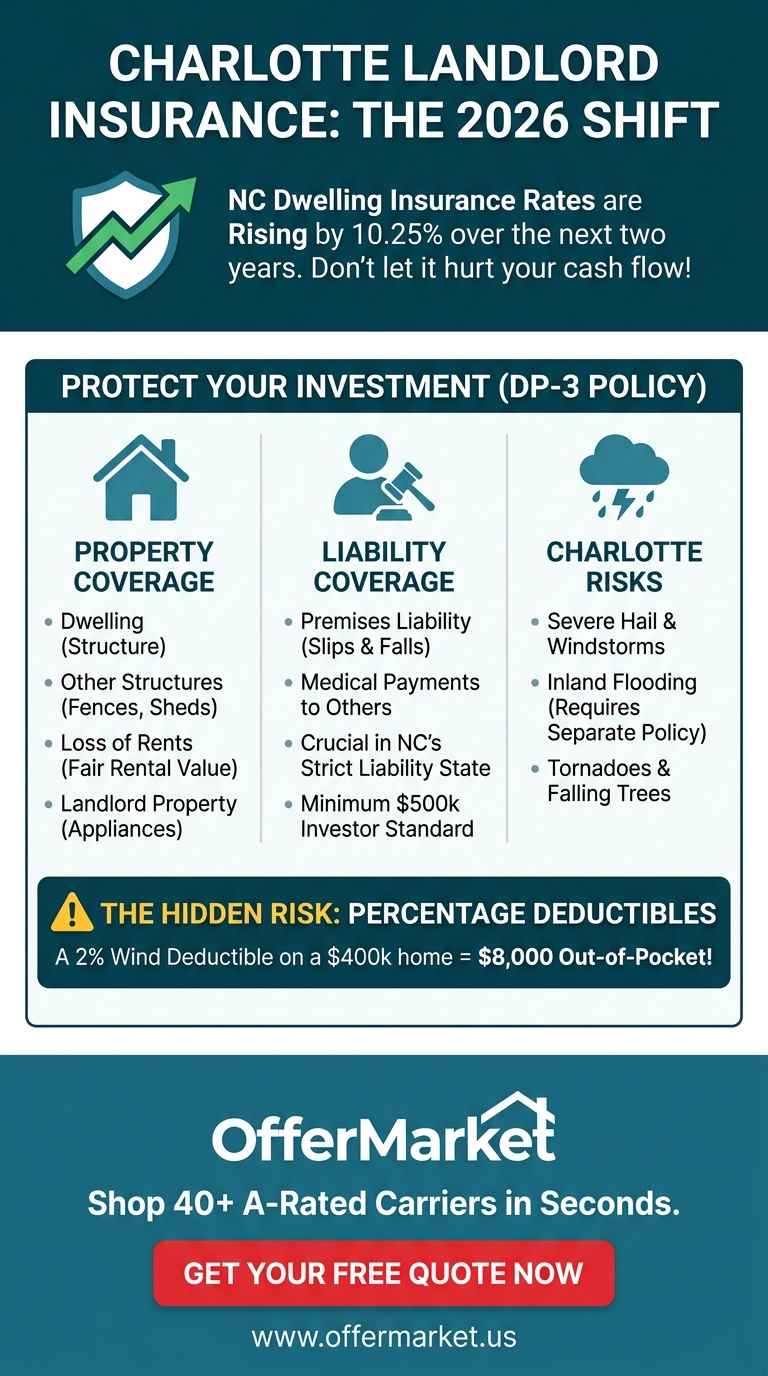
Add us on GoogleThe North Carolina Rate Bureau (NCRB), which represents all insurance carriers in the state, initially filed for an average statewide dwelling insurance rate increase of a staggering 42.2%, with some coastal areas seeing proposed hikes as high as 99%. For the Charlotte and Mecklenburg County area, the proposed increase was a significant 68.3%. After negotiations with the North Carolina Department of Insurance, a settlement was reached. Instead of the massive one-time hike, rates will increase by a more manageable 5% in 2025 and an additional 5% in 2026.
Navigating North Carolina's 2026 Dwelling Insurance Rate Shift
While this is a far better outcome than the original proposal, a cumulative 10.25% increase over two years is still a substantial new expense for landlords to absorb. For a Charlotte rental property insured for $400,000 with a current annual premium of $1,800, this settlement means the premium could rise to nearly $2,000 by 2026. For investors with large portfolios, this financial impact is multiplied across every door. This new reality makes it absolutely critical to shop your policy across multiple insurance carriers.
A carrier that was most competitive last year may no longer offer the best rate. Protecting your cash flow now requires comparing dozens of options, not just accepting a single renewal offer. Furthermore, these rising operational costs directly impact the underwriting of investment property loans.
Lenders use the Debt Service Coverage Ratio (DSCR) to qualify a property, and higher insurance premiums can shrink this ratio, potentially affecting your ability to secure financing or refinance.
Core Landlord Insurance Coverages for Charlotte Properties (DP-3)
When securing insurance for a rental property, you are not buying a standard homeowner's policy (HO-3). Instead, you need a specific dwelling policy, most commonly a "DP-3" policy. The DP-3 is the preferred choice for investors because it provides "special form" or "open peril" coverage on the structure itself, meaning it's protected against all risks except those explicitly excluded in the policy. Here are the core components of a DP-3 policy for your Charlotte rental.
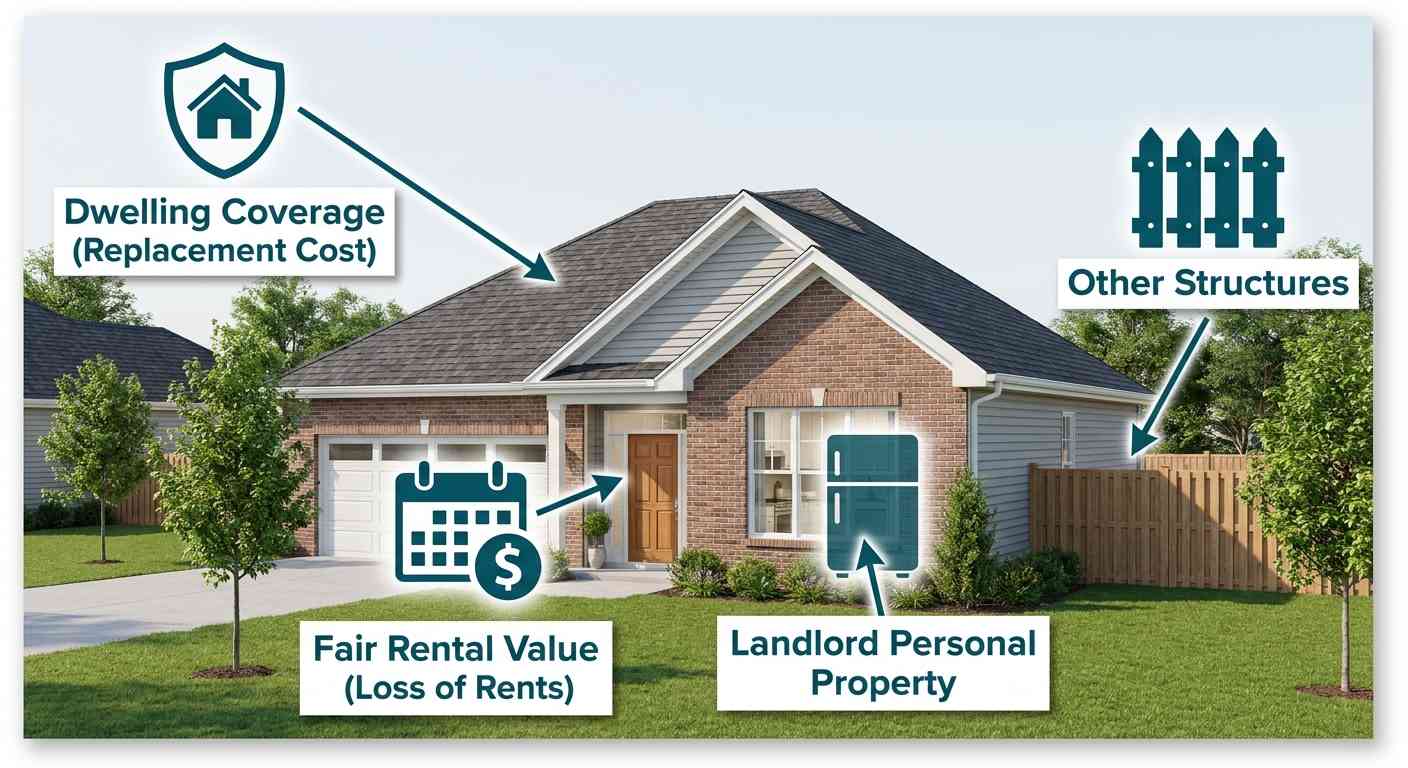
Dwelling Coverage
This is the cornerstone of your policy. It covers the physical structure of the rental property, including the foundation, walls, roof, and built-in fixtures. It is crucial that this coverage is written at Replacement Cost Value (RCV), not Actual Cash Value (ACV). RCV pays to rebuild the home to its previous condition using materials of like kind and quality, without a deduction for depreciation. ACV, on the other hand, only pays the depreciated value, which could leave you thousands of dollars short of being able to complete repairs after a major loss.
Other Structures
This coverage protects structures on the property that are detached from the main dwelling. Common examples for a Charlotte rental include a detached garage, a storage shed, a fence, or a retaining wall. This coverage is typically calculated as a percentage of the main dwelling coverage, often 10%.
Fair Rental Value (Loss of Rents)
If your rental property becomes uninhabitable due to a covered loss (like a fire or major storm damage), you'll lose the rental income you rely on. Fair Rental Value coverage reimburses you for this lost income while the property is being repaired or rebuilt. This is a vital protection for maintaining cash flow and meeting your mortgage obligations on the property.
Landlord Personal Property
This does not cover your tenant's belongings—that's what renter's insurance is for. This coverage protects personal property you own and provide for the tenant's use within the rental unit. This primarily includes appliances like refrigerators, stoves, washers, and dryers, as well as any maintenance equipment you store on-site, such as a lawnmower.
Essential Liability Protection for North Carolina Landlords
While property coverage protects your physical asset, liability coverage protects you from lawsuits. If a tenant or their guest is injured on your property and claims you are at fault, the legal and medical costs can be financially devastating. Landlord insurance provides a critical layer of financial protection against these claims.
Premises Liability
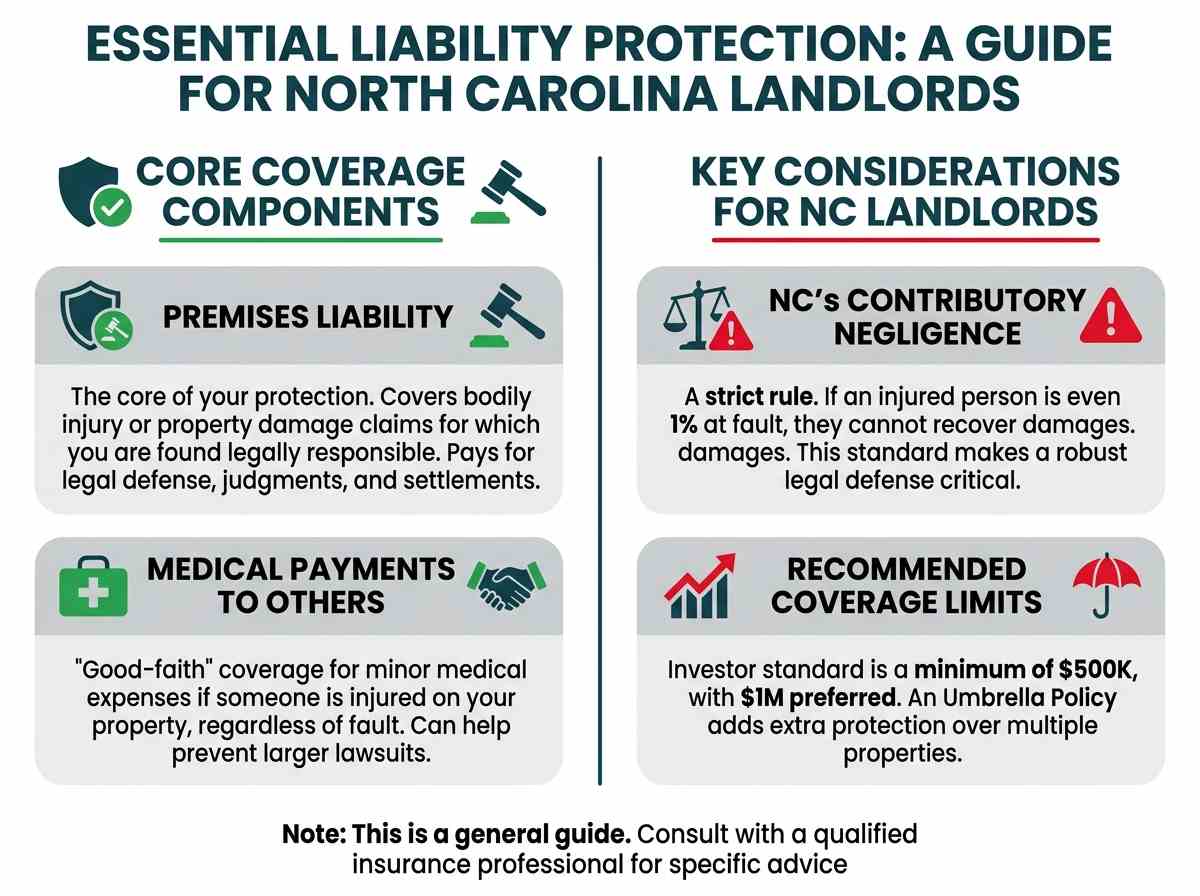
This is the core of your liability protection. It covers bodily injury or property damage to others (like tenants, guests, or even delivery people) that occurs on your rental property for which you are found legally responsible. The most common example is a "slip-and-fall" claim, where someone trips on a broken step or slips on an icy walkway you failed to treat. This coverage pays for legal defense costs and any judgments or settlements against you, up to your policy limit.
Medical Payments to Others
This is a smaller, "good-faith" coverage designed to quickly pay for minor medical expenses if someone is injured on your property, regardless of who is at fault. For example, if a guest twists their ankle on a paving stone, this coverage can pay for their trip to urgent care. Paying for this small expense promptly can sometimes prevent a much larger liability lawsuit from being filed.
Understanding North Carolina's Strict Contributory Negligence Standard
It's vital for Charlotte landlords to understand that North Carolina is one of the few states that still follows a pure contributory negligence standard.
In simple terms, this rule states that if an injured person is found to be even 1% at fault for their own injury, they are barred from recovering any damages from you. While this may seem to favor the landlord, it often leads to more complex and expensive litigation as both sides fight to prove the other was 100% at fault. This legal environment makes having a robust legal defense, paid for by your insurance, even more critical.
Why a Minimum of $500,000 in Liability is the Investor Standard
Given the high cost of medical care and legal defense, a standard $100,000 or $300,000 liability limit is often insufficient for a real estate investor. A single serious injury claim can easily exceed these limits, leaving your personal assets and the rest of your portfolio exposed.
The professional standard for landlords is a minimum of $500,000 in liability coverage, with many experienced investors opting for $1,000,000. For investors with multiple properties, a separate umbrella policy is often recommended to provide an additional layer of liability protection over all your properties.
Charlotte's Unique Weather Risks and Your Insurance Policy
Charlotte's location in the North Carolina Piedmont region exposes it to a specific set of weather-related risks. Your landlord insurance policy must be structured to adequately protect your investment from these frequent and sometimes severe events.
Severe Thunderstorms and Hail
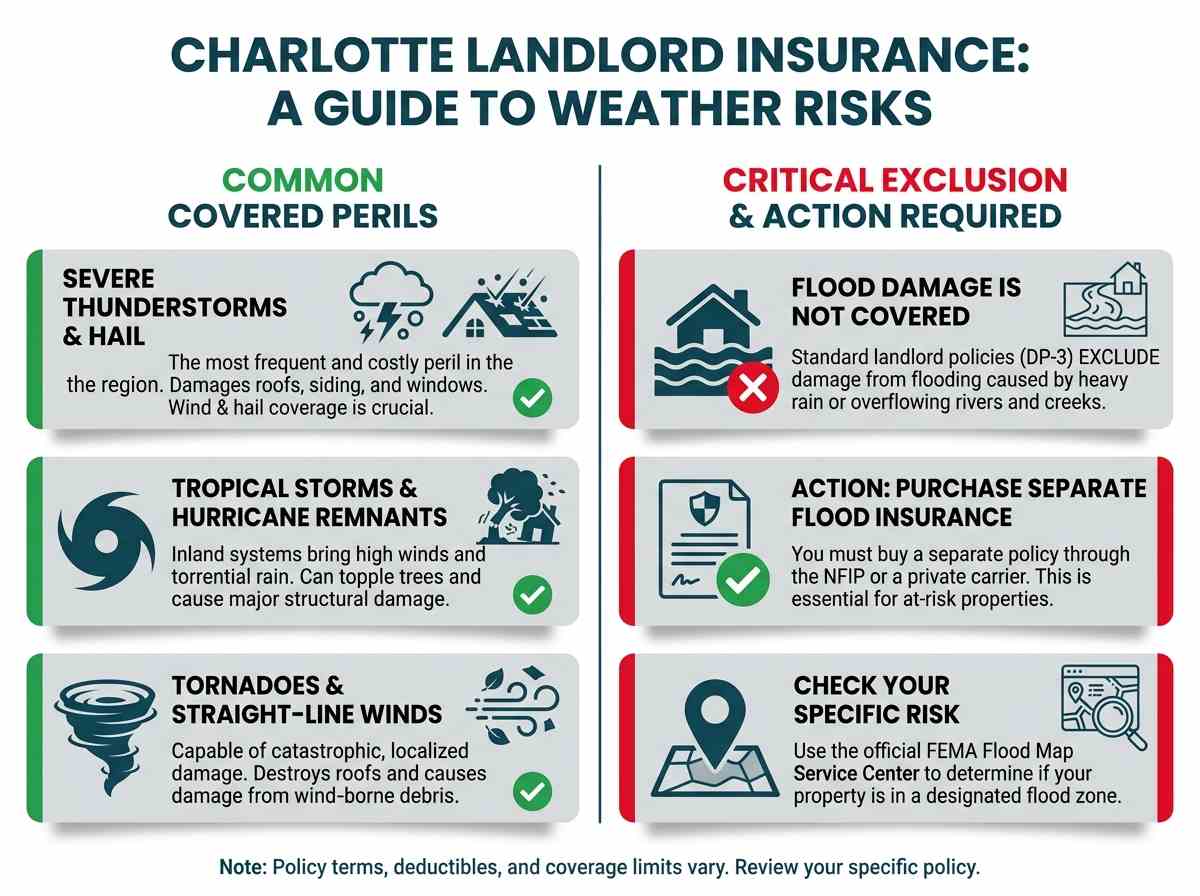
According to the North Carolina Climate Office, severe thunderstorms capable of producing damaging hail are the most frequent and costly weather peril in the region. A single hailstorm can cause tens of thousands of dollars in damage to roofs, siding, and windows. Your policy's coverage for wind and hail is one of its most important components.
Tropical Storms and Hurricane Remnants
While Charlotte is not on the coast, it is frequently impacted by the remnants of hurricanes and tropical storms tracking inland. These systems bring two primary threats: high winds that can topple trees and damage structures, and torrential rainfall that can lead to significant inland and flash flooding. The widespread wind damage from the remnants of Hurricane Hugo in 1989 is a stark reminder of Charlotte's vulnerability.
Tornadoes and Straight-Line Winds
The Charlotte area is also susceptible to tornadoes and powerful straight-line winds, often spun up by the same severe thunderstorms that produce hail. These events can cause catastrophic, localized damage, destroying roofs and causing extensive damage from falling trees and wind-borne debris.
Flood Damage Exclusion: The Need for Separate Flood Insurance
It is critical for every landlord to understand this: "Standard DP-3 landlord insurance policies do not cover damage from flooding." This includes flooding from overflowing rivers or creeks (like the Little Sugar Creek), storm surge, or widespread surface water accumulation from heavy rains.
If your rental property is located in or near a designated flood zone, you must purchase a separate flood insurance policy, typically through the National Flood Insurance Program (NFIP) or a private flood insurance carrier. You can check your property's specific flood risk at the FEMA Flood Map Service Center.
The Wind and Hail Deductible Trap in North Carolina
One of the most critical and often misunderstood parts of a landlord insurance policy in North Carolina is the wind and hail deductible. Many carriers have started using percentage-based deductibles instead of traditional flat-dollar deductibles, which can create a massive and unexpected out-of-pocket expense for investors.
Flat Dollar vs. Percentage-Based Deductibles
A flat dollar deductible is a fixed amount you pay on a claim. For example, if you have a $5,000 deductible and a $20,000 hail damage claim, you pay the first $5,000, and the insurance company pays the remaining $15,000. It's simple and predictable.
A percentage-based deductible is calculated as a percentage of your property's total insured value (Dwelling Coverage A), not a percentage of the claim amount. These typically range from 1% to 5%.
Calculating the Significant Out-of-Pocket Cost Difference
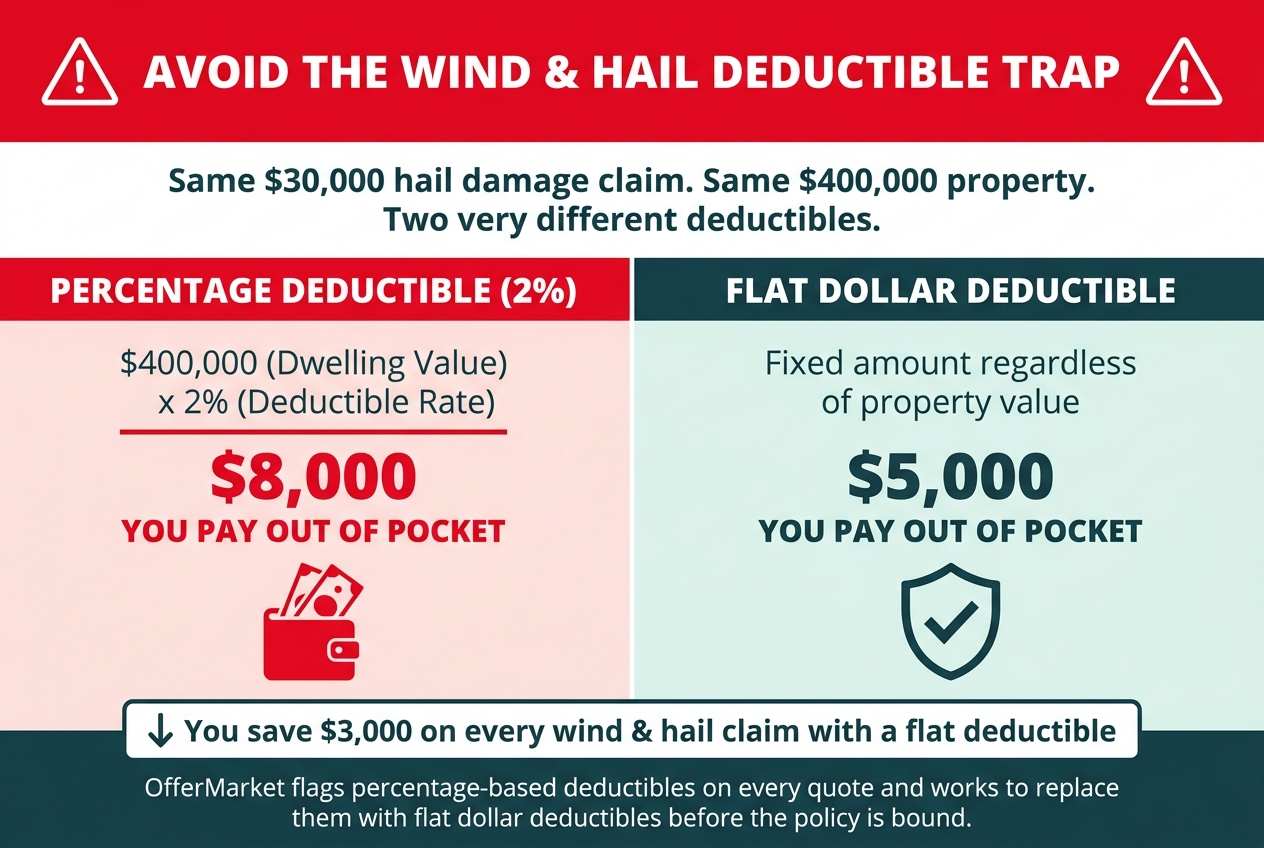
Let's see how this plays out on a typical Charlotte rental property insured for $400,000 that sustains $30,000 in roof and siding damage from a hailstorm.
Scenario A: $5,000 Flat Deductible (OfferMarket's Benchmark)
- Your out-of-pocket cost is $5,000.
- The insurance payout is $25,000.
Scenario B: 2% Percentage Wind/Hail Deductible
- Your deductible is 2% of the $400,000 insured value.
- Your out-of-pocket cost is $8,000.
- The insurance payout is $22,000.
In this common scenario, the percentage deductible costs you an extra $3,000 out of your own pocket on a single claim. In Charlotte's hail-prone market, where roof and siding damage claims happen with regularity, that $3,000 gap adds up fast across multiple properties or multiple storm seasons. When you get a quote through OfferMarket, the in-house team flags any policy with a percentage-based wind/hail deductible and works to replace it with a flat $5,000 before the policy is bound.
How to Identify and Avoid This Trap
When reviewing an insurance quote, the deductibles are usually listed on the first or second page. Look for specific language like "Wind/Hail Deductible" or "Named Storm Deductible" and check if the amount is a flat number (e.g., $5,000) or a percentage (e.g., 1%, 2%). A slightly lower annual premium is never worth the risk of a massive percentage-based deductible.
How OfferMarket Protects Charlotte Landlords from Deductible Surprises
When you get a landlord insurance quote through OfferMarket, the in-house insurance team reviews every quote before it reaches you.
One of the first things the team checks is the deductible structure. If a quote comes back with a percentage-based wind/hail deductible instead of a flat dollar amount, the team flags it and works to replace it with a flat $5,000 deductible before the policy is bound.
You never have to wonder whether a percentage-based deductible slipped into your policy, because the QC review catches it before you sign anything. That is the difference between getting a quote and getting a quote that has actually been reviewed by someone who understands what landlord insurance needs to look like in a hail-prone market like Charlotte.
Shop 40+ Carriers for Your Charlotte Rental Property
Enter your property address, select your coverage type, and get an instant DP-3 quote in under a minute. OfferMarket's team reviews every quote to catch percentage-based wind/hail deductibles and make sure your policy meets NC lender requirements.
Get Insurance Quote →Key Factors Influencing Your Charlotte Landlord Insurance Quote
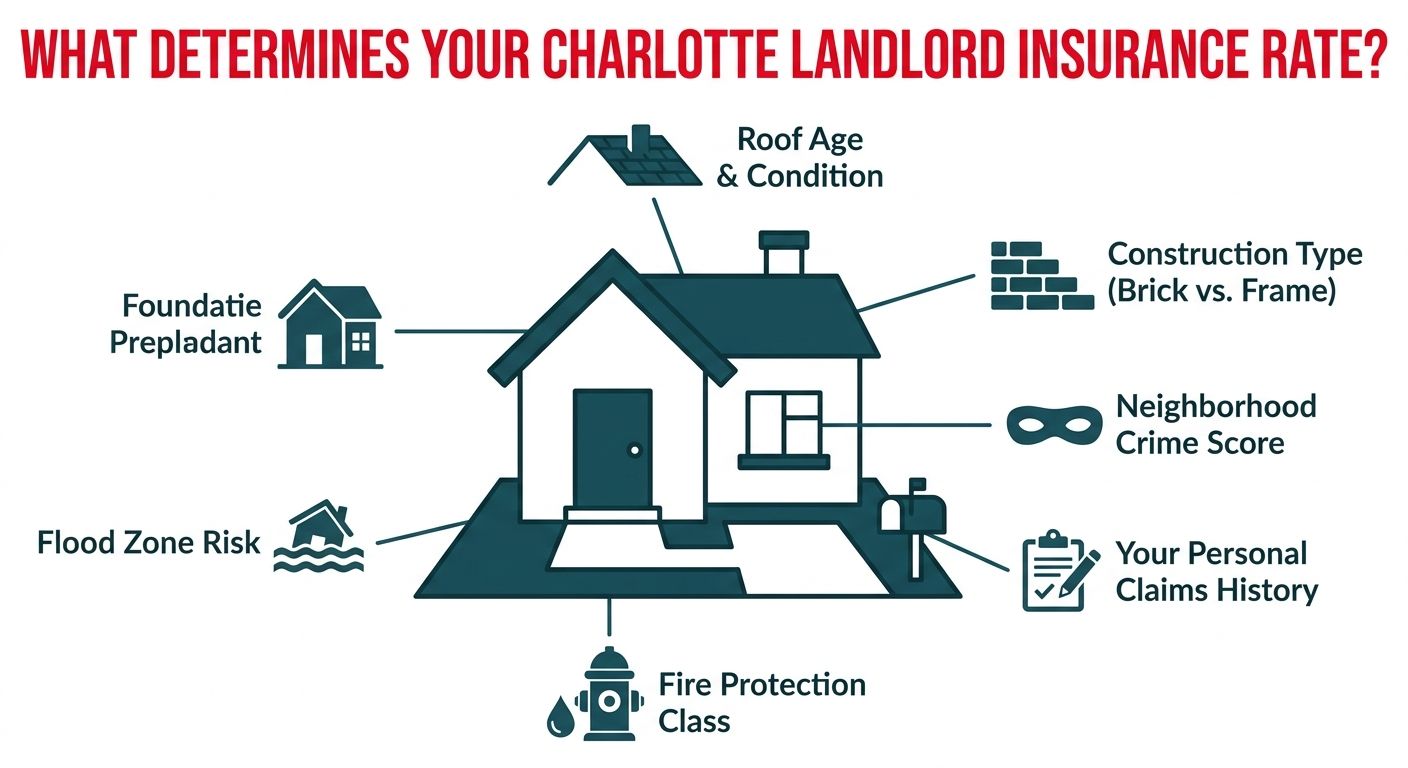
A landlord insurance premium is not a one-size-fits-all number. It's a carefully calculated price based on the specific risk profile of your property and you as an investor. Understanding these factors can help you see why rates can vary and what you can do to potentially lower your costs.
Property Characteristics
Age and Construction: Older homes may have higher premiums due to the increased risk of issues with plumbing, electrical, and structural components. Masonry (brick) construction is often cheaper to insure than frame (wood) construction due to its superior fire resistance.
Roof Condition: The age and condition of the roof are paramount. A brand-new architectural shingle roof will command a much lower premium than a 15-year-old 3-tab shingle roof.
Updated Systems: The age and type of the core systems matter. Homes with updated electrical (circuit breakers instead of fuses), modern plumbing (PVC or copper instead of galvanized steel), and a newer HVAC system are considered lower risk and receive better rates.
Location-Specific Risks
Fire Protection Class: Insurance carriers use a "Protection Class" rating from 1 (best) to 10 (worst) to score a property's proximity to a fire station and fire hydrants. Most properties within Charlotte's city limits have excellent ratings (Class 1-3).
Neighborhood Crime Scores: Carriers analyze local crime statistics, including rates of theft and vandalism. Properties in areas with higher crime rates will have higher premiums.
Flood Zones: As mentioned, properties in or near a FEMA-designated special flood hazard area will be flagged, and separate flood insurance will be required by lenders and highly recommended for all owners.
Coverage Selections
Deductible Amounts: Choosing a higher deductible (e.g., $5,000 vs. $2,500) will lower your annual premium. However, you must be comfortable paying this higher amount out-of-pocket if you have a claim.
Liability Limits: Increasing your liability limits from $500,000 to $1,000,000 will increase your premium, but the additional cost is often minimal for the significant increase in protection.
Optional Endorsements: Adding endorsements for things like water backup or ordinance or law will add to the cost, but they close critical coverage gaps.
Investor Profile
Personal Claims History: Just like with personal auto insurance, a history of filing multiple property claims can lead to higher premiums or even non-renewal.
Portfolio Size: Carriers offer discounts for investors who insure multiple properties with them, recognizing the value of a larger portfolio.
Crucial Policy Endorsements for Charlotte Rental Properties
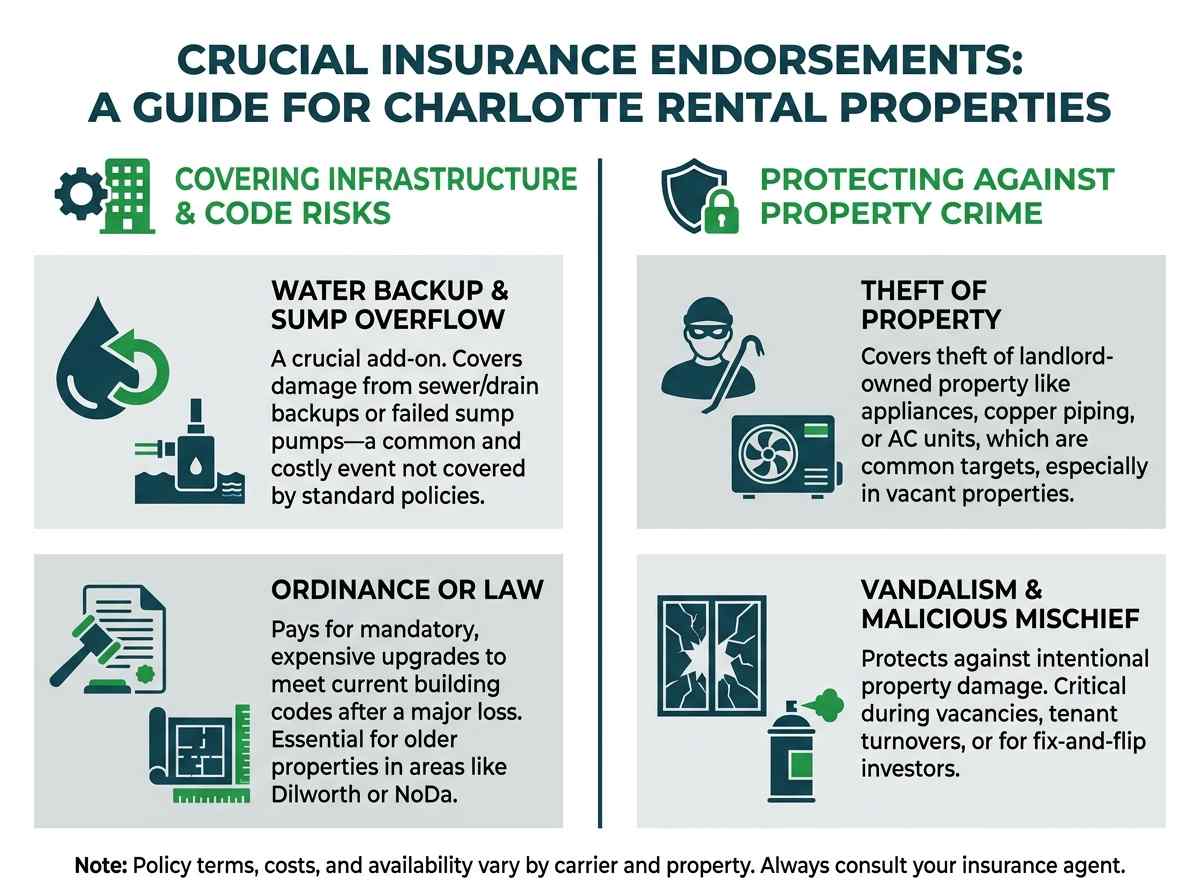
A standard DP-3 policy provides a great foundation, but several common and costly risks are often excluded. Policy endorsements (also called riders) are optional coverages you can add to your policy to close these gaps and customize the protection for your specific property.
Water Backup and Sump Overflow
This is one of the most important endorsements for any property owner. A standard policy does not cover damage caused by water that backs up through sewers or drains or from a failed sump pump. A sewer line clog, often caused by tree roots or tenant misuse, can cause thousands of dollars in damage to flooring, drywall, and personal property in a matter of minutes. This inexpensive endorsement provides coverage for that specific, and common, event.
Ordinance or Law
If your Charlotte rental property is older and suffers a major loss, you will likely be required to rebuild it to meet current, stricter building codes.
This can add significant costs to the reconstruction for things like updated electrical wiring, plumbing standards, or energy efficiency requirements. Ordinance or Law coverage helps pay for these mandatory, code-related upgrade costs that are not covered by standard Dwelling coverage. This is especially valuable in historic or transitioning neighborhoods like Dilworth, Plaza Midwood, or NoDa.
Theft of Property
While a standard policy covers damage caused by a break-in (like a broken door), it may not cover the theft of items that are part of the property itself. This endorsement provides coverage for the theft of landlord-owned property, such as appliances. More importantly, it can cover the theft of building materials, like copper piping or external AC units, which are common targets for thieves, especially when a property is vacant.
Vandalism and Malicious Mischief
This coverage protects you from intentional damage to your property. While it's often included, some basic policies can exclude it, especially if the property is vacant for an extended period (typically over 30-60 days).
Given the risk of a disgruntled former tenant or other issues during a vacancy, ensuring you have Vandalism coverage is a critical part of risk management for any landlord. This is particularly important for investors using fix-and-flip loans where the property will be vacant during renovations.
Check your rate
See rates, terms, and max LTV for your investment property in minutes — no credit check required.
Check my rate →Analyzing the Charlotte Rental Market: An Investor's Snapshot
Charlotte continues to be a top-tier market for real estate investors due to its robust economy and strong population growth. According to data from Norada Real Estate Investments, the metro area benefits from a diverse job market, anchored by banking, technology, and healthcare sectors, which fuels sustained demand for rental housing. Understanding the different submarkets is key to aligning your investment strategy with your goals.
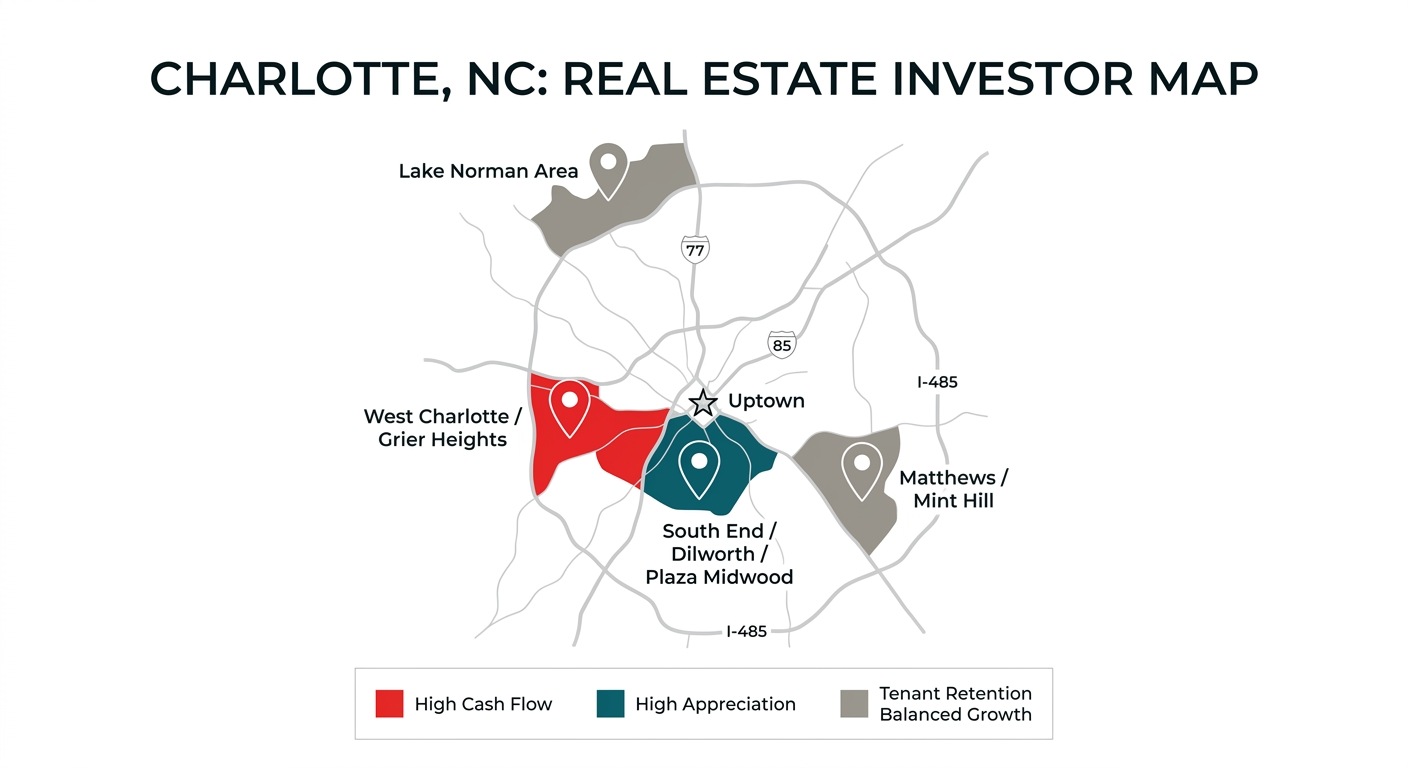
High Cash-Flow Neighborhoods
For investors prioritizing monthly cash flow, neighborhoods with more affordable entry prices and solid rental demand are key.
Areas like "Hidden Valley", "Grier Heights", and parts of "West Charlotte (zip code 28208)" often provide higher rent-to-price ratios. While these areas may require more intensive management, they can generate strong and consistent returns for savvy investors.
Appreciation-Focused Submarkets
If long-term appreciation is the primary goal, areas with high demand from young professionals, walkable amenities, and ongoing development are prime targets. Neighborhoods like "South End", known for its vibrant nightlife and light rail access; "Dilworth", with its historic charm and tree-lined streets; and "Plaza Midwood", famous for its eclectic mix of shops and restaurants, command higher prices but have a strong track record of value growth.
Suburban Opportunities for Tenant Retention
For investors seeking a balance of cash flow and appreciation with a focus on long-term tenant stability, Charlotte's suburbs are an excellent choice. Towns like "Matthews" and "Mint Hill" offer a more suburban feel with good schools and a strong sense of community, attracting families who tend to rent for longer periods.
The areas around "Lake Norman", such as "Huntersville" and "Cornelius", also offer attractive rental opportunities, appealing to tenants seeking a lifestyle centered on outdoor and water activities.
How to Get a Competitive Landlord Insurance Quote in Charlotte
In a market with rising rates, the method you use to shop for insurance has a direct impact on the price and quality of the coverage you receive.
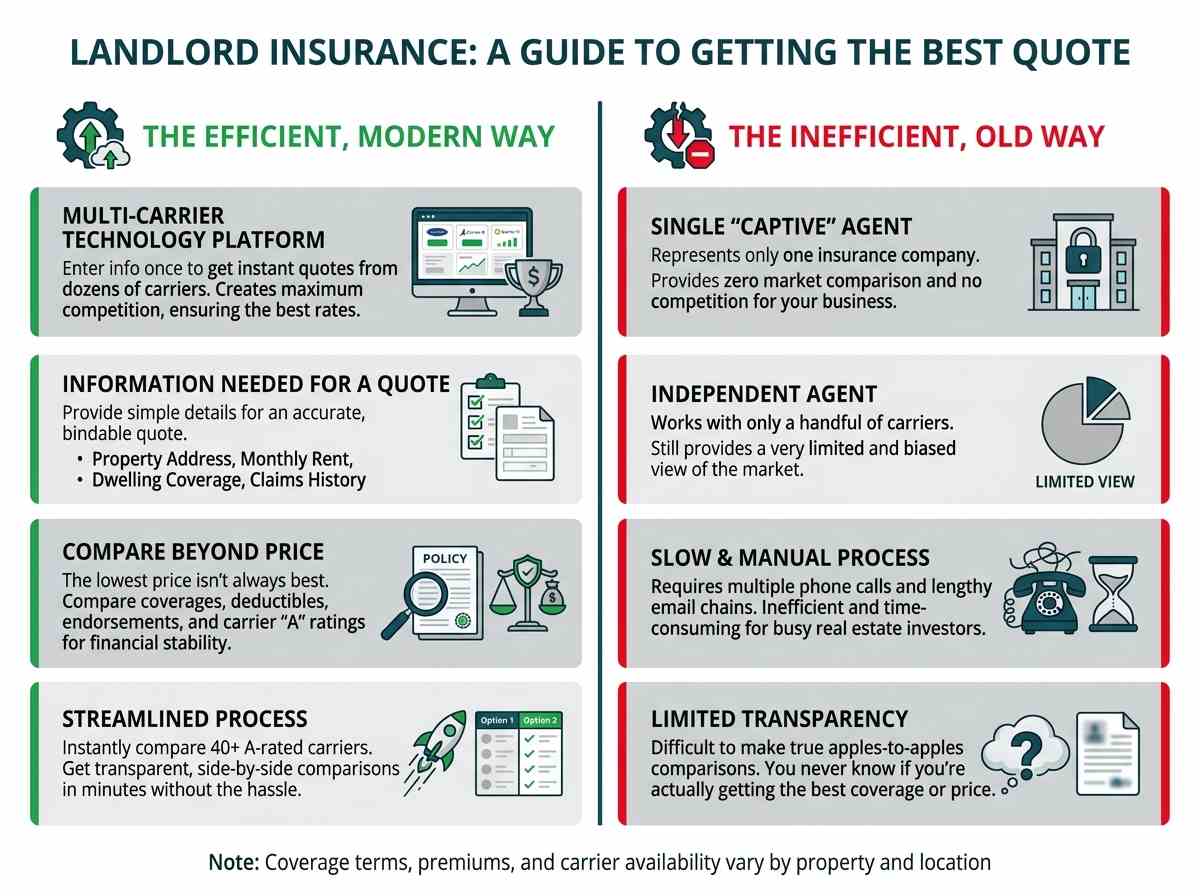
The Inefficiency of Single-Agent Quotes vs. a Multi-Carrier Technology Platform
The traditional method of calling a single "captive" agent (who represents only one company) or even an independent agent who only works with a handful of carriers is no longer sufficient.
This process is slow and provides a very limited view of the market. A modern, multi-carrier technology platform like OfferMarket, by contrast, allows you to enter your information once and instantly receive quotes from dozens of insurance carriers. This creates maximum competition for your business, ensuring you see the best possible rates.
Information Needed for an Accurate Quote
Getting an accurate, bindable quote is a straightforward process. You will typically need to provide:
- 🏠 Coverage Type — Landlord or Fix and Flip
- 📍 Property Address — the rental you need insured
- 💵 Monthly Rent — current or projected
- 🏢 Entity Name — LLC, trust, or personal name
- 🏗️ Dwelling Coverage — estimated replacement cost to rebuild
- 📅 Effective Date — closing date, today, or rough estimate
- 📋 Claims History — number of claims in the last 5 years
- 📬 Mailing Address — your personal or business address
- 🎂 Date of Birth — standard carrier verification
Comparing Quotes Beyond Price
The lowest price is not always the best deal. When comparing quotes, you must look at the details to ensure you're making an apples-to-apples comparison.
- Coverages: Are the Dwelling and Liability limits the same?
- Deductibles: Does one quote have a low premium because of a high, percentage-based wind/hail deductible?
- Endorsements: Does the policy include crucial add-ons like Water Backup and Ordinance or Law?
- Carrier Ratings: Is the insurance carrier financially stable? Look for carriers with an "A" rating or better from a service like AM Best.
Our Streamlined Process: Instantly Compare 40+ A-Rated Carriers
Our platform was built specifically for real estate investors. The process is simple: you enter your property information, and our technology instantly shops your quote across our network of over 40 A-rated insurance carriers that specialize in rental properties. You get transparent, side-by-side comparisons in minutes, allowing you to choose the best combination of coverage and price without the hassle.
OfferMarket's Charlotte Specific Coverage Benchmarks
When you get a landlord insurance quote through OfferMarket, the in-house team reviews every quote against these benchmarks:
- 🏠 Dwelling Coverage: Full replacement cost value with zero coinsurance
- 💵 Deductible: Flat $5,000 across all perils
- ⚖️ Premises Liability: $500,000 per occurrence minimum
- 💸 Loss of Rent: Up to 12 months of rental income
- 📋 Ordinance or Law: Included (typically 10% of dwelling coverage)
- 🚰 Water Backup: Included (typically $5,000)
- 🏗️ Loss Settlement: Replacement Cost Value on dwelling, other structures, and personal property
If any of these are missing, below benchmark, or structured in a way that would leave you exposed, the team flags it and works to correct it before the policy is bound. This is the QC layer that separates getting a quote from getting the right coverage.
Why Charlotte Investors Choose OfferMarket
Securing the right insurance is a critical component of a successful real estate investment strategy. Charlotte investors partner with us because we provide a service built to meet their specific needs for speed, expertise, and value.
Unmatched Market Access
Our access to over 40 A-rated carriers means we can deliver a level of competition that a single agent simply cannot match. This competition results in superior rates and coverage options for our clients, directly improving their bottom line and property cash flow.
Expert Review Ensures Investor-Grade Coverage
Every policy is reviewed to ensure it meets the high standards required by professional investors. We eliminate policies with dangerous pitfalls like percentage-based deductibles and ensure crucial endorsements are in place to protect you from common risks.
Seamless Integration with Lending
For investors acquiring new properties, time is of the essence. Our insurance and lending operations are seamlessly integrated.
This means we can provide an insurance binder—the proof of insurance required for closing—in record time, helping you close your DSCR or fix-and-flip loans faster and with less friction.
Don't leave your Charlotte portfolio under-protected or over-priced. Take control of your insurance costs and ensure your investments are secure.
Get your free, no-obligation Charlotte landlord insurance quote now.
Shop 40+ Carriers for Your Charlotte Rental Property
Protect your investment property with competitive rates — quote in minutes.
Get Insurance Quote →


OfferMarket Loans
Check your rate
60 seconds · no credit pull